The Delivery Graveyard: Why Africa's Largest Market Cannot Keep Food Startups Alive
Key Takeaways
- •Five significant Nigerian food delivery companies—Jumia Food, Bolt Food, FoodCourt, GoLemon, and Eden Life—have all ceased or suspended operations within a three-year period despite substantial backing from global investors and experienced founders.
- •Jumia Food processed $64 million in food orders across as many as 11 African countries during nine months of 2023 but remained unprofitable for over a decade, losing money on every order after factoring in rider costs, fuel, and customer support.
- •Food delivery failures span globally, with companies including Kitchen United, Getir, Amazon Food, Uber Eats India, Jüsto, and Deliveroo all retreating or shutting down despite raising between $10 million and $1.5 billion each in capital.
- •Nigeria's national power grid generates only 4,000 to 5,000 megawatts for 220 million people, and Lagos lacks formal address systems, making the operating environment structurally hostile to just-in-time delivery businesses.
- •Chowdeck continues operating by maintaining profitability per delivery, while Glovo remains active in Nigeria supported by its parent company's willingness to subsidize losses for market share.
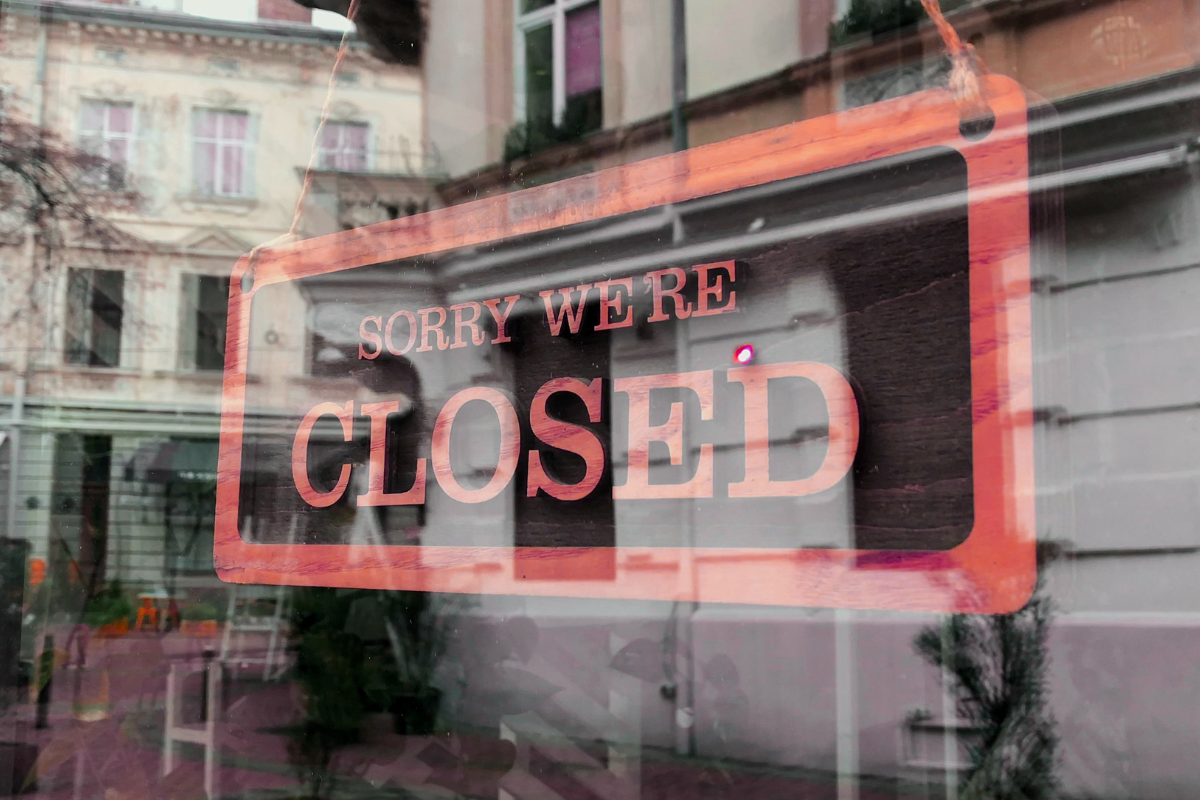
There is a particular cruelty to the Nigerian food delivery story. The market is enormous: 220 million people, a median age of 18, a middle class that craves convenience, and a generation of founders who have proven themselves elsewhere. One by one, they fall.
Jumia Food. Bolt Food. FoodCourt. GoLemon. Eden Life, which paused its consumer business last month. Five significant players — some backed by global giants, others by Y Combinator, and still others by alumni of Nigeria's most successful startup exit — are all dead or dying in the same market within three years.
The venture capital pitch for Nigeria has always been seductive: an emerging, untapped market. A large, youthful, and growing population. A rising middle class. A mobile-first economy. The numbers look inevitable on a slide deck.
But inevitability does not pay rider wages. It does not buy diesel for generators. It does not fix roads. And it certainly does not outrun unit economics that have been broken from day one. Food delivery is a business where even mature players in wealthy markets operate on gross margins in the single digits — and that is before accounting for fleets, customer support, and refunds. In markets where every one of those costs multiplies, the margin simply vanishes.
Jumia Food, despite operating across as many as 11 African countries at its peak and processing $64 million in food orders in just nine months of 2023, was unprofitable for more than a decade. The company lost money on every single order once rider costs, fuel, and customer support were factored in.
Jumia CEO Francis Dufay stated plainly: "Costs are very high, and there is plenty of competition; so there is downward pressure on the commissions we make, and upward pressure on marketing costs."
Bolt Food saw the same math and withdrew. FoodCourt, the Y Combinator-backed cloud kitchen that was supposed to solve the problem by centralising production, suspended operations in April 2026 after kitchen workers went on strike over unpaid salaries and vendors stopped supplying ingredients. GoLemon, founded by four former Paystack executives who had already built and exited one of Africa's greatest fintech success stories, lasted 28 months and acquired 40,000 customers before posting its goodbye note last week.
This pattern repeats far beyond Nigeria's borders.
In the United States — the deepest capital market on earth, with functional infrastructure, stable power, and customers who actually tip — the ghost kitchen and food delivery graveyard is just as crowded.
Kitchen United raised $100 million in July 2022, including from grocery giant Kroger, and shut down all its physical locations by November 2023. Reef Technology, backed by SoftBank with more than $1.5 billion in capital, abruptly closed nearly one-third of its 300+ food trailers in January 2022 and has continued winding down locations in Portland, Philadelphia, Houston, and New York ever since. Wendy's scaled back its plan to open 700 Reef locations. Nextbite endured three rounds of layoffs in 14 months before selling itself to a competitor.
Europe tells the same story, written in billions of burnt venture capital. Getir, the Turkish quick-commerce pioneer that once commanded an $11.8 billion valuation, was backed by top-tier global funds and spent lavishly to conquer Europe with 10-minute grocery deliveries, only to execute a total retreat from the United Kingdom, Germany, the Netherlands, and mainland Europe.
Gorillas, Germany's own venture darling that reached unicorn status in record time, suffered the same fate after burning through hundreds of millions of dollars before being acquired at a steep discount. Even established giants have surrendered whole markets under legal and competitive pressure. Deliveroo completely abandoned Germany after failing to beat local incumbent Delivery Hero and later retreated from Spain when the nation's "Rider Law" forced platforms to classify gig workers as formal employees — a shift that instantly shattered the fragile unit economics of on-demand logistics.
In India, the world's most hyper-competitive consumer market, scale proved no shield against structural unprofitability. Not even Amazon, with its bottomless balance sheet, could crack the code. Amazon Food launched in India to challenge local powerhouses Zomato and Swiggy, only to be quietly dismantled two years later as part of corporate-wide cost-cutting.
Uber Eats surrendered its Indian footprint entirely, selling off its local business after realising that chasing market share through constant customer discounting was a financial black hole. Long before them, early VC darlings like TinyOwl and Yumist — startups that raised tens of millions to build dark kitchens and custom delivery fleets during India's initial tech boom — collapsed when venture funding dried up, leaving behind a market dominated solely by a duopoly willing to absorb massive annual losses.
Latin America and Southeast Asia offer no refuge from this arithmetic either. In Mexico, Jüsto raised over $300 million to build a full-stack digital grocery network, expanding rapidly across Peru and Brazil before high operating costs forced a complete pullback and ultimate shutdown. SoftBank-backed Jokr scaled up and down South America at breakneck speed, only to pull out of Colombia, Chile, Peru, and Mexico to preserve cash.
Across the Pacific, South Korean giant Delivery Hero shuttered its Vietnamese unit, Baemin, declaring the market's unit economics fundamentally unsustainable. Down under, Deliveroo abruptly placed its Australian business into voluntary administration, pulling out of the country after years of burning capital against Uber Eats and DoorDash.
Whether in Berlin, Bengaluru, São Paulo, or Sydney, the conclusion is the same: forcing high-touch, real-time physical logistics onto razor-thin retail margins is a model that breaks under its own weight the moment cheap capital stops subsidising it. But while an engineer in Berlin moves on to another tech firm and a founder in Bangalore raises a fresh round for a SaaS startup, the structural fallout in developing markets cuts far deeper into the real economy. When the funding taps turn off, the global model breaks everywhere. It is just the floor that drops much further depending on where you stand.
These were not underfunded experiments. These were companies that raised between $10 million and $1.5 billion. They had access to the best operators, the best technology, and the most forgiving consumer markets in the world. They still collapsed. The failure rate of food delivery and cloud kitchen startups is not an African anomaly. It is a global bloodbath.
The difference matters, though. In the United States, when Kitchen United fails, the founders pivot to software, the investors write it off, and the employees find jobs at DoorDash or Uber within a month. In Nigeria, when GoLemon dies, the pickers who packed orders at 2 a.m. have no safety net. The riders who navigated Lagos traffic for ₦300 delivery fees have no unemployment insurance. The farmers who built their weekly schedules around GoLemon's offtake now have a gap in their income and no one to call. The human cost falls entirely on individuals, while the system that made their failure inevitable remains unchanged.
An increasing number of high-profile startups have shut down in this sector: — Startup Graveyard Africa (@stgr_africa) July 29, 2026
Nigeria does not just have a startup problem. Nigeria has a state problem. You cannot build a just-in-time delivery business in a city where the power grid is a suggestion — and where the national grid generates roughly 4,000 to 5,000 megawatts for 220 million people, less than a single mid-sized European city produces for a fraction of the population. You cannot promise 30-minute delivery windows on roads where a single pothole or a random checkpoint can swallow an hour, and where Lagos, home to an estimated 15 million residents, operates largely without formal address systems, forcing riders to navigate by landmarks and phone calls. You cannot maintain cold chains when diesel prices spike every other month. You cannot hire talent at global standards when the naira is on a perpetual slide and your best engineers are migrating to Canada. You cannot raise a Series B when your investors are watching the central bank governor get arrested on television — and when total venture funding to African startups has contracted sharply from its 2021–2022 peak, narrowing every runway before it begins.
The US and European food delivery startups failed because the business model was flawed. The Nigerian ones failed because the business model was flawed and the operating environment is hostile. That multiplier kills.
This is why the argument for a leadership reset is arithmetic, not political sloganeering. Nigeria's best ideas — grocery delivery, cloud kitchens, subscription home services, logistics — are failing because the cost of doing business in Nigeria extracts a tax that no amount of venture capital can subsidise forever. At some point, the runway ends. In Nigeria, the runway is shorter, bumpier, and lit by generator-powered floodlights.
Chowdeck survives, for now, by being ruthlessly capital-efficient and profitable per delivery. Glovo survives because it has a billion-dollar parent company willing to burn money for market share. Everyone else is learning the hard way that a good app cannot outrun a broken state.
The graveyard will keep growing until Nigeria's leaders decide that infrastructure, currency stability, and regulatory sanity are prerequisites for the "emerging market" they love to pitch. Until then, the country will keep burying its best ideas, one Medium post, one green heart emoji, one unpaid salary at a time.

