FOIA Response Reveals Controversial Trump DHS Home-Entry Memo Was an Email From an ICE Lawyer, Analyst Says
Key Takeaways
- •The original claim involved a Homeland Security document said to authorize ICE agents to enter civilian homes without a judicial warrant.
- •Allison Gill said her FOIA request showed the guidance was not based on an Office of General Counsel memo.
- •DHS reportedly identified the underlying record as an email from Adam Loiacono, a legal official in ICE's Office of the Principal Legal Advisor.
- •Gill argued that if the email became adopted policy, it may qualify as working law rather than protected deliberative advice.
- •The same ICE lawyer was previously reported to have written an email opinion on questioning unaccompanied minors at HHS facilities without Miranda warnings.
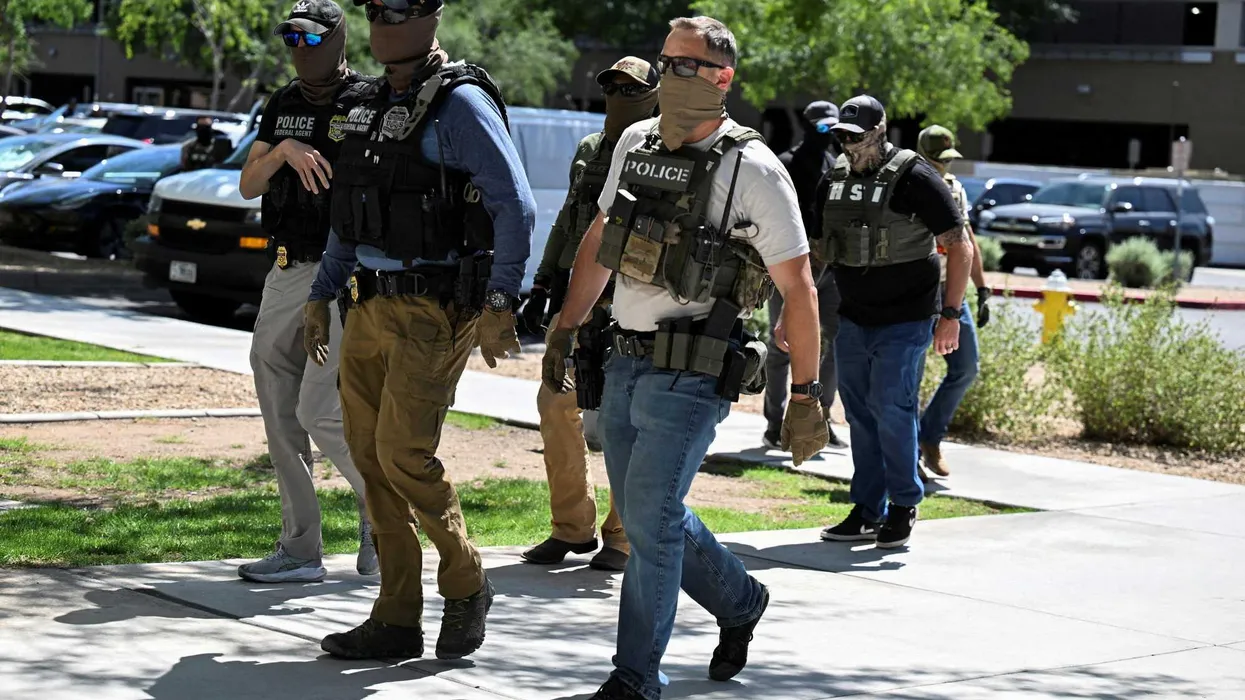
One of the Trump administration's most contested legal documents may in fact be a complete ruse, according to a legal analyst.
Last year, the Department of Homeland Security under President Donald Trump allegedly issued a memo instructing Immigration and Customs Enforcement (ICE) agents that they hold the legal authority to enter civilian homes without a judicial warrant. The disclosure sent shockwaves through the legal community, with many arguing that it constituted a blatant violation of the Fourth Amendment's privacy protections. That alarm rests on settled legal ground: ICE enforcement routinely relies on administrative warrants signed by the agency's own officers rather than by judges, and federal courts have held that such paperwork does not authorize agents to enter a home without consent.
Allison Gill, a legal analyst, wrote in her Substack newsletter that she filed a Freedom of Information Act (FOIA) request for the memo as soon as the story first surfaced. FOIA, the federal open-records law enacted in 1966, compels agencies to search for and release responsive records, but it permits withholding under exemptions that include privileges for internal legal deliberations, a carve-out that sits at the center of many disputes over government guidance. The response to that request has raised more questions than it answered.
"Today, we got a response from the Department of Homeland Security, and it turns out there's no Office of General Counsel memo underpinning the Todd Lyons memo," Gill noted. "It was an email written by Adam Loiacono, the Deputy Principal Legal Advisor for Enforcement and Litigation in the Office of the Principal Legal Advisor at ICE."
The reference is to Todd Lyons, who leads ICE as its acting director. The FOIA response also highlights an institutional distinction: ICE's Office of the Principal Legal Advisor is the enforcement agency's own in-house legal arm, separate from the DHS Office of the General Counsel that sits atop the department in Washington.
"Adam Loiacono is the same lawyer [who] wrote the opinion (via email) legally justifying the questioning of unaccompanied minors at HHS facilities without Miranda warnings," she added.
Miranda warnings trace to Miranda v. Arizona, the 1966 Supreme Court decision requiring that suspects be advised of their rights before custodial interrogation.
"I'm not sure if he writes these as emails to avoid having to release them, but that shouldn't matter, because any policy adopted as working law waives the privilege they claim justifies the redactions you'll see below," Gill wrote, referring to the responsive documents from DHS that she shared in her newsletter.
Her "working law" framing invokes a recognized FOIA doctrine: under Supreme Court precedent, the deliberative-process privilege does not shield records that embody an agency's final, operative policy rather than pre-decisional advice. Whether an emailed legal rationale adopted in practice counts as such "working law" is the kind of question that, in FOIA practice, is often resolved through administrative appeals or litigation over redactions.
Source: Raw Story

