Bachs Co-founder Bolu Dada on the Infrastructure Problems Holding Back Global Payments
Key Takeaways
- •Bolu Dada, co-founder of payments infrastructure company Bachs, previously built Syncgram, which helped hundreds of educators and internet entrepreneurs accept global payments and processed more than $2 million in subscriptions.
- •World Bank 2025 data shows sending $200 to Sub-Saharan Africa costs about 8.78% on average, compared with 6.49% globally, due partly to limited competition and weak cross-border interoperability.
- •Dada argues the middle of the market is underserved, as large companies can afford treasury teams for currencies and settlements while small online business founders must manage these complexities alone.
- •The IMF estimates Nigeria received roughly $59 billion in crypto-asset inflows between July 2023 and June 2024, with stablecoins accounting for more than 65% of the country's crypto inflows in 2024 and about 60% of stablecoin inflows into Sub-Saharan Africa between late 2019 and early 2025.
- •The IMF says stablecoins such as USDT and USDC can make cross-border payments faster and cheaper while also creating risks around regulation, financial stability, and dollar-linked assets operating outside the traditional banking system.
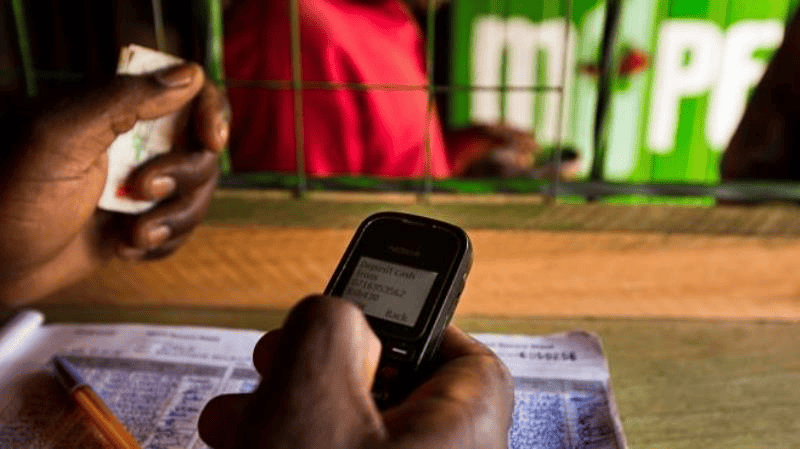
An entrepreneur in Lagos can build a product today and sign up customers in Ghana, the United Kingdom, the United States and Kenya within weeks. The internet has made finding those customers straightforward. Getting paid by them is a different matter entirely.
To move money from a customer to a business account, a founder may have to contend with multiple payment providers, currencies, banks, foreign exchange rules, compliance requirements and settlement timelines. Large companies can lean on treasury teams and finance departments. For a small internet business, it often becomes a problem the founder has to solve alone.
That challenge sits at the center of Bolu Dada's work. As co-founder of payments infrastructure company Bachs, Dada has spent years dealing with it firsthand. His previous venture, Syncgram, helped hundreds of educators and internet entrepreneurs accept payments from customers worldwide and processed more than $2 million in subscriptions, he says — an experience that reshaped his view of payments.
"The way people build businesses has changed much faster than the financial system supporting them," Dada told Technext.
His argument is straightforward: a business can operate globally from the day it launches, yet the financial system behind it remains largely organized around countries, banks and separate payment networks. "The payment experience should be much simpler," he said. "You should be able to focus on running your business, not spend so much time figuring out how your money moves."
A payment is commonly understood as the moment a customer enters card details or approves a bank transfer, but that is only the start. Behind a single transaction, several systems must work in concert: the payment has to be authorized, screened for fraud, converted into the right currency where necessary, settled and eventually made available to the business. When customer and business sit in different countries, further layers can come into play — and in Dada's view, much of the problem lies here.
For African businesses selling globally, one of the biggest challenges is not accepting a payment in the first place. It is persuading financial institutions and payment companies that the business and its transactions are safe. "Ultimately, where you're building your business shouldn't determine how much access you have to the global payment system," he said.
The risk problem is genuine: payment companies cannot simply process everything that comes their way. They must shield themselves and their customers from fraud, money laundering, stolen cards and other forms of financial crime. That creates a difficult balance — stronger controls protect the system but they can also make it harder for legitimate businesses in markets perceived as higher risk to reach global payment networks. In practice, that means two businesses running similar models can face very different access to those networks depending on where they are based — precisely the outcome Dada is arguing against.
The cost of moving money compounds the problem. According to the World Bank's 2025 data, sending $200 to Sub-Saharan Africa costs about 8.78% on average, versus 6.49% globally. The institution has also cited limited competition and weak cross-border interoperability as reasons remittances remain expensive.
For an individual sending money home, that is already frustrating. For a business receiving hundreds or thousands of payments across multiple countries, the complexity can quickly grow into a far larger financial and operational burden. Dada argues the middle of the market is especially underserved: large companies can afford treasury teams to manage currencies, liquidity and international settlements, while consumers have remittance services built specifically for cross-border transfers. But the founder running a small online business from Lagos with customers in five countries has little in between — and, in his view, should not need to become a treasury expert simply to collect revenue.
Building Bachs has taught him something he did not fully appreciate at the outset. "One of the biggest things we've realised is that we're much more of a treasury business than we initially thought," he said.
Treasury, in simple terms, is the part of a business that manages its money: where it sits, which currency it is held in, when it arrives, how it is moved and what it costs to move. For an international internet business, those questions can matter as much as the payment button itself.
Stablecoins are playing a growing role in cross-border payments, and Nigeria is a prime example. The IMF estimates Nigeria received roughly $59 billion in crypto-asset inflows between July 2023 and June 2024, with stablecoins accounting for more than 65% of the country's crypto inflows in 2024. Nigeria also represented about 60% of stablecoin inflows into Sub-Saharan Africa between late 2019 and early 2025.
To Dada, that growth explains why stablecoins have become valuable for businesses moving money across borders. "I don't know if we could build Bachs the way we're building it today without them," he said.
Traditional international transfers can pass through several banks and force businesses to juggle different currencies and liquidity. Stablecoins such as USDT and USDC — dollar-pegged tokens issued by Tether and Circle, respectively — can, by contrast, move value across blockchain networks almost instantly.
They are not a complete fix, however. The IMF says stablecoins can make cross-border payments faster and cheaper, while also creating risks around regulation, financial stability and the growing use of dollar-linked assets outside the traditional banking system.
Dada also sees room for local-currency stablecoins such as cNGN, a naira-pegged token, particularly as African businesses contend with multiple currencies and payment systems. The bigger challenge is making these systems work together. "We're still early," Dada said. "We're moving towards a financial system that's much more interoperable and programmable than what we have today." How regulators weigh those IMF-flagged risks, and whether dollar-linked and local-currency systems can work in concert, are the developments most likely to shape how quickly that more interoperable system reaches the small businesses Dada describes.
That may be the real test for the next generation of payment infrastructure: not simply moving money faster, but making it easier for businesses to move money across borders without having to understand all the machinery underneath.
Source: TechNext24 — Bolu Dada, Co-founder of Bachs, on the infrastructure problems holding back global payments

