Five Incidents Accounted for Nearly 59% of CertiK-Tracked Crypto Losses in 2026
Key Takeaways
- •Five security incidents accounted for nearly 59% of the cryptocurrency losses tracked by CertiK in 2026.
- •CertiK's data shows crypto hackers stole $2.7 billion in 2026, with losses described as alarmingly concentrated.
- •The concentration figure applies only to CertiK's own dataset, and differing tracking methodologies mean annual loss totals can vary between providers.
- •The NEAR Intents application hack demonstrated how a single exploit against one protocol can significantly influence sector-wide loss figures.
- •The SEC's proposed crypto custody rules for investment advisers and the UK's February 2027 FCA compliance deadline remain pending, signaling stricter security requirements ahead.
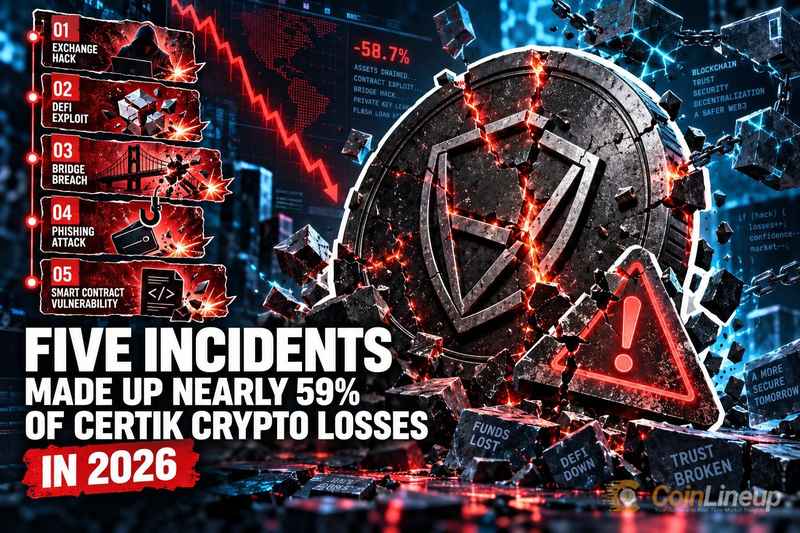
Five security incidents were responsible for nearly 59% of all cryptocurrency losses tracked by blockchain security firm CertiK in 2026. The concentration indicates that a small number of large breaches — not a steady drip of smaller attacks — shaped the year's overall damage figure.
Five incidents drove nearly 59% of CertiK-tracked losses
When only five events account for nearly three-fifths of a tracker's annual total, large individual breaches clearly carry outsized weight in the final numbers. CryptoSlate's coverage of CertiK's data reported that crypto hackers have taken $2.7 billion in 2026, with losses described as "alarmingly concentrated."
The figure warrants careful reading. CertiK-tracked losses are not the same as all crypto losses globally. The nearly 59% concentration applies to incidents within CertiK's own dataset, so the real-world picture may differ. Tracking firms also differ in which incidents they count and how they value stolen funds, which is why annual loss totals can vary between providers. Even so, the pattern is striking: a small number of severe events, rather than many small ones, determined the shape of this year's losses.
The hack of the NEAR Intents application illustrated how a single exploit against one protocol can move the needle on sector-wide loss figures. Incidents at that scale feed directly into the kind of concentration CertiK's data reflects.
Why concentrated losses matter for crypto security
A large annual loss figure grabs attention, but the distribution of that figure tells a more useful story. If losses were spread across hundreds of small incidents, the risk would be diffuse. When most losses come from five events, the risk is concentrated differently: a small number of high-value targets or high-impact vulnerabilities are responsible for the bulk of the damage.
That distinction matters for anyone evaluating a protocol or considering where to hold assets. A platform that escaped this year's five major incidents may have a meaningfully different risk profile from one that was involved, even if both appear in a broad loss-count statistic.
Regulators are paying closer attention to how loss data is categorized and reported. The SEC's proposed crypto custody rules for investment advisers and the UK's February 2027 deadline for crypto firms to meet FCA protection standards both reflect an expectation that the industry will account for security risks more systematically. Both measures remain pending — the US proposal has yet to be finalized and the UK deadline is still ahead — making them natural items to watch as security expectations move from principle to formal requirement.
What everyday crypto holders can take from this
For anyone holding crypto on an exchange or in a wallet, the concentration finding does not change basic security practices, but it offers useful context: the most severe losses of 2026 did not result from countless small attacks. They came from a small number of large events.
That points to a simple question worth asking about any platform: was it involved in one of the major incidents this year? Security audit firms like CertiK publish their findings publicly, so checking whether a protocol has been audited, and whether it was affected by a significant breach, is a reasonable step in evaluating where to hold funds.
The industry's growing focus on concentrated, high-impact threats was evident throughout the year. Understanding that annual loss totals are shaped by a few outlier events, rather than by uniform risk across the board, is one of the most practical takeaways from CertiK's 2026 data.
Source: CertiK data as reported by CryptoSlate.
Disclaimer: This article is for informational purposes only and does not constitute financial or investment advice. Cryptocurrency and digital asset markets carry significant risk. Always conduct your own research before making decisions.

