Five Fintech Tools Helping Professionals Make Smarter Financial Decisions
Key Takeaways
- •Xero and QuickBooks centralize accounting data to give businesses clearer visibility into cash flow, expenses, invoices, and other financial activity.
- •Stripe helps online businesses manage digital payments, track revenue, and reduce friction in the checkout and reconciliation process.
- •TradingView combines market data, charting, and technical indicators in one platform to support data-driven financial analysis.
- •Cannabiz Credit Association uses payment, accounts receivable, and collections data to help businesses make more informed credit decisions and monitor risk.
- •The article says the best fintech tools solve a specific financial problem, and notes that AI-assisted accounting, faster payment rails, and broader credit-intelligence use are already developing.
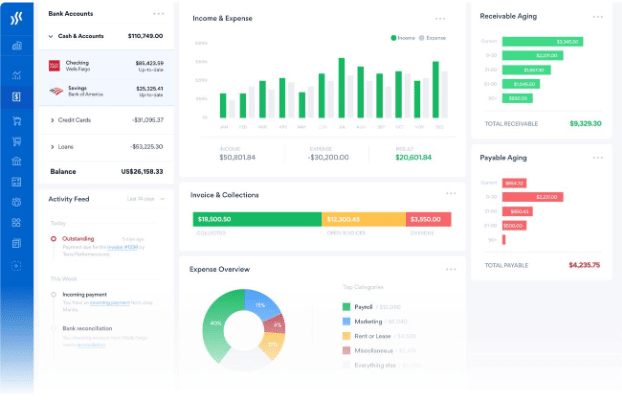
Financial technology has moved well beyond making banking more convenient. For business owners, entrepreneurs, and finance professionals, the right fintech platform can deliver clearer financial visibility, cut administrative work, simplify payments, and make it easier to act on reliable information.
The most useful tools are rarely the ones with the longest feature lists. They are the platforms that solve a specific financial problem and fit naturally into everyday workflows. From accounting and payment processing to market analysis and credit intelligence, professionals are using fintech to spend less time organizing financial information and more time making decisions with it.
Below are five fintech tools that business and finance professionals say have made a meaningful difference in how they manage money and financial information.
Xero: Creating Better Financial Visibility
Growing businesses quickly reach a point where spreadsheets and manual calculations no longer provide the financial clarity they need. Revenue may be rising, but so can operating expenses, outstanding invoices, supplier payments, and other obligations. Without an up-to-date view of those figures, confident decision-making becomes more difficult.
Cloud-based accounting platforms such as Xero address this challenge by bringing key financial information into a centralized system. Business owners can monitor transactions, expenses, invoices, and cash flow without waiting until the end of a reporting period to understand how the company is performing. Xero, founded in New Zealand in 2006, was built for the browser rather than adapted from desktop software, an approach that helped make live bank feeds and always-current records a baseline expectation in small-business accounting.
For Conrad Wang, Managing Director at EnableU, the main advantage is having greater visibility at the moment financial decisions actually need to be made.
“One fintech tool that has made a noticeable difference in how I manage business finances is Xero. Running a growing business involves much more than simply tracking income and expenses. You need a clear view of cash flow, outstanding payments, operating costs, and the company’s overall financial position. Xero makes that information far easier to access without relying entirely on spreadsheets or manual calculations.
“What I particularly value is having financial information organized in one place. Rather than waiting until the end of a reporting period to understand performance, I can review key figures and transactions as they happen. That makes it easier to identify unnecessary expenses, monitor cash flow, and make better-informed decisions.
“For a business operating across multiple services with ongoing operational expenses, that visibility can save considerable time while reducing the administrative burden of bookkeeping and reporting. The biggest benefit, though, is not simply convenience. It is having reliable financial information available when decisions need to be made. That has made managing our finances more structured, efficient, and predictable.”
This illustrates an important shift in business accounting: financial software is increasingly valuable not just as a record-keeping tool but as a source of timely information. When owners have a clearer picture of their financial position, they can respond to changing conditions earlier rather than discovering problems weeks later.
Stripe: Simplifying Digital Payments
For online businesses, accepting a payment is only one part of the financial process. Companies must also track transactions, reconcile revenue, understand payment activity, and give customers a checkout experience free of unnecessary friction.
Stripe has become one of the platforms businesses use to bring these functions together. Centralizing digital payment information makes incoming revenue easier to monitor while reducing some of the administrative work that accompanies a growing volume of transactions. Since launching in 2010, Stripe has grown into one of the most widely used payment processors for online businesses, and its transaction data can be connected directly into accounting systems such as Xero and QuickBooks, one reason payments increasingly sit inside the financial workflow rather than beside it.
Bryan Henry, President of PeterMD, says the platform has helped connect payment processing more closely with broader financial management.
“One fintech platform that has made managing business finances easier for me is Stripe. For an online business, payment processing is closely connected to cash flow, customer experience, and day-to-day financial management, so having a reliable way to accept and track digital payments can make a significant difference.
“Stripe brings payment activity into a centralized platform, making it easier to monitor transactions and track incoming revenue. Instead of treating payments as a separate administrative task, they become part of a broader financial workflow. I also value the visibility that comes with digital payment reporting. When you are managing a growing business, even small gaps in payment information can be frustrating, while having organized, accessible transaction data makes reconciliation much easier.
“The customer side also matters. Online businesses need a payment process that is straightforward for customers while remaining practical for the company behind the scenes. A smooth checkout can remove unnecessary barriers and help maintain a consistent customer experience. For me, the real value of Stripe is that it makes payments easier to manage while giving us greater visibility into one of the most important components of business cash flow.”
That combination of operational efficiency and customer convenience explains why payment technology has become such an important part of the fintech landscape. A payment platform can influence not only how a company collects revenue but also how easily its finance team understands and manages that revenue afterward.
TradingView: Supporting Data-Driven Financial Decisions
Fintech is also changing how investors and financial professionals access and interpret market information. Financial markets produce an enormous amount of data, and the challenge is often not finding information but organizing it in a way that supports useful analysis.
Platforms such as TradingView provide charting, market data, technical indicators, and monitoring tools within a single environment, reducing the need to move constantly between different sources when evaluating market conditions. TradingView also pairs its charting tools with a large community where users publish analyses, which has helped make it one of the most widely used platforms of its kind among both retail and professional market watchers.
Gerrid Smith, Chief Marketing Officer at Joy Organics, says bringing market information and analytical tools into one environment makes the platform particularly useful when following fast-moving financial markets.
“One fintech tool that has made a meaningful difference in how I approach financial decisions is TradingView. In financial markets, timely information is essential. Decisions often depend on assessing price movements, trends, and broader market conditions without constantly switching between multiple platforms.
“TradingView provides a centralized environment for monitoring markets and analyzing assets. I find the charting capabilities particularly useful because they let me examine price movements and apply different indicators when evaluating potential opportunities. What I value most is the combination of information and accessibility. Markets can move quickly, and having relevant data presented clearly makes the decision-making process more efficient.
“Of course, a platform does not replace sound judgment or proper research, but it can provide useful information to support those decisions. TradingView is also practical across different asset classes, whether you are following equities, currencies, cryptocurrencies, or other instruments. For me, the biggest benefit is having tools that help me make decisions based on data rather than reacting to market noise.”
The distinction between information and decision-making matters. No analytical platform can eliminate market risk or automatically determine the right investment. Its value comes from helping users organize information, investigate trends, and establish a more disciplined process for evaluating financial decisions.
Cannabiz Credit Association: Using Payment Data to Make Smarter Credit Decisions
Another area where fintech can have a direct financial impact is business credit management. Companies that sell to other businesses on payment terms effectively take on financial risk every time they allow a customer to pay later. The challenge grows in industries where traditional commercial credit information is limited or payment behavior can change quickly.
Credit intelligence platforms help close that information gap by giving finance teams access to actual payment and accounts receivable data. Instead of relying primarily on relationships, assumptions, or fragmented internal records, businesses can use broader payment information to evaluate prospective customers and monitor existing accounts.
Brett Gelfand, Managing Partner at Cannabiz Credit Association, says this has been particularly important in the cannabis industry, where access to conventional business credit information has historically been limited. That gap has a structural cause: because cannabis remains illegal under United States federal law, many banks and the major commercial credit bureaus have limited their engagement with state-licensed businesses, leaving companies with far less of the payment-history data that other industries take for granted.
“One fintech platform that has made a meaningful difference for us is Cannabiz Credit Association because it turns real payment behavior into information businesses can actually use when making credit decisions. One of the biggest challenges we saw in the industry was companies extending substantial credit terms to customers without having enough reliable information about whether those businesses actually paid their bills on time.
“The platform helps change that by bringing trade credit, accounts receivable, and collections data into one place. Instead of spending hours piecing together references or relying on a sales relationship and a gut feeling, a business can get a much clearer picture of payment behavior before deciding whether to extend terms. It also gives finance teams another way to monitor existing customers and spot potential warning signs before an overdue balance becomes a serious collections problem.
“For me, that is where fintech creates real financial value. The goal is not simply to digitize an existing process; it is to give businesses information they previously lacked and help them use it to protect cash flow. Preventing one significant bad debt can be worth far more than the time and resources spent trying to recover that money after the fact. Better data allows businesses to be more disciplined about credit while still supporting responsible growth.”
The broader principle applies well beyond a single industry. When companies extend payment terms, technology can help move credit management from a reactive process toward a preventive one. Identifying payment risk before an invoice becomes seriously overdue can protect working capital while allowing finance and sales teams to make more informed decisions about which customers should receive credit and on what terms.
In this sense, fintech is increasingly helping businesses answer a question that accounting software alone cannot always resolve: not simply how much money is owed, but how likely a customer is to pay it. That additional layer of financial intelligence can make credit decisions more structured and ultimately help businesses protect the cash flow behind their reported revenue.
QuickBooks: Keeping Growing Business Finances Organized
As businesses expand, the number of financial transactions they need to manage tends to increase rapidly. A company may be dealing with payroll, customer payments, supplier expenses, inventory costs, taxes, and other operating expenditures at the same time. Maintaining accurate records across those areas becomes difficult when information is scattered across spreadsheets and disconnected systems.
Accounting software such as QuickBooks reduces that fragmentation by giving companies a more consistent place to record and review financial activity. Integrations with other business systems can further reduce repetitive administrative work and keep financial records easier to maintain as transaction volumes grow. QuickBooks, made by Intuit, has been a staple of small-business accounting since the early 1990s, and it is the cloud-based QuickBooks Online version that most modern integrations now connect to.
Greg McRoberts, Founder and CMO of Verde Fulfillment USA, says this kind of organization is especially valuable in the fulfillment industry, where numerous financial activities need to be monitored at once.
“One fintech tool that has made a noticeable difference in managing our business finances is QuickBooks. For a fulfillment company, financial management can become complicated very quickly. You have inventory costs, operating expenses, customer payments, vendor relationships, payroll, and many other transactions that need to be tracked accurately.
“QuickBooks helps bring much of that information into one organized system. Instead of relying on disconnected spreadsheets or manually compiling information from different sources, we can maintain clearer records and a more consistent view of financial activity. Integration is another important advantage. When financial software connects with other business systems, it reduces repetitive administrative work, which becomes increasingly valuable as a company grows and transaction volumes increase.
“For me, the biggest benefit is visibility. Good financial management depends on knowing where money is coming from, where it is being spent, and what those numbers mean for the business’s health. Having that information readily available makes it easier to monitor expenses and make decisions based on actual financial data. QuickBooks does not need to make financial management complicated to be useful. Its value is in simplifying the fundamentals and giving business owners a clearer picture of their finances.”
For small and growing businesses in particular, that centralized view can be more valuable than any individual accounting feature. Reducing manual work also gives owners and finance teams more time to interpret the numbers rather than assemble them.
The Best Fintech Tools Solve Specific Problems
These five examples highlight how broad fintech’s practical value has become. Xero and QuickBooks help businesses create clearer financial records and visibility, Stripe simplifies digital payment management, TradingView gives market participants tools to organize and analyze financial information, and Cannabiz Credit Association demonstrates how payment data and credit intelligence can support better business credit decisions.
What these platforms have in common is that they address recognizable financial problems. Business owners want to understand cash flow without manually combining spreadsheets. Online companies need payments that are convenient for customers and manageable internally. Investors and market professionals need to filter large amounts of information into something they can actually analyze. Businesses extending payment terms need reliable information to understand customer payment behavior and manage credit risk.
Some directions worth watching are already visible in shipping products rather than remaining projections. Intuit and Xero have both been adding AI-assisted capabilities such as automated transaction categorization and cash-flow forecasting, faster payment rails such as the U.S. Federal Reserve’s FedNow service are shortening settlement times, and credit-intelligence models are extending into more industries where formal data has historically been thin.
The lesson for anyone choosing a fintech tool is therefore relatively simple: start with the financial problem rather than the technology. Identify where time is being lost, where information is difficult to access, or where financial decisions are being made without enough visibility, then look for a platform that directly improves that process.
The most valuable fintech tool is not necessarily the most sophisticated one. It is the one that makes financial information clearer, reduces unnecessary work, and helps its user make better decisions when those decisions matter.
Frequently Asked Questions
What is a fintech tool? A fintech tool is an app, software platform, or digital service that uses technology to simplify financial activities. These tools can support tasks such as accounting, payment processing, budgeting, investing, expense management, credit assessment, and financial reporting.
How can fintech tools help small businesses? Fintech tools can help small businesses automate routine financial tasks, monitor cash flow, process payments, organize accounting records, and access financial information more quickly. This can reduce administrative work while giving business owners greater visibility into their financial position.
What should businesses look for when choosing a fintech platform? Businesses should start by identifying the specific financial problem they want to solve, then consider ease of use, integrations with existing systems, security, reporting capabilities, scalability, and overall cost before selecting a platform.
Can fintech tools help businesses manage financial risk? Yes. Some fintech platforms provide payment histories, credit intelligence, transaction data, and other information that can help businesses identify potential risks. For companies extending payment terms, better access to payment data can also support more informed credit decisions.
Do fintech tools replace financial professionals? Generally, fintech tools are most useful for supporting rather than replacing professional judgment. They can automate repetitive processes and make financial information easier to access, but important accounting, investment, credit, and business decisions may still require human expertise.
Source: FinTechZoom

