More Than 90 North Dakota Banks and Credit Unions Join Fiserv's Solana-Based Roughrider Coin Rollout
Key Takeaways
- •Fiserv reports that over 90 banks and credit unions in North Dakota are participating in the rollout of Roughrider Coin, a digital currency built on the Solana blockchain.
- •The participation count represents stated rollout involvement only, as confirmed transaction volumes and completed deployments at each institution have not been verified.
- •Given North Dakota's roughly 100 state-chartered banks and numerous credit unions, the initiative would encompass a substantial portion of the state's community lending sector.
- •Roughrider Coin differs from central bank digital currencies because it is developed by a private company operating on a public blockchain rather than being issued by a government.
- •Critical details such as regulatory approval status, token design, custody, and consumer launch timing remain undisclosed, and the coin is not yet usable by bank customers.
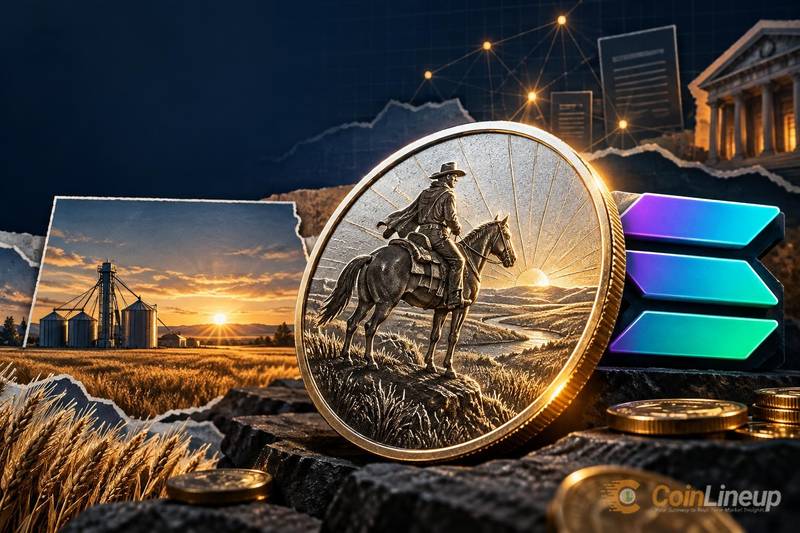
Fiserv, one of the largest financial technology companies in the United States, says more than 90 banks and credit unions across North Dakota are joining the rollout of Roughrider Coin, a digital currency built on the Solana blockchain. The announcement represents a notable step toward state-level digital currency adoption by community financial institutions.
What Fiserv Announced
According to reporting on the announcement, participation has reached more than 90 institutions spanning North Dakota, encompassing both traditional banks and credit unions — the latter being member-owned financial cooperatives.
The figure comes from Fiserv directly. It reflects reported rollout participation only, not confirmed transaction volume or completed deployment at every institution.
Why the Lender Count Matters
North Dakota has roughly 100 state-chartered banks and dozens of credit unions, meaning a rollout covering more than 90 institutions would represent a large share of the state's community lending sector. For everyday customers, that could eventually translate into access to Roughrider Coin through existing bank or credit union accounts — though Fiserv has not confirmed when, or how, customers would interact with the coin directly.
Projects of kind sit at the intersection of traditional finance and blockchain technology, a space where governments and institutions worldwide have been testing digital currency programs with varying degrees of adoption and regulatory support. Unlike central bank digital currencies issued by governments, this project is built by a private company on a public blockchain — placing it on the private-sector side of the digital currency landscape.
Why Solana Is the Named Network
Roughrider Coin is described as running on Solana, a public blockchain known for fast transaction processing and relatively low fees compared with older networks such as Ethereum. Solana serves as the underlying infrastructure, in much the same way a payment rail like Visa processes card transactions behind the scenes.
Several key details remain undisclosed at this stage: token design, how settlement between institutions would work, custody arrangements for the coin, fee structures, and whether regulators have formally approved the product for consumer use. Those specifics matter significantly for how the rollout would function in practice.
Observers should watch for official disclosures on regulatory approval status, a confirmed consumer launch date, and whether participating institutions will offer the coin to retail account holders or restrict it to interbank settlement. The broader fintech sector has seen similar announcements precede lengthy regulatory review periods before actual deployment.
For a North Dakota bank account holder, the announcement does not yet mean Roughrider Coin is available to use. Rather, it signals that a large group of local financial institutions intends to participate in the rollout, with the implications for customers still to be confirmed.
Additional source reference: source document 1.
Disclaimer: This article is for informational purposes only and does not constitute financial or investment advice. Cryptocurrency and digital asset markets carry significant risk.

