No Fork Required: Bitcoin's First Quantum-Safe Transaction Mined on Mainnet
Key Takeaways
- •Damian Chen of the Starknet Foundation demonstrated the first post-quantum-resistant Bitcoin transaction on mainnet at Bitcoin Asia in Hong Kong, achieved without any soft forks, hard forks, or core protocol upgrades.
- •The transaction employed a signature-grinding technique created by StarkWare researcher Avihu Levy, which takes hours to produce a single transfer and is positioned for security-critical institutional use rather than everyday payments.
- •The solution, branded Quantum Safe Bitcoin (QSB), introduces a new hash authorization designed to block fraudulent transfers even if an attacker obtains an exposed public key or derives the private key.
- •Because ordinary Bitcoin nodes do not recognize the non-standard transaction format, mining firm MARA's Slipstream service—launched in 2025 for non-standard transactions—submitted it directly and mined it.
- •Galaxy Research estimated in 2024 that roughly four million bitcoin sits in quantum-vulnerable addresses, while draft proposals such as BIP-360 seek quantum-resistant addresses through a consensus-level soft fork.
Should fund managers dealing in Bitcoin be worried about the threat of quantum computing? The short answer is yes — but there is time to prepare, and solutions are already being found. One of them is post-quantum Bitcoin transactions on the mainnet, and the first one happened this week thanks to the Starknet Foundation.
JUST IN: The first post-quantum resistant Bitcoin transaction was mined today. "It required no soft forks. It required no hard forks. It required no core protocol upgrades. And it's live today." pic.twitter.com/YyZbHhm8HI
— Bitcoin Magazine (@BitcoinMagazine) August 27, 2026
https://x.com/BitcoinMagazine/status/2092846329424925077?ref_src=twsrc%5Etfw
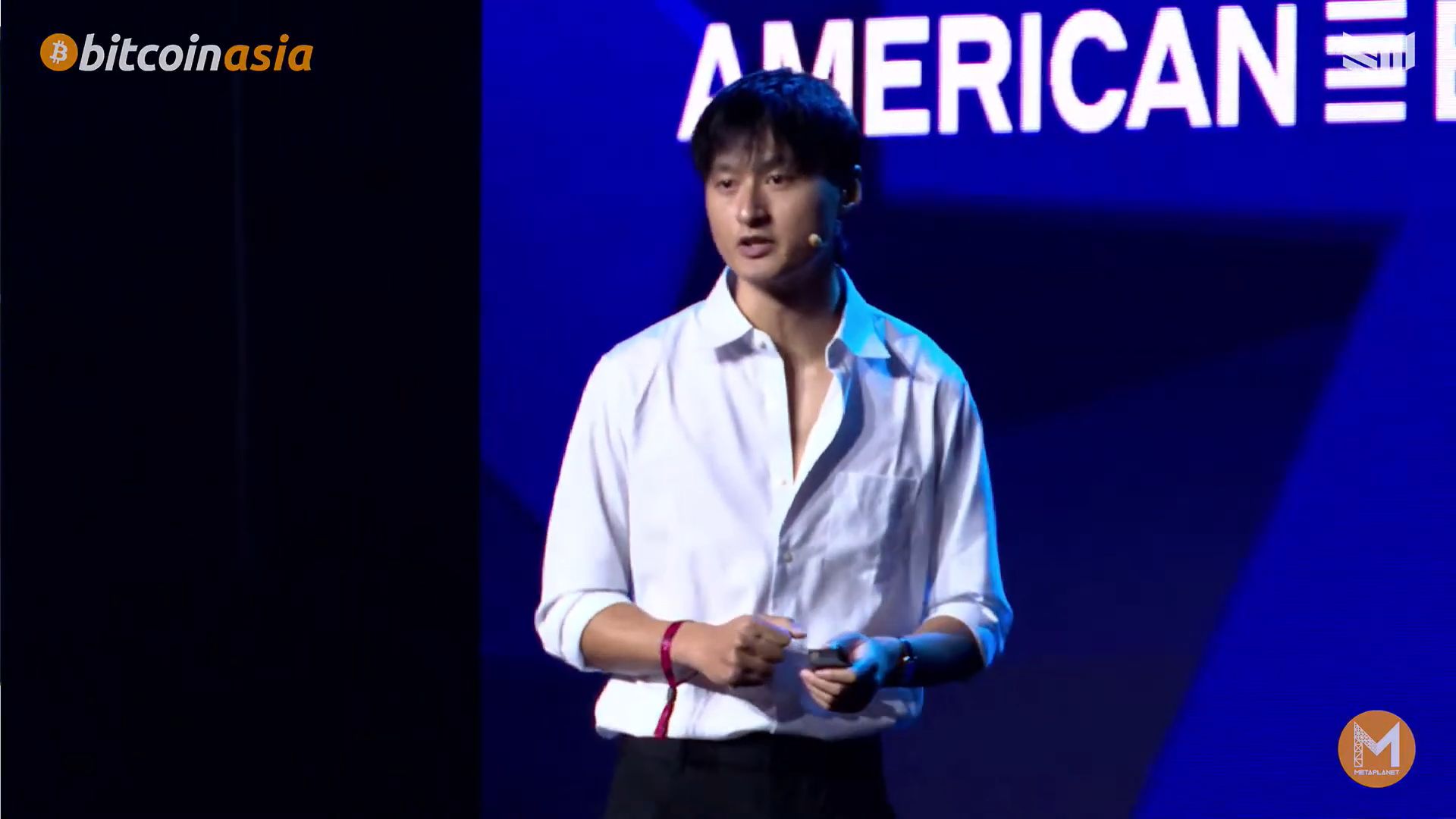
Speaking at Bitcoin Asia in Hong Kong on Thursday, Damian Chen, VP of growth at the Starknet Foundation, demonstrated how funds vulnerable to future quantum attacks can be secured without requiring a network-wide fork, thanks to the company's latest solution.
"This is a monumental moment," Chen said. "This is the first post-quantum-resistant Bitcoin transaction on bitcoin mainnet today. It required no soft forks; it required no hard forks; it required no core protocol upgrades, and it's live today."
The transaction was executed using a method created by StarkWare researcher Avihu Levy. Bitcoin transactions sit briefly in a public queue before confirmation, and during that window they expose cryptographic material that a sufficiently powerful quantum computer could use to forge a signature and steal the funds before the transaction is confirmed. The underlying concern is not new: mathematician Peter Shor showed in 1994 that a large-scale quantum computer could break the elliptic-curve math behind digital signatures like Bitcoin's ECDSA, which is why any exposed public key — whether in a pending transaction or an older address format — is treated as raw material for a future attack. Rather than accepting the first valid signature, Levy's method generates millions of signature candidates until it finds one with a specific structural property that does not expose the vulnerable material while waiting in the mempool.
This "signature grinding" is deliberately computationally expensive — a single transaction takes hours to produce — but that cost is precisely what makes it resistant to quantum shortcuts. For now, that trade-off positions the technique as a tool for security-critical transfers rather than everyday payments, matching the institutional audience Chen was addressing.
Touting Quantum Safe Bitcoin transactions — dubbed "QSB" — to institutions, Chen said that even if attackers have a fund's private keys, they could not make a fraudulent transfer.
"QSB introduces a new hash authorization, and so an attacker with a sufficiently capable computer, even if they have your exposed public key, even if they derive your private key from your public key, even if they try to use that to authorize a spend to move your coins out of your wallet, those things are not enough for them to do so," he said.
Ordinary Bitcoin nodes currently do not recognize this non-standard transaction format, so it could not enter the public mempool. Instead, it had to be handed straight to a miner willing to accept it — and mining company MARA's Slipstream service was the one that mined the QSB transaction. MARA launched Slipstream in 2025 precisely so that oversized and non-standard transactions can bypass the public mempool and be submitted directly to its pools.
Quantum researchers have warned that a time will come when Bitcoin's software — which underpins the biggest and strongest computer network in the world — will need to be upgraded to deal with quantum computing. The potential exposure is significant: Galaxy Research estimated in 2024 that roughly four million bitcoin — including long-dormant coins from the network's earliest days — sits in quantum-vulnerable addresses, largely older formats and reused addresses whose public keys are already visible on-chain. Migration is already under way outside crypto, with the US National Institute of Standards and Technology finalizing its first post-quantum cryptography standards in August 2024. While some crypto VC firms have urged action, top Bitcoin developers have argued that many of today's quantum computers have limited capabilities and have only demonstrated trivial computations. Still, they have noted that their development could arrive unexpectedly — just like advances with artificial intelligence — and have started developing some solutions, including draft soft-fork proposals such as BIP-360 that would introduce quantum-resistant addresses; StarkWare's pitch is that its protection requires no such consensus-level change at all.
Chen added: "The question to me has never been when will quantum arrive. We all know quantum will arrive at one stage, but the question to me has always been, how long will it take for you to be ready when quantum does arrive?"
This article is based on reporting by Mathew Di Salvo, originally published by Bitcoin Magazine.
