US Treasury Cuts MEXC Off From US Financial System Over $16 Billion in Illicit Transactions
Key Takeaways
- •FinCEN's order prohibits US financial institutions from processing funds transfers to or from MEXC in either direction, with the restriction taking effect 30 days after publication in the Federal Register.
- •Treasury attributed at least $16 billion in illicit-linked transactions on MEXC between May 2021 and May 2026, including nearly $1.5 billion connected to Russian sanctions evasion and roughly $1 billion in transfers involving more than 40 Iranian crypto exchanges.
- •Despite Garantex's April 2022 sanctions designation, MEXC reportedly kept handling transactions involving the Russian exchange and its successor Grinex through June 2026.
- •FinCEN said deficiencies in MEXC's anti-money laundering controls allowed prohibited transactions to continue even though the exchange's stated policies ban activity involving sanctioned jurisdictions.
- •The measure is part of Operation Economic Outcast, a Treasury campaign launched in August targeting networks supporting Iran's sanctions evasion, and financial institutions that violate it could face civil or criminal penalties.
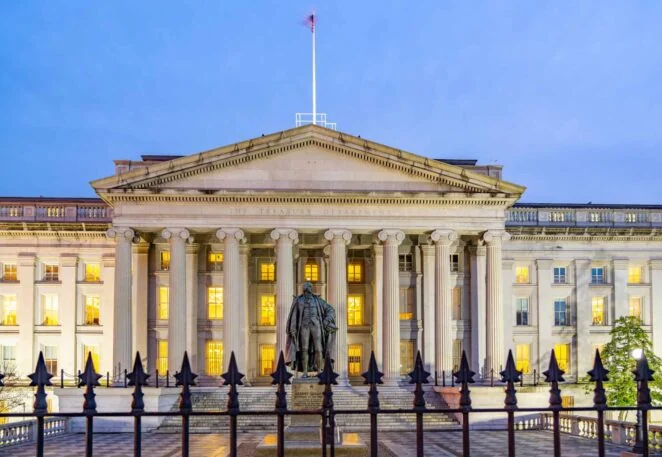
The US Treasury Department announced Friday that its Financial Crimes Enforcement Network (FinCEN) has issued an order effectively cutting off crypto exchange MEXC Global from the US financial system, citing at least $16 billion in transactions linked to illicit activity, according to the Treasury announcement.
The order prohibits US financial institutions from processing funds transfers to or from MEXC in either direction. Treasury said the move follows findings that the exchange facilitated transactions connected to Iranian, Russian, and North Korean sanctions evasion, as well as cybercrime and other illicit activity. The restriction will not take effect immediately. The measure applies to the US financial system; the announcement does not describe it as a global shutdown of MEXC.
According to Treasury, MEXC processed at least $16 billion in transactions associated with illicit finance between May 2021 and May 2026. That total includes nearly $1.5 billion linked to Russian sanctions evasion, among it $232 million in direct transactions with entities sanctioned by the United States, the European Union, and the United Kingdom.
Continued ties to sanctioned Russian platforms
Treasury said MEXC continued processing transactions involving sanctioned Russian exchange Garantex and its successor Grinex as recently as June 2026, even though Garantex was sanctioned in April 2022. The exchange also facilitated at least $26 million in transactions benefiting the sanctioned A7 network and nearly $200 million connected to A7A5, a stablecoin the network used to facilitate sanctions evasion, according to Treasury.
Iranian exchanges and the IRGC
Iranian activity accounted for another significant portion of the transactions identified by FinCEN. Between May 2021 and May 2026, MEXC sent or received approximately $1 billion in direct transfers involving more than 40 Iranian crypto exchanges, some of which are themselves subject to international sanctions. Treasury also identified approximately $22 million in transactions benefiting Iran's central bank and the Islamic Revolutionary Guard Corps, including its Qods Force.
FinCEN said that although MEXC's stated policies prohibit activity involving sanctioned jurisdictions, deficiencies in the exchange's anti-money laundering controls allowed prohibited transactions to continue.
The action forms part of Operation Economic Outcast, a Treasury campaign launched in August that targets financial networks supporting Iran and its sanctions evasion activities. The order was issued under Section 9714(a) of the Combating Russian Money Laundering Act and will take effect 30 days after its publication in the Federal Register. Financial institutions that violate the restrictions could face civil or criminal penalties. Publication in the Federal Register and the ensuing 30-day period are therefore the next formal milestones before the restriction becomes effective.
The action lands while MEXC remains one of the larger venues in digital asset trading. As of September, the exchange processed more than $1 billion in daily trading volume and maintained approximately $5 billion in reserves, according to Treasury, and it offered access to more than 3,000 cryptocurrencies and tokenized assets.

