Fidelity Strategist Jurrien Timmer Stays Bullish as Bitcoin Dips Below $58,000
Key Takeaways
- •Jurrien Timmer, Fidelity's director of global macro, maintained his bullish bitcoin stance on Nov. 20 even after the price dropped below $58,000.
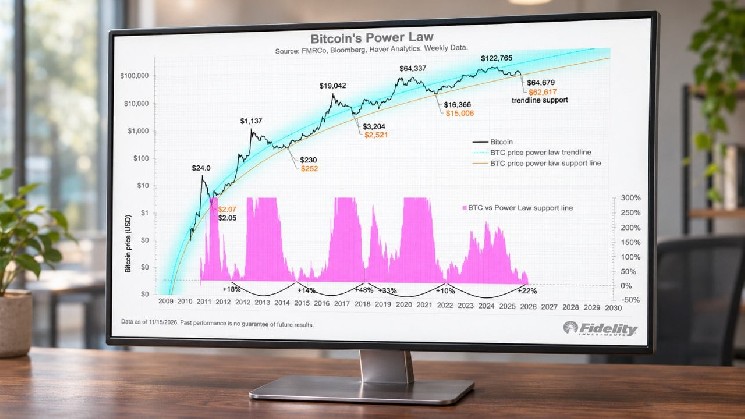
- •His outlook rests on bitcoin's four-year cycle and a Power Law model that estimates support near $62,000, a level he describes as rising.
- •Bitcoin lost nearly $3,000 within an hour on Nov. 20, sliding to about $57,960 — roughly 7.4% below the support level on Timmer's Nov. 15 chart — and was down more than 13% over seven days.
- •Timmer warned that a sustained decline well below the rising support line would cast doubt on his entire analytical framework.
- •Fidelity Digital Assets analyst Zack Wainwright concluded in January 2026 that the four-year cycle may no longer apply, after recording 17 occasions of new one-year volatility lows following bitcoin's October 2025 peak above $126,000.
Fidelity Strategist Jurrien Timmer Stays Bullish as Bitcoin Dips Below $58,000
Jurrien Timmer, Fidelity Investments’ director of global macro, reaffirmed his bullish outlook on bitcoin after the cryptocurrency dropped below $58,000 on Nov. 20. Writing on X, the strategist pointed to his long-standing valuation models even as the price slid toward a key support curve.
“I remain bullish on bitcoin based on its four-year cycle and Power Law math, but it’s a bit disheartening that we are back again sitting on that power law support curve,” Timmer wrote.
A power law describes a relationship in which doubling one quantity multiplies another by a fixed factor. Timmer applies that relationship to bitcoin’s age and price, and the lower curve on his chart estimates where the price may find support as the network ages.
How Far Below Support Would Bitcoin Have to Fall?
Timmer’s weekly chart placed bitcoin at $64,679 on Nov. 15, above the model’s $62,617 support line. Five days later, the strategist put support near $62,000 and described the level as rising. He did not specify a price or percentage decline that would change his view, though he identified a threshold for his framework.
“If bitcoin’s price were to ever fall well below this support line (currently at $62k and rising), it would put my entire framework in doubt. Never a dull moment!” Timmer added.
Bitcoin Dipped Below $58,000 on Nov. 20
Bitcoin had traded above $61,000 earlier on Nov. 20 before losing nearly $3,000 between 11 a.m. and noon Eastern. The slide later extended to about $57,960, roughly 7.4% below the support level shown on Timmer’s Nov. 15 chart. As of 8:46 p.m. Eastern, bitcoin was down about 5% over 24 hours and more than 13% over seven days.
The strategist has previously flagged turning points with his models. In February, he identified an attractive entry point near $65,000. Bitcoin subsequently touched about $57,800 in late June before recovering over the summer, and by September it was back near $80,000. At that stage, Timmer saw a possible path to $100,000 after bitcoin formed two lows, with the projection dependent on a breakout above $80,000.
Does Bitcoin Still Follow a Four-Year Cycle?
Timmer also drew on the historical pattern of bitcoin’s market peaks and downturns. Under the bitcoin halving schedule, the network cuts the amount of new bitcoin miners receive per block in half every 210,000 blocks — an interval that, at the protocol’s roughly 10-minute block target, works out to about four years and is where the cycle takes its name.
Fidelity Digital Assets analyst Zack Wainwright examined the four-year market cycle in February and found that bitcoin’s volatility had declined even as its price climbed above $126,000 in October 2025. Earlier peaks typically coincided with widening price swings.
In January 2026, just months after that record, Wainwright counted 17 occasions when bitcoin’s volatility over the preceding year reached a new low. He concluded that the familiar four-year pattern may no longer apply.
The upshot is a visible divergence in views within one firm: Timmer’s power-law and cycle models still frame bitcoin as sitting on long-term model support, while Fidelity Digital Assets’ own research suggests the calendar-based rhythm his outlook leans on may be fading. Which reading holds may come down to whether bitcoin stays near, or falls well below, the rising support curve Timmer’s framework needs to defend.

