Legal scholars say lower federal courts formed 'last line of defense' against Trump's midterm election interference
Key Takeaways
- •Two legal scholars writing in The Hill concluded that President Trump's efforts to shape the midterm elections were largely unsuccessful because lower federal courts repeatedly blocked his actions.
- •Federal judges nominated by presidents from both parties, including Trump himself, have thwarted his election-related interventions at least 34 times.
- •The Justice Department has lost all 28 of its lawsuits demanding that states hand over complete voter rolls to the federal government.
- •The scholars pointed to the 2010 Citizens United ruling and this year's Louisiana v. Callais decision as Supreme Court actions that loosened campaign finance limits and gutted key provisions of the Voting Rights Act.
- •Wippman and Altschuler called on congressional Democrats to use their new majorities to curb partisan gerrymandering, strengthen the Voting Rights Act, and regulate undisclosed political spending.
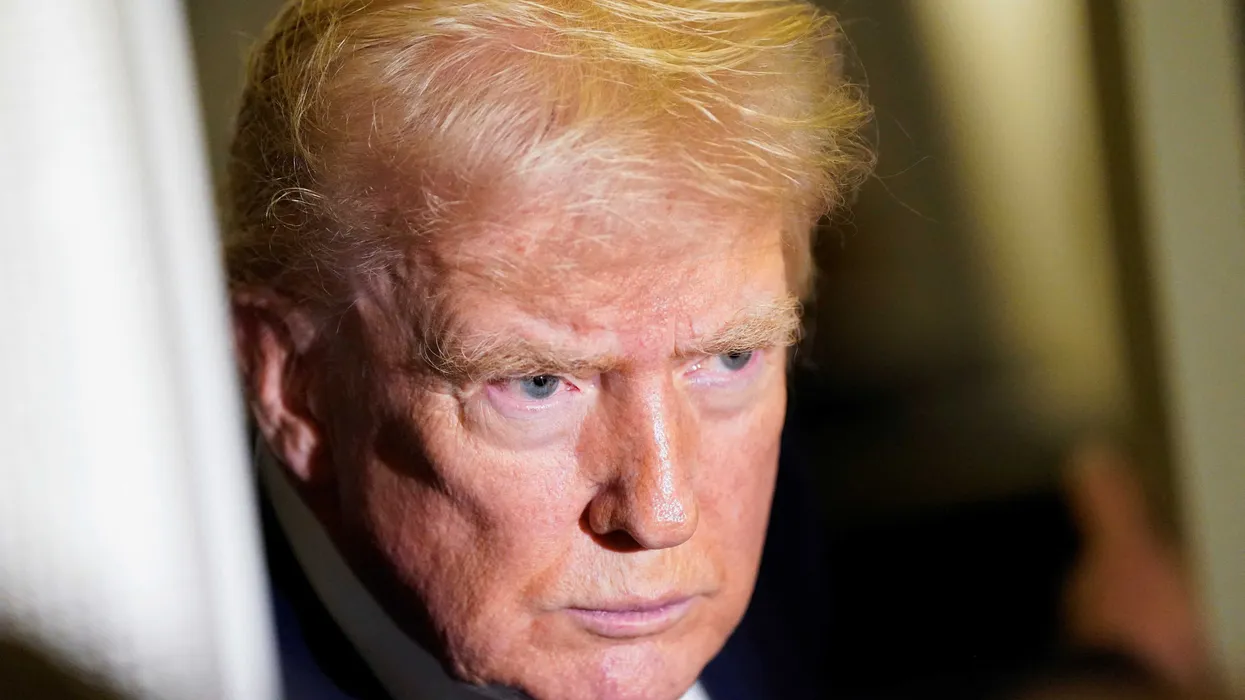
President Donald Trump's efforts to "put his thumb on the scale" of this year's midterm elections were largely unsuccessful, according to two legal scholars writing for The Hill, with one specific "last line of defense" — the lower federal courts — holding up against attempts to subvert democracy.
In a piece published Sunday, legal scholar David Wippman and historian Glenn C. Altschuler traced how the Supreme Court has, over recent decades, helped reshape elections in ways that make them less likely to reflect the will of voters. Pointing to developments dating back to 2010, they cited the 2010 Citizens United v. Federal Election Commission ruling, which uncapped the amount of money that corporations could give to politicians, and this year's decision in Louisiana v. Callais, which gutted key provisions of the Voting Rights Act, the landmark 1965 civil rights law.
Yet even as the scholars described that erosion at the highest level of the judiciary, they noted that lower courts have "repeatedly stood in [Trump's] way."
"Emboldened, no doubt, by these decisions, Trump has ignored the provision in the U.S. Constitution, which authorizes the states — not the president — to set the time, place and manner of elections, subject to laws enacted by Congress, and has repeatedly sought to impose federal control over voter registration, ballot distribution, and vote counting," they wrote. "He has been thwarted at least 34 times by federal judges appointed by both Democratic and Republican presidents, including his own. And Trump's Department of Justice is zero for 28 in lawsuits demanding that states provide complete voter rolls to the federal government, which critics believe the administration intended to use to compile its own list of eligible voters." That constitutional provision is the Elections Clause, found in Article I, Section 4 of the Constitution. The judges behind those rulings sit on the district courts — the federal trial courts where most election litigation begins — and reach the bench through presidential nomination and Senate confirmation.
They added further: "In several decisions, judges could not be clearer about the significance of federal intervention in elections. As the U.S. District Court for the Central District of California warned this year in U.S. v. Weber, 'the taking of democracy does not occur in one fell swoop; it is chipped away piece-by-piece until there is nothing left.' The Constitution states, unequivocally, that only states and Congress have the power to regulate elections. The executive branch may enforce election laws but cannot override them. Federal judges enforced that distinction when it mattered most. Those judges deserve our gratitude."
Wippman and Altschuler cautioned, however, that "democracy should not depend on the willingness of individual judges to resist presidential pressure based on unfounded allegations of fraud." Looking ahead, they argued that Democrats in Congress must act with their new majorities to fix the holes in the system, including efforts to rein in "partisan gerrymandering, strengthen the Voting Rights Act, and regulate the flood of dark money into politics, even if some reforms may not be possible until a new president is elected or new justices join the Supreme Court." Partisan gerrymandering refers to the drawing of electoral maps to favor one political party, while "dark money" generally describes political spending by groups that do not disclose their donors. Under the legislative process, measures like those would need to pass both chambers of Congress and receive a president's signature to become law.

