Fed Chair Kevin Warsh Reaffirms 'Firm and Fixed' 2% Inflation Target as Officials Favor Patience on Rates
Key Takeaways
- •Kevin Warsh stated that price stability is the Federal Reserve's top priority and characterized the 2% PCE inflation target as firm and fixed.
- •A good majority of Federal Reserve officials preferred to wait rather than adjust interest rates at the July meeting.
- •The Federal Reserve has long favored the PCE price index over the Consumer Price Index because it covers a broader range of household spending.
- •Warsh's comments do not rule out future rate adjustments, which will depend on policymakers' assessment of economic and inflation conditions.
- •Market observers track FOMC statements and minutes, the Summary of Economic Projections, and monthly PCE and CPI reports for signals on the direction of monetary policy.
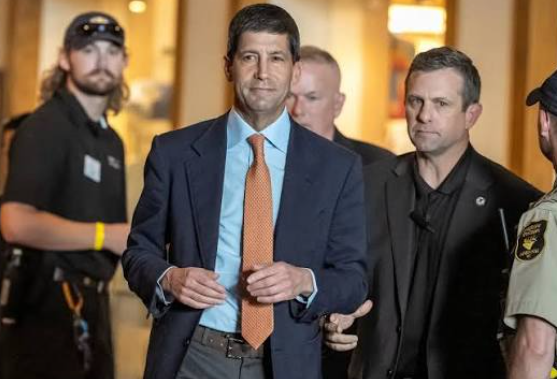
Federal Reserve Chair Kevin Warsh said price stability remains the central bank's top priority, reaffirming the 2% target for personal consumption expenditures (PCE) inflation as "firm and fixed," according to an update shared by @coinbureau on X. Warsh added that a "good majority" of Federal Reserve officials favored waiting before making changes to interest rates at the July meeting.
The remarks underscore the Federal Reserve's continued focus on inflation risks as policymakers assess the appropriate path for monetary policy. While shifting economic conditions can require adjustments to interest rates, the latest comments indicate that controlling inflation remains a key consideration in decisions over whether and when to change borrowing costs.
Warsh Places Price Stability at the Center of Policy
Warsh's comments positioned price stability at the core of the Federal Reserve's policy considerations. The central bank operates under a dual mandate from Congress that includes maximum employment as well as stable prices, and its 2% PCE inflation target serves as the key benchmark for the price-stability side of that mandate. By describing the 2% target as "firm and fixed," Warsh reaffirmed the importance the Federal Reserve places on keeping inflation aligned with that objective.
The PCE price index is closely watched by the Federal Reserve when it assesses inflation. Published by the Commerce Department's Bureau of Economic Analysis, it measures changes in the prices paid by consumers for goods and services, and the Fed has long favored it over the Consumer Price Index because it covers a broader range of household spending and captures shifts in what consumers buy when relative prices change. Warsh's remarks indicate that inflation remains a significant consideration even as officials evaluate broader economic conditions and the appropriate level of interest rates.
Officials Favored Waiting on Rate Changes
Warsh also said that a "good majority" of officials favored waiting before changing rates at the July meeting. The comment offers insight into the discussion among Federal Open Market Committee (FOMC) policymakers regarding the timing of monetary-policy adjustments. Rather than moving rates immediately, most officials at the July meeting reportedly preferred to wait and assess incoming economic information.
Interest-rate decisions are closely linked to inflation conditions because changes in borrowing costs can influence consumer spending, business investment, and broader economic activity. The FOMC sets the target range for the federal funds rate — the overnight rate at which banks lend to one another — at eight regularly scheduled meetings each year, and that rate feeds into a wide range of consumer and business borrowing costs, from mortgages and auto loans to credit cards and corporate credit. Policymakers therefore weigh inflation developments alongside other economic indicators when determining whether monetary policy should become tighter or more accommodative. The statement that a "good majority" favored waiting indicates substantial support among officials for maintaining the existing approach at that meeting.
Inflation Risk Remains a Key Policy Consideration
Warsh's emphasis on inflation risk highlights the challenge facing the Federal Reserve as it considers future rate decisions. Inflation can influence household purchasing power and business costs, while persistent price increases can complicate efforts by central banks to maintain stable economic conditions. Keeping inflation near the Federal Reserve's 2% objective is therefore an important part of the institution's monetary-policy framework.
By reiterating the 2% PCE target, Warsh reinforced the benchmark that policymakers use when evaluating inflation performance. His comments also suggest that concerns about inflation remain relevant to discussions surrounding future changes in interest rates.
The Federal Reserve's approach requires policymakers to assess whether economic conditions are consistent with continued progress toward price stability. Waiting before changing rates can allow officials to evaluate additional economic information before determining whether an adjustment is appropriate.
What the July Meeting Signals for Monetary Policy
The comments about the July meeting provide additional context for how Federal Reserve officials approached the question of rate changes. According to Warsh, a "good majority" of officials supported waiting rather than changing rates at that meeting. The statement does not indicate that policymakers have ruled out future adjustments, but it reflects the preference expressed by most officials at that point.
The emphasis on inflation also indicates that price stability remains an important factor in the Federal Reserve's assessment of monetary policy. Any future decision to change rates will depend on policymakers' evaluation of economic and inflation conditions.
For financial markets, statements from senior Federal Reserve officials can influence expectations about the future direction of monetary policy. Warsh's remarks provide a clear indication that the 2% PCE inflation target remains unchanged and that inflation risks continue to receive significant attention. Market observers typically track a set of scheduled releases for further signals, including the FOMC's post-meeting statements and minutes, its Summary of Economic Projections, and the monthly PCE and CPI inflation reports — each providing a reading on whether conditions are moving toward or away from the Fed's stated goal.
Source: Hokanews

