Fed Rate Hike Bets Rise After Brent Crude Briefly Tops $100
Key Takeaways
- •Futures markets now assign a 38% probability to a quarter-point Federal Reserve rate increase on July 29, up significantly from 13% one week earlier.
- •Brent crude settled above $100 per barrel on Thursday after a 7% session gain, leaving the benchmark roughly 25% above its level at the June Fed meeting, before easing to near $96.78 on Friday.
- •The two-year Treasury yield reached 4.37% on July 23, its highest level since early 2025, while the ten-year yield approached 4.7%, increasing borrowing costs across the economy.
- •Bitcoin traded near $64,000 during a volatile week as rising yields and diminished expectations for easier liquidity reduced the appeal of non-yielding risk assets.
- •The next PCE inflation report is scheduled for July 30, one day after the Fed's policy decision, meaning officials will not have that data available when voting.
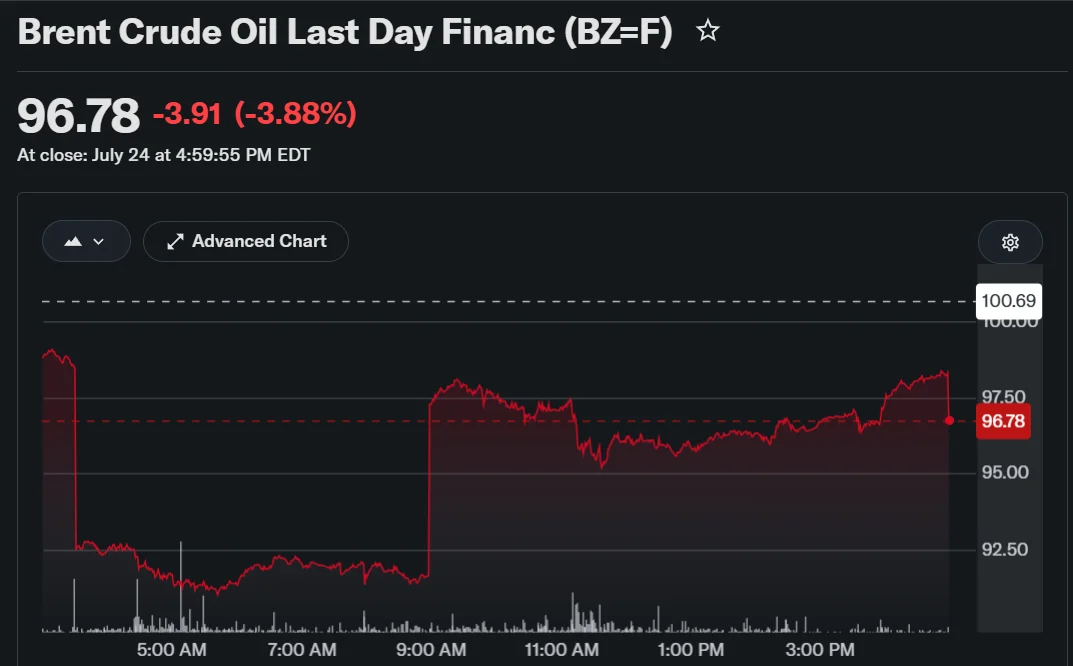
Market expectations for a Federal Reserve rate increase have risen sharply after Brent crude briefly climbed above $100 a barrel, reviving concerns that higher energy costs could keep inflation elevated. The move reversed earlier confidence that policymakers were more likely to cut rates in the near term.
Futures markets now price a 38% probability of a quarter-point rate increase on July 29, compared with 13% a week earlier. The repricing followed renewed supply concerns tied to the Iran conflict and risks to shipping through major Middle East routes, including the Strait of Hormuz, through which roughly a fifth of global daily oil consumption transits.
The rise in oil prices has also pushed Treasury yields higher and tightened financial conditions across global markets. Bitcoin traded near $64,000 during a volatile week as investors reassessed exposure to risk assets ahead of the next scheduled Federal Open Market Committee policy decision.
Oil Prices Add Pressure to Inflation Outlook
Brent crude settled above $100 on Thursday after rising 7% during the session. West Texas Intermediate also moved above $92 as traders priced in the possibility of supply disruptions. Brent's move left the benchmark about 25% above where it stood at the June Fed meeting.
Higher fuel costs can quickly feed into transportation, manufacturing, and household budgets, complicating the inflation outlook for policymakers. Gasoline prices, among the most visible costs consumers face, tend to move closely with crude oil, meaning sustained increases can shift inflation expectations. The latest data has provided mixed signals. June consumer prices fell 0.4% from May, while annual inflation slowed to 3.5%. Core inflation remained at 2.6%, supporting the case among some officials for a patient approach.
However, the Fed's preferred inflation gauge has been less reassuring. May PCE inflation reached 4.1%, while core PCE stood at 3.4%. Both measures remain well above the central bank's 2% target.
The Federal Reserve left its federal funds target range unchanged at 3.5% to 3.75% in June. In its statement, the central bank said inflation remained elevated in part because of supply shocks, including energy. A rate increase next week would raise the range by 25 basis points and would represent a swift response to renewed inflation pressure.
Treasury markets have already reflected the changing policy outlook. The two-year Treasury yield reached 4.37% on July 23, its highest level since early 2025. The ten-year yield approached 4.7%, increasing borrowing costs for companies and households. Higher Treasury yields can weigh on equity valuations, mortgage rates, and speculative assets.
CME said trading in federal funds futures was 50% higher than before the comparable July 2025 decision. The increased volume reflects uncertainty over whether policymakers will respond immediately or wait for additional inflation evidence.
Higher Yields Weigh on Bitcoin and Risk Assets
Bitcoin has faced a tougher market backdrop as yields have risen and expectations for easier liquidity have weakened. The asset traded near $63,993 on July 25 after moving between roughly $63,700 and $65,055.
A Federal Reserve rate hike could increase demand for cash and government bonds, which offer income without Bitcoin's price volatility. Higher yields also make non-yielding risk assets less attractive by comparison, adding pressure across parts of the crypto market.
The oil shock presents a policy challenge that interest rates cannot directly resolve. Higher borrowing costs may curb demand, but they cannot restore disrupted crude supply. That distinction matters because supply-driven price pressures tend to ease only when the underlying disruption resolves, potentially leaving the Fed to weigh whether tighter policy helps or compounds the drag on growth. That trade-off has increased recession concerns if energy prices remain elevated while credit conditions continue to tighten.
As a result, investors are monitoring both inflation data and geopolitical developments. Fed officials appear divided ahead of the July 28 and 29 meeting. Some policymakers have argued that inflation requires faster action, while others favor waiting until September for more evidence on prices and economic activity.
That split has left markets sensitive to oil price moves, public comments from officials, and new inflation readings. The next PCE report is scheduled for July 30, one day after the Fed decision, meaning policymakers will not have that data before voting.
Instead, officials must assess June CPI, May PCE, energy markets, tariffs, services inflation, and labor conditions. The limited information available before the meeting increases the possibility of a divided committee.
Oil prices eased below $100 on Friday, though Brent still ended near $96.78. A sustained retreat could reduce immediate pressure for a Federal Reserve rate hike, while another supply disruption could quickly reverse that relief. Markets are expected to keep watching the Strait of Hormuz, Red Sea shipping, Treasury yields, and Fed guidance through Wednesday.

