Wall Street Sees Rate Hike Likely After Blowout Jobs Report, as Fed Decision Looms
Key Takeaways
- •The US economy added 162,000 jobs last month, exceeding economists' expectations and signaling labor market strength that complicates the Fed's inflation fight.
- •Macquarie analysts moved their expected rate hike forward from December to September, while Polymarket bettors price a 53% chance of a hike at the Fed's September 15-16 meeting.
- •The Trump administration is pressuring the Fed to lower rates, threatening a trade embargo, echoing 1960s-70s episodes of political interference linked to entrenched inflation.
- •Fed Governor Christopher Waller signaled support for holding rates steady if the upcoming inflation report shows prices easing.
- •Heavy AI-related capital spending and rising Treasury issuance are increasing corporate borrowing demand and tightening conditions for rate-sensitive buyers.
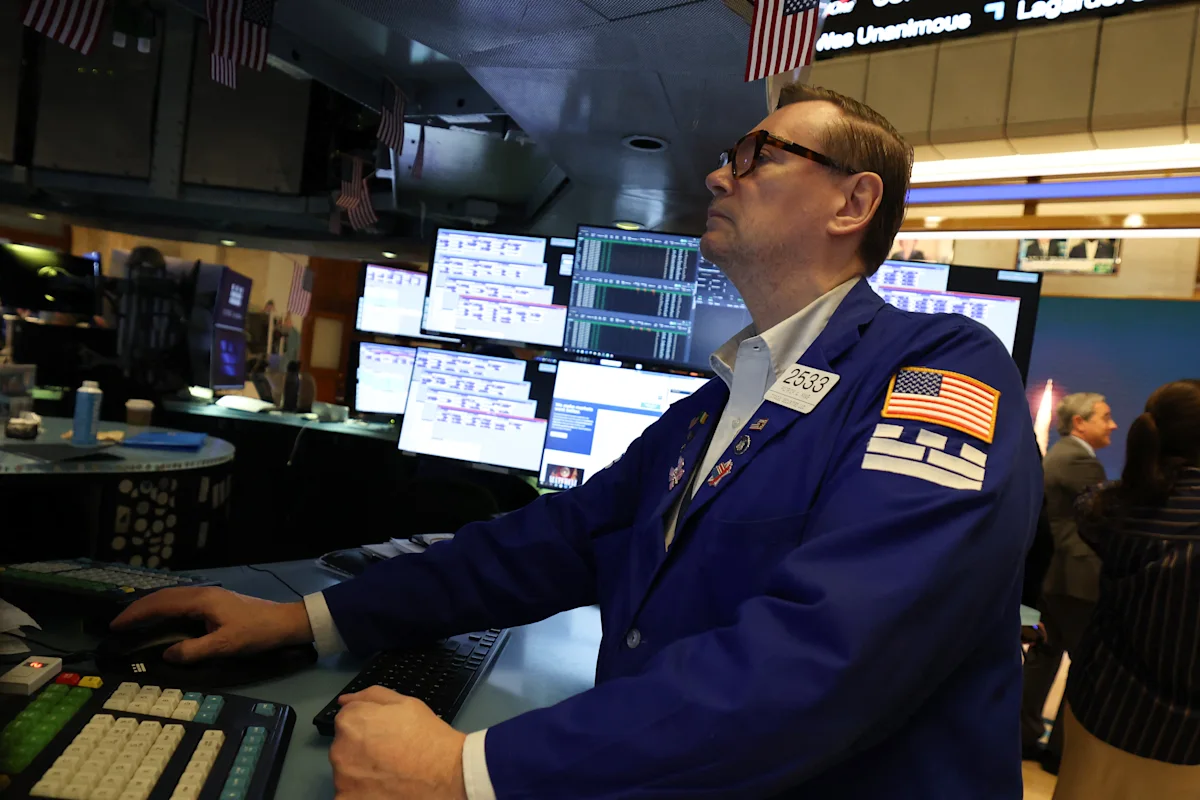
Wall Street is interpreting a blowout jobs report and spiking Treasury yields as yet another signal that the Federal Reserve will have to raise interest rates in order to rein in inflation.
The US economy added 162,000 jobs last month, blowing past economists' expectations. If the Fed was searching for evidence of a slowing economy, this report offered none. A strong labor market typically keeps wage and spending pressure elevated, complicating the central bank's effort to cool inflation—the very dynamic that has made employment data a focal point for Fed watchers in recent years.
"They're a little bit behind the curve," Joe Brusuelas, chief economist at RSM, told Yahoo Finance, referring to the central bank. "They're going to need to hike rates if they want to reinforce their credibility, and that's going to cause a lot of problems at 1600 Pennsylvania Avenue."
The Trump administration has been pushing aggressively for lower rates to bring down borrowing costs and flatten the yield curve, with the president threatening a trade embargo if the Fed does not comply. The standoff echoes past episodes of presidential pressure on the Fed—most notably during the late 1960s and 1970s, when political interference in monetary policy is widely credited by economists with contributing to entrenched inflation that took a severe recession to unwind.
Fed Chairman Kevin Warsh has remained silent on forward guidance, although his speech at Jackson Hole last month was widely viewed as hawkish. On the final day before the Fed's communication blackout period ahead of its next policy meeting, Fed Governor Christopher Waller signaled support for holding rates steady if next week's inflation report shows prices easing. The Fed's blackout period, which bars officials from public commentary in the days before a meeting, adds to the weight markets place on any late remarks.
"I think we are leaning into the direction of a Fed hike," R.J. Gallo, chief investment officer for global fixed income at Federated Hermes, told Yahoo Finance. Gallo believes a hike would appease short-term bond buyers, while demand at the long end of the curve could rise as the Fed tackles inflation.
"[Warsh] can satisfy markets by hiking [short-term] rates, and if long yields come down, which I think they might, he gets the pressure off him from the political side," Gallo added.
On Friday, Macquarie analysts moved their rate-hike expectation forward from December to September, with a second hike anticipated in the first quarter of 2027. Polymarket bettors have priced in a 53% chance of a rate hike versus a 48% chance of a hold at the Fed's Sept. 15-16 meeting. The next inflation print, due before the meeting, is now the key data point markets are watching.
The open question on Wall Street is what happens if a hike fails to bring down long-end yields. Rising inflation driven by higher oil prices, record-high debt, and increasing auction sizes have led investors to demand a higher term premium on the debt they purchase. A recent US Treasury announcement of increased bond buybacks eased yields for roughly a day before they climbed again, and an intervention to support Japan's currency—undertaken in exchange for Japan not selling its bonds—did little to stop the rise in the long end of the curve. Japan is among the largest foreign holders of US Treasuries, which is why its currency interventions and holdings decisions carry outsized weight in the Treasury market.
"The position of the United States as a borrower is just not quite what it was," Gallo said.
The bond market turmoil is unfolding alongside a surging AI trade, with Nvidia (NVDA) nearing all-time highs and reports that AI developer Anthropic (ANTH.PVT) is preparing to go public. The combination matters for credit markets: heavy AI-related capital spending has added to corporate borrowing demand just as the Treasury is expanding its own issuance, tightening conditions for rate-sensitive buyers.
"Rate-sensitive buyers are also getting a flood of paper from corporate issuers that they hadn't had to get in years," Steve Sosnick, chief strategist at Interactive Brokers, told Yahoo Finance. "The AI build-out is forcing cash flow generators to now go seek cash."
UBS analysts advised investors to reassess their portfolios and consider using stock pullbacks as an opportunity to add exposure. "We continue to position for the upside in equities and continue to favor AI, power, and resources," the analysts wrote in a Friday note.
On the bond side, some strategists recommend a barbell approach that positions for either Fed outcome. "Nobody really knows," Nick Panitsas, chief investment officer at Farther, told Yahoo Finance. His firm is employing a barbell strategy combining longer-dated Treasurys, which could benefit from falling rates, with short-term TIPS—inflation-protected Treasury bonds—that can help hedge against persistent inflation.
Ines Ferre is a senior business reporter for Yahoo Finance.
Source: Yahoo Finance
