Bitcoin Price Outlook: What Happens If the Fed Hikes Rates in 11 Days
Key Takeaways
- •The Federal Reserve's rate decision is roughly 11 days away, and AI-generated scenarios suggest an unexpected hike would likely trigger a quick Bitcoin sell-off followed by choppy trading.
- •A Fed pause or dovish tone could relieve pressure and favor a near-term Bitcoin bounce by signaling easier financial conditions ahead.
- •Bitcoin often swings more than broader risk assets on Fed decision days because leveraged crypto positions can force rapid selling.
- •Market reactions depend on the expectation gap, so a fully priced-in hike may have muted impact, while surprises drive the larger moves.
- •Traders are monitoring Fed futures, Treasury yields, the dollar, ETF flows, and pre-meeting inflation and employment data, with the article advising holders to know their risk tolerance and avoid leveraged bets.
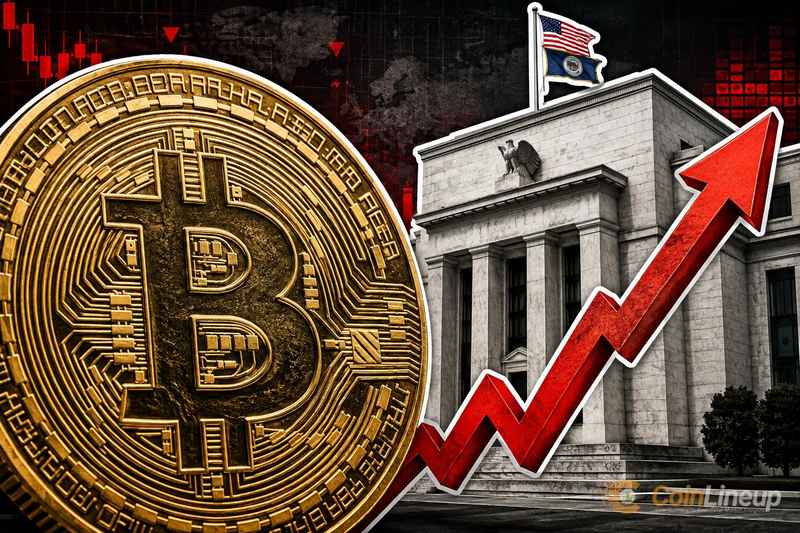
With a Federal Reserve rate decision roughly 11 days away, we asked AI to map out what a surprise rate hike could mean for Bitcoin's price. The short answer: a hike would likely trigger a quick sell-off, while a pause or a dovish tone could give Bitcoin room to rally. These are scenarios, not predictions, and the actual move depends on what markets already expect.
An important caveat comes first. This article walks through AI-generated reasoning about how Bitcoin usually reacts to Fed decisions. It is not based on confirmed forecasts or insider data, and it should be treated as a framework for thinking rather than a crystal ball. For related coverage, see Jeremy Grantham Says Bitcoin Will Fade Away With a Whimper.
How a Fed Rate Hike Usually Hits Bitcoin
The Federal Reserve sets interest rates, which shape how expensive it is to borrow money across the entire economy. Rate decisions come from the Federal Open Market Committee (FOMC), which meets roughly every six weeks and publishes both the decision and a statement read closely for clues about the policy path. When rates rise, borrowing becomes more expensive and holding cash grows more attractive, which tends to pull money out of riskier bets such as stocks and crypto.
Bitcoin is highly sensitive to this kind of liquidity shift. Higher yields and a stronger dollar make speculative assets less appealing, so a hike often pressures Bitcoin in the short term. This dynamic has already played out, with Bitcoin's recovery running into a Fed ceiling as hopes for cheaper money faded.
There is also a leverage angle. Many traders borrow to amplify their crypto positions, and a sharp move against them can force rapid selling. That is why Fed decision days often bring larger price swings for Bitcoin than for broader risk assets.
AI Scenario: If Rates Rise vs. If They Do Not
Base case, if the Fed hikes: AI reasoning points to an immediate downward reaction. A hike that markets did not fully expect would likely spark a fast intraday drop, followed by choppy trading over the following week as investors digest the message.
Bull case, if the Fed pauses or sounds dovish: a decision to hold rates steady, or softer language about future cuts, could relieve pressure. That scenario tends to favor a near-term bounce because it signals easier financial conditions ahead.
The key variable is the expectation gap. If a hike is already priced in, the actual move may be muted; the bigger reactions come from surprises. This is why traders watch not just the rate decision itself but also the FOMC's accompanying projections and the chair's press conference, where shifts in the expected path of future rates often move markets as much as the headline decision. Recent coverage showed Bitcoin left stranded as Fed projections flipped toward higher rate-hike odds, a reminder that shifting expectations move the market as much as the decision itself.
Before weighing any scenario, it helps to check where Bitcoin actually trades right now via Bitcoin's live price on CoinGecko, which tracks real-time BTC/USD price, 24-hour change, and market cap ahead of the Federal Reserve's rate decision.
What to Watch in the 11-Day Countdown
The 11-day timeline gives holders a window to prepare rather than react in panic. Volatility tends to build as the decision nears, so positioning risk rises for anyone using leverage.
Several signals are worth monitoring. Fed futures show how the market is pricing the odds of a hike or cut. Treasury yields and the U.S. dollar hint at risk appetite, and rising crypto leverage warns of sharper swings. Economic data released before the meeting, such as inflation and employment reports, can also shift those odds, which is why the countdown itself can be volatile.
On Bitcoin itself, watch spot support levels and ETF flow momentum, since sustained fund outflows can amplify a downturn. The broader macro backdrop remains cloudy, with Fed officials mapping a longer inflation path that leaves Bitcoin's rate tailwind conditional. Bitcoin has recently leaned on long-term holder support even as some demand drivers stalled.
The practical takeaway for a regular holder: there is no need to trade the Fed. Understand that a hike could bring a short, sharp dip, know your own risk tolerance, and avoid making leveraged bets on an event no one can call with certainty.
Disclaimer: This article is for informational purposes only and does not constitute financial or investment advice. Cryptocurrency and digital asset markets carry significant risk. Always do your own research before making decisions.
