The Fed Conundrum: Who's Got the Votes?
Key Takeaways
- •The Federal Reserve held rates unchanged on a 9-3 vote, with three dissenters advocating for tighter policy—an unusually high level of dissent signaling deep internal disagreement.
- •The 30-year Treasury bond yield rose 19 basis points after the announcement to near a 20-year high, while 2-year yields declined, creating a classic bear steepener pattern.
- •Chairman Warsh declined to push for a rate hike because passing one on a narrow margin such as 7-5 or 8-4 would have publicly signaled a lack of majority support.
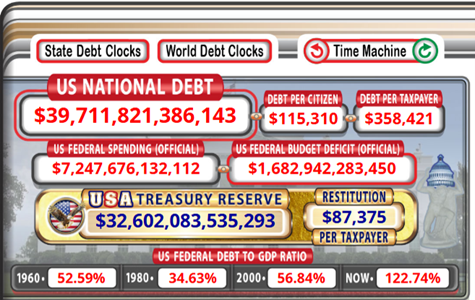
- •U.S. national debt is projected to reach $40 trillion by the fourth quarter, with annual interest payments already exceeding $1.1 trillion, or over 20% of government revenues.
- •Warsh's next significant opportunity to demonstrate the Fed's commitment to price stability will be his address at the Kansas City Fed's Jackson Hole symposium at the end of August.
The Fed Conundrum: Who's Got the Votes?
By John Mauldin
Who's Got the Votes?
This week's Federal Reserve FOMC vote will carry implications for quite some time, and most of the pundits writing about it have their analysis wrong. This was not merely a vote to hold rates steady — there was considerably more at play behind the scenes.
The Federal Reserve elected to hold the Fed funds rate unchanged on a 9–3 vote, with three dissenters advocating for higher rates. Three dissents on a single FOMC vote are notable — such deep internal divisions are historically uncommon and typically signal significant disagreement within the committee about the economic outlook. Markets did not react well. Long-term rates, as measured by 30-year bonds, rose, while short-term rates fell — a classic bear steepener, a pattern in which long-term yields climb faster than short-term ones, often reflecting investor concern about inflation or fiscal sustainability rather than growth optimism. The stock market initially sold off before stabilizing.
The question is why. Looking at the bond futures market, there was no real expectation of a rate hike. Yet the market reaction suggested that the most significant players were either expecting or wanting one. They wanted to see a Fed serious about fighting inflation, and Chairman Warsh had been talking a tough inflation-fighting game.
Warsh has come under heavy criticism over the past two days on two main fronts. First, hawks wanted him to raise rates. Second, his rope-a-dope press conference, in which he effectively said nothing, drew fire from those demanding forward guidance — something Warsh has explicitly said he will not provide.
His reasoning: he wants markets to focus on the game (what he called "the ball"), not the referee. More than a few commentators responded, "You don't understand — you are the ball." For over 20 years, the Fed chairman has been exactly that, and that is what Warsh is trying to end.
Warsh wants markets to function without being spoon-fed by the Fed. What he seeks is price discovery, and market price discovery should be every bit as important to the Federal Reserve as other data points. If markets are merely reacting to forward guidance, the information that can be gleaned from market pricing is diminished, because participants are responding to the guidance rather than to underlying market conditions.
WWWD — What Would Warsh Do?
Everything Warsh has written over the past decades and recently suggests he is hell-bent on fighting inflation. As argued over the last two weeks, he needed to make a statement signaling that inflation is job one. Paraphrasing Governor Waller from last week: you simply cannot angrily stare at inflation and expect it to go away — you have to do something (though Waller himself voted to hold rates steady).
The stock market essentially yawned after some initial fluctuation. As of Friday morning, the S&P 500 is roughly flat since the Fed meeting, and the Dow Jones Industrial Average is down just 0.6% — and even that cannot be squarely attributed to the bond market.
The bond market, however, is not happy. The 30-year bond is near a 20-year high, having risen 19 basis points since the Fed's announcement. Meanwhile, yields on the short end, as reflected in the 2-year bond, have declined.
The human mind likes neat cause-and-effect narratives, so many analysts blame the Fed. One data point equals one result. They ignore everything else happening around the event.
The Fiscal Backdrop
Consider the broader context: U.S. national debt is projected to reach $40 trillion by the fourth quarter. Interest on the debt stands at $1.1 trillion — over 20% of total government revenues. The deficit is $1.7 trillion, on a trajectory toward $50 trillion in total debt. Congress appears to have no appetite for reducing the deficit.
Three charts illustrate the picture. The first shows actual debt and interest paid (Source: USDebtClock.org). The second tracks the 30-year bond rate over 20 years, showing we are near a two-decade high (Source: Apollo). The third displays 30-year bond yields over the past year, revealing a sharp upward spike following the Fed meeting (Source: Trading Economics).
If the Fed had raised rates, the 30-year bond yield would likely have dropped, while 2-year rates would have risen modestly — producing what is known as a bull flattener.
Instead, the bond market and the broader world are now laser-focused on inflation. Inflation has become a problem in England, Europe, Japan, and numerous developing countries. Major central banks, including the European Central Bank and the Bank of England, have been navigating their own inflation challenges, with bond markets across advanced economies pushing yields higher where central bank resolve is in question. Rates are rising everywhere bond markets judge their central banks insufficiently committed to fighting inflation. For long-term bond buyers, the current cushion above inflation is less than 2% in the United States — not a lot. Without confidence in the Fed's inflation-fighting credentials, investors will demand higher yields.
As noted last week, if the Fed had raised rates now, it would have needed to tighten less in the future. Instead, it now faces the opposite situation: rates will likely need to go higher, and monetary policy will need to remain tighter for longer.
Why Didn't Warsh Move?
He didn't have the votes — pure and simple. He could have voted to raise rates, and Powell would have gone along, having pledged to vote with the chairman. That might have produced two or three additional votes for a hike.
The problem is that raising rates in this political environment on a 7–5 or 8–4 vote would signal that the chairman lacks majority support — a visible sign of weakness. A friend asked why Warsh didn't simply vote to raise rates to establish his position. The answer: he would have been seen as a chairman who cannot lead. He was in a no-win situation, and allowing the vote to go 9–3 to hold rates was his best available option.
The next Fed meeting is scheduled for September 15–16. Between now and then, two CPI reports and one PCE report will be released. Most observers expect the next CPI report to come in "hotter" as energy prices climb. What circumstances will change? The FOMC members who declined to vote for a hike likely wanted to see those additional data points before acting. It should also be noted that by September, the midterm elections will be very close, making a rate hike even more politically difficult — even if warranted.
The worst outcome would be for Warsh to fail to build a clear consensus, leading the market to conclude that nothing has changed from the Bernanke/Yellen/Powell era. "Meet the new Fed, same as the old Fed" is not a formula for benign long-term rates.
The problem is mostly fiscal now. But if the Fed is seen as aiding and abetting fiscal profligacy, the situation will become significantly messier. This is what happens as the country stumbles toward a funding crisis — it was never going to be smooth or easy. All of the governors voted to keep rates steady.
Even with the weak GDP number, the economy is still growing, and there is much to be positive about.
Looking Ahead to Jackson Hole
The next real opportunity for Warsh to make his case will be his annual Jackson Hole presentation at the end of the month. The Kansas City Fed's Economic Policy Symposium, held annually in Jackson Hole, Wyoming, has historically served as a venue for major policy signals — Chairman Bernanke used his 2010 remarks to foreshadow QE2, and the 2022 symposium reinforced the Fed's tightening commitment. Historically, most Jackson Hole speeches are fairly formulaic and carry little lasting significance. There are exceptions, however, and they matter. Warsh has the chance to make this one of those exceptional speeches — and frankly, it needs to be.
The emphasis in his speech must be that the Fed's business is maintaining price stability, full stop. Additionally, the task forces Warsh has appointed will publish their findings early next year, examining different data sources, communication methods, and more. Changing the culture at the Federal Reserve will take more than one or two meetings, and some governors appear to be resisting change. It needs to happen, though it was never going to be easy.
If this waffling continues, it will only deepen the crisis. The Fed needs to put the ball back in Congress's hands, where it belongs — and that is what the chairman is trying to do. Congress can bring down long-term rates simply by reducing deficits and moving toward a balanced budget, much as happened during the Clinton-Gingrich era in the 1990s, when the U.S. government last ran budget surpluses during fiscal years 1998–2001.
This article marks the beginning of the 27th year of Thoughts from the Frontline. Based on reader feedback and click-through data, the letter is being shortened from a target of 3,000 words to 2,500 or fewer, designed to be readable in under five minutes.
Source: GoldSeek