Federal Reserve Holds Interest Rates Steady Amid Persistent Inflation Risks: Commerzbank Analysis
Key Takeaways
- •The Federal Reserve has kept interest rates unchanged, signaling a cautious stance as inflation continues to run above its 2% target.
- •Commerzbank's analysis indicates the central bank will require sustained evidence of declining inflation before contemplating any rate cuts.
- •Borrowing costs for consumers and businesses, including mortgages and business loans, are expected to remain elevated in the near term.
- •A robust labor market continues to exert upward pressure on wages and consumer prices, complicating the final stage of inflation reduction.
- •The Fed's future decisions will be data-dependent, with upcoming CPI figures and employment reports playing a critical role in shaping monetary policy.
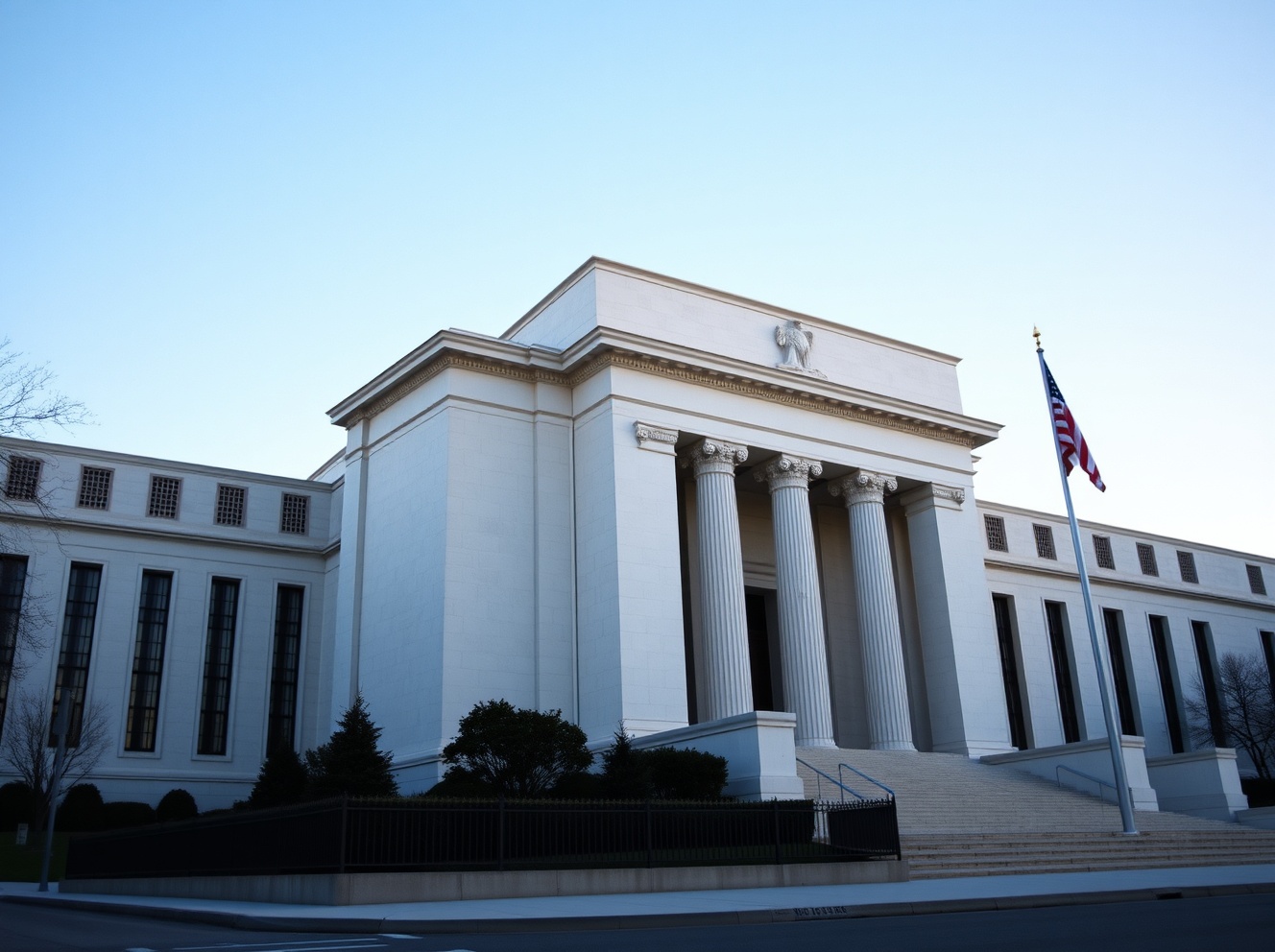
The Federal Reserve has decided to hold interest rates steady while continuing to monitor persistent inflation risks, according to a recent analysis from Commerzbank. The decision, widely anticipated by financial markets, signals a cautious approach by the central bank as it seeks to balance price stability with maximum employment—the two pillars of its congressional mandate. The current pause follows one of the most aggressive rate-hiking cycles in decades, which began in March 2022 and lifted the federal funds rate from near-zero levels in an effort to rein in inflation that had reached multidecade highs.
Commerzbank's Assessment of the Fed's Decision
Economists at Commerzbank observe that the Federal Reserve's decision to maintain the current rate level reflects a deliberate wait-and-see stance. The analysis notes that although inflation has moderated from its previous peaks, it continues to run above the Fed's 2% target. The central bank will likely need further evidence of a sustained downward trend in prices before contemplating any rate cuts.
Commerzbank's statement also highlighted that the labor market remains robust, a factor that could sustain upward pressure on wages and consumer prices.
Market Implications and Economic Outlook
The federal funds rate serves as the benchmark that indirectly shapes borrowing costs across the economy. With the decision to keep rates on hold, mortgage rates, credit card interest charges, and business loan costs are all expected to remain elevated in the near term. Financial markets have responded with cautious optimism, as the Federal Reserve's steady approach offers a degree of predictability.
However, Commerzbank cautioned that any renewed acceleration in inflation could compel the Federal Reserve to shift back toward a more hawkish policy stance. The trajectory of future decisions will depend heavily on forthcoming economic data releases, including Consumer Price Index (CPI) figures and employment reports.
Impact on Consumers and Businesses
For consumers, the maintenance of current rates means borrowing costs are unlikely to ease in the immediate future, affecting decisions ranging from home purchases to auto financing. For businesses, the decision points to a continued environment of elevated financing costs, which could influence investment decisions and expansion strategies.
The Federal Reserve's central challenge remains navigating what economists describe as the "last mile" of inflation reduction—the phase in which stubborn price pressures in sectors such as services and housing prove difficult to bring down.
The Road Ahead
The Federal Reserve's decision to hold rates steady, as examined by Commerzbank, reflects a calculated strategy to manage inflation without derailing economic growth. The specific benchmark interest rate is set by the Federal Open Market Committee (FOMC) and is announced following each policy meeting.
Commerzbank, a major European financial institution with a dedicated research division, provides independent analysis of global central bank policies that is closely followed by investors and market participants. Its assessment comes at a time when other major central banks, including the European Central Bank and the Bank of England, are confronting similar inflation dynamics, making globally coordinated monetary policy trends a key area of focus.
The coming months will be pivotal. The Federal Reserve's next moves will be guided by incoming data on inflation, employment, and broader economic growth. A meaningful decline in inflation or a sharp labor market slowdown could open the door to rate cuts, while persistently elevated inflation could prompt consideration of further increases. Data-dependent decisions are expected to shape the course of monetary policy through the remainder of the year.
Source: BitcoinWorld

