Fed's Goolsbee: Biggest short-run fear is that inflation isn't under control
Key Takeaways
- •Goolsbee said his biggest short-run fear is that inflation is not under control.
- •U.S. consumer-price inflation peaked at 9.1% in June 2022, and the Fed raised rates from near zero to above 5% between March 2022 and July 2023.
- •He said political pressure on the Federal Reserve puts him on edge and warned that interference in central banks can lead to inflation.
- •Goolsbee described the current economy as stable overall but unusual because both hiring and firing remain low.
- •Goolsbee has led the Federal Reserve Bank of Chicago since January 2023 and participates in FOMC meetings that set U.S. interest-rate policy.
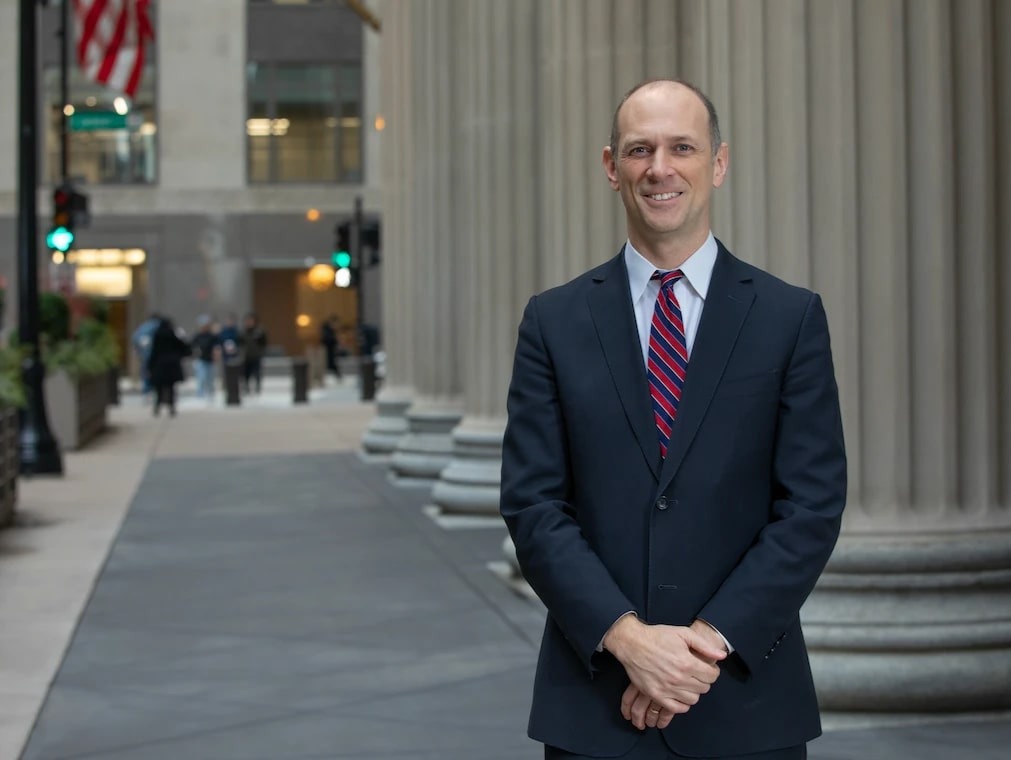
Chicago Federal Reserve President Austan Goolsbee said his biggest short-run fear is that inflation is not under control, in remarks reported by investingLive.
Goolsbee's focus on prices reflects the experience of recent years: U.S. consumer-price inflation peaked at 9.1% year over year in June 2022, a four-decade high, prompting the Fed to raise its policy rate from near zero to above 5% between March 2022 and July 2023 — its fastest tightening cycle since the early 1980s — and, while inflation has slowed from that peak, it has yet to settle durably at the Fed's 2% goal.
Goolsbee also said that political pressure on the Fed "puts me on edge," and he warned that political interference in central banks generally leads to inflation. The comments touch on a long-standing principle in central banking: the Federal Reserve, established in 1913 as the U.S. central bank, is designed to set monetary policy independently of the political branches, a structure economists view as important for keeping inflation expectations anchored. Cross-country research on central-bank independence has found that central banks freer from political influence tend to deliver lower average inflation, and the pressure President Richard Nixon applied to Fed Chair Arthur Burns ahead of the 1972 election — a period followed by the high inflation of the 1970s — remains a frequently cited case study. The Fed operates under a dual mandate from Congress — price stability and maximum employment — and targets inflation of 2% over the longer run.
Describing the current state of the economy, Goolsbee said the present environment of low hiring and low firing is unusual, while noting that the economy on balance has been stable. Economists often describe such conditions as a period of low labor-market churn, in which both hiring and separations slow at the same time; the Labor Department's monthly JOLTS report tracks exactly these flows, and both hires and separations have trended down from the elevated levels recorded during the post-pandemic hiring boom.
On the policy front, the report notes that Goolsbee has been advocating for rate hikes for a while.
Goolsbee, an economist, has led the Federal Reserve Bank of Chicago since January 2023, when he succeeded Charles Evans as president. As a regional Fed president, he participates in Federal Open Market Committee meetings, which set U.S. interest-rate policy at eight scheduled gatherings a year, and his public comments form part of the central bank's regular communication with the public — remarks that Fed watchers routinely parse for signals about the direction of policy between meetings.
Source: investingLive

