Fed's Mary Daly: Labor Market Not a Significant Driver of Inflation
Key Takeaways
- •San Francisco Fed President Mary Daly stated that labor market conditions are not meaningfully contributing to inflationary pressures at this time.
- •The Federal Reserve is maintaining its benchmark interest rate in the 5.25%–5.50% range, the highest level in over two decades, while inflation persists above the 2% target.
- •Daly's assessment suggests that remaining inflationary pressures likely stem from services, housing, or supply-chain factors rather than wage and employment dynamics.
- •The Bureau of Labor Statistics is scheduled to release July inflation data, which markets view as critical for shaping expectations on future rate adjustments.
- •Market participants are closely monitoring the September FOMC meeting for any signals of a shift in the Federal Reserve's policy stance.
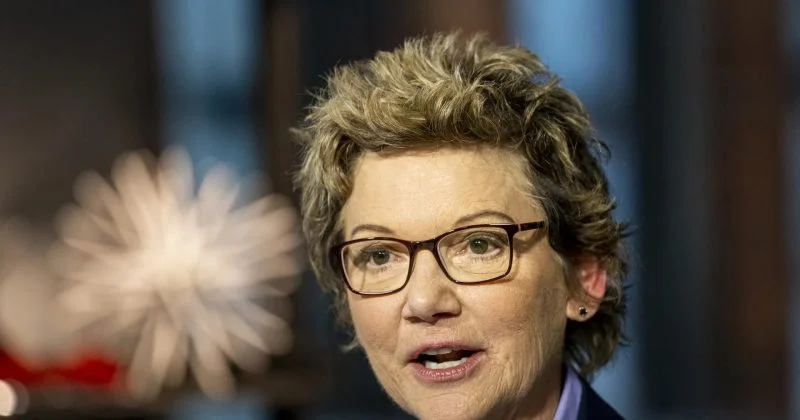
Mary Daly, President of the Federal Reserve Bank of San Francisco, stated that current labor market conditions are not meaningfully contributing to inflationary pressures. Her assessment aligns with the Federal Reserve's broader observations of a labor market that has shown signs of stabilization, with unemployment reported at 4.2% and private payrolls reflecting improvement.
Daly's remarks reinforce the Federal Reserve's posture of maintaining a restrictive policy interest rate — currently in a target range of 5.25%–5.50%, the highest in over two decades — as it seeks to balance persistent inflation concerns against the health of the labor market. Inflation continues to run above the Fed's 2% target, keeping the debate over the timing and magnitude of potential rate cuts ongoing. The Fed's dual mandate of price stability and maximum employment means that labor market dynamics are a central input in determining whether inflation is on a sustainable path back to target.
The San Francisco Fed president's comments are consistent with a picture in which wage and employment dynamics are exerting only modest upward pressure on prices. If labor market conditions are not a significant inflation driver, it suggests that remaining price pressures may stem more from sources such as services, housing, or supply-chain factors than from worker compensation. Market pricing following her remarks suggested alignment with expectations of relatively stable July inflation figures, which would support forecasts for a gradual cooling of price pressures.
The observed stability in employment conditions may also signal that abrupt shifts in Fed monetary policy are unlikely in the near term, leaving current market expectations largely intact.
Market participants are closely watching the Federal Reserve's upcoming policy meetings, with particular attention on the September gathering for any signals of a shift in stance. Federal Reserve Chair Jerome Powell and the Federal Open Market Committee (FOMC) will be central figures in those deliberations.
In addition, the Bureau of Labor Statistics is set to release July inflation data, which will be critical in determining whether the current inflation outlook is consistent with Daly's characterization of labor market pressures. Any notable deviation from expectations could reshape market projections for future rate adjustments.
