Fed Chair Kevin Warsh Does Not See AI Growth as Necessarily Inflationary, Says Tom Lee
Key Takeaways
- •Federal Reserve Chair Kevin Warsh, according to Tom Lee, views AI-driven growth as a demand shock that arrives before its productivity benefits rather than a source of persistent inflation.
- •Warsh presented this position publicly in July 2026 testimony before the Senate Banking Committee and at the October 2026 IMF meetings, arguing that a one-time price adjustment is distinct from ongoing inflation.
- •The Consumer Price Index stood at 3.7% year over year in September 2026, nearly double the Fed's 2% target, and inflation has exceeded the target for more than five years.
- •Despite the inflation overshoot, the Fed has kept interest rates steady as of late October 2026, consistent with Warsh's distinction between supply-constraining shocks and potentially transformative AI investment.
- •The main risk to this framework is timing: if the anticipated supply-side response arrives more slowly or proves smaller than expected, elevated inflation could persist while rates remain unchanged.
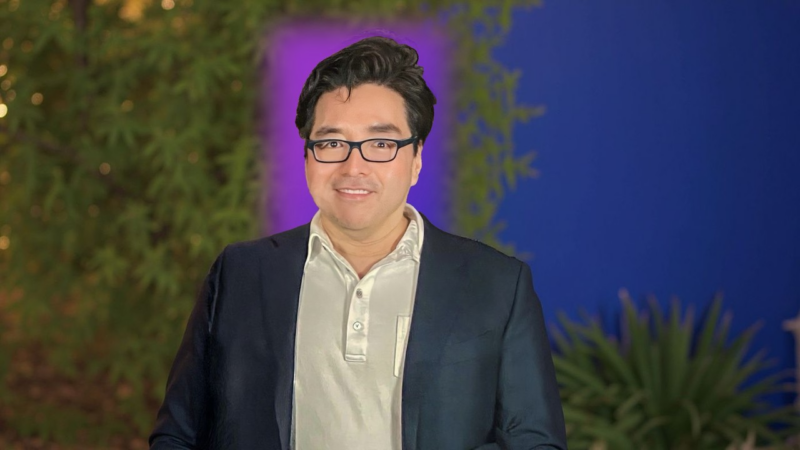
Federal Reserve Chair Kevin Warsh does not see artificial intelligence-driven growth as necessarily inflationary, according to Tom Lee. The position is friendlier toward AI than might be expected from a central banker confronting inflation that remains well above target — and it matters because the Fed's next moves on interest rates depend partly on whether it treats the AI boom as a price problem or a productivity story.
In Warsh's framing, the AI spending boom is a demand shock that arrives before its productivity payoff — even with the Consumer Price Index running at 3.7%.
What Warsh Has Said Publicly
Lee's summary lines up with Warsh's own public remarks over the past several months. The clearest version came during his July 2026 testimony before the Senate Banking Committee, where Warsh argued that a one-time change in prices is not necessarily inflationary. His reasoning: a supply response is expected to follow. The argument draws on a standard piece of macroeconomic vocabulary — a one-time adjustment in the price level, where prices move to a new point and settle, is different from inflation, which requires them to keep rising.
He expanded on the idea at the IMF meetings in October 2026. In those remarks, Warsh described the AI investment surge as a "shock" that hits demand before its supply-side benefits can show up. Taken together, the two appearances give the position a consistent public record, spanning congressional testimony and international policy discussions.
The framing acknowledges that the bills are real: rising AI-related investment may affect prices in the near term. What Warsh disputes is the idea that this automatically translates into persistent inflation.
A Stubborn Inflation Backdrop
That outlook comes against a stubborn data picture. As of September 2026, the Consumer Price Index stood at 3.7% year over year — well above the Fed's 2% target, and nearly double the central bank's stated goal. Nor is it a recent blip: inflation figures have exceeded the target for more than five years.
Even so, the Fed has not reacted by tightening. As of late October 2026, the central bank has kept interest rates steady despite the persistent overshoot. That combination — above-target inflation alongside a holding-pattern Fed — is where Warsh's framework meets its regular test, with each monthly CPI release and rate decision offering fresh evidence on whether the anticipated supply response is taking shape.
A New Chair With a Distinct Framework
Warsh took over as Fed chair in May 2026 after being nominated by President Trump. In his months on the job, he has leaned on a specific distinction when talking about price pressures.
On one side are supply-constraining events, such as geopolitical conflicts. These shrink what the economy can produce, which tends to push prices up without any offsetting benefit. On the other side is AI, which Warsh treats as potentially transformative. In his view, the near-term demand surge is a precursor to higher productivity and wealth creation down the line.
The distinction shapes how he talks about the current environment, in which heavy AI investment is lifting demand even as its productivity gains remain ahead.
What It Means for Rates — and Where the Risk Lies
For markets, the most direct implication is about interest rates. A Fed chair who views AI spending as a temporary demand shock, rather than a source of lasting inflation, has less reason to raise rates in response to it. The research summary supporting this story suggests the Fed may keep rates steady to avoid stifling growth while AI investment plays out — in effect, allowing time for the anticipated supply-side response.
The risk is in the timing. Warsh's argument rests on that anticipated supply-side response. If it arrives more slowly than expected, or proves smaller, the Fed would be sitting on steady rates while inflation that is already above 3% refuses to budge.
For now, the message relayed by Lee is consistent with what Warsh has told the Senate and the IMF. The Fed chair sees the AI boom as a bill that comes due before the payoff — and he appears willing to wait for the payoff.
Source: CryptoBriefing. Disclosure: the original article was edited by Diego Almada Lopez.

