Richmond Fed's Barkin Says Inflation Risks Outweighed Employment Risks in Last Week's Rate Hike
Key Takeaways
- •Richmond Fed President Thomas Barkin said the Federal Reserve raised rates last week because inflation risks outweighed risks to maximum employment.
- •He argued the rate hike will help restore price stability but stopped short of committing to additional increases.
- •Barkin described economic conditions as firming, if anything.
- •He cautioned that shocks often labeled as passing, such as tariffs and energy, are not fading.
- •Barkin flagged a risk that currently elevated inflation could influence future inflation.
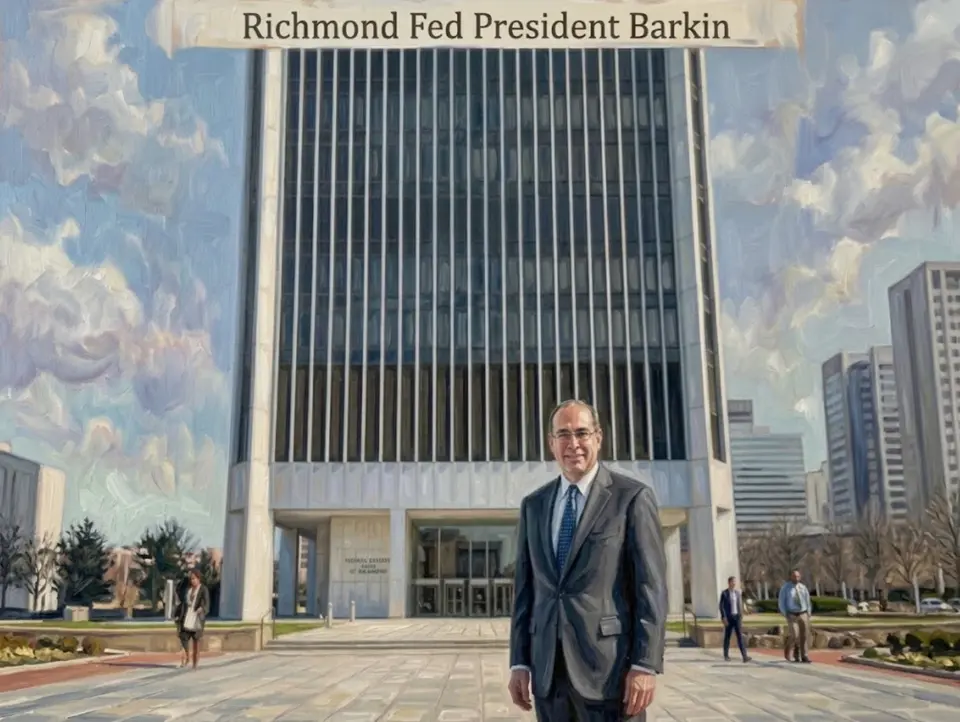
Thomas Barkin, president of the Federal Reserve Bank of Richmond, said the US central bank raised interest rates last week because the risks surrounding inflation outweighed the risks to maximum employment. His remarks were reported by investingLive.com September 22, 2026.
Barkin said last week's rate hike will help restore price stability, while indicating that policymakers will watch to see whether additional increases are needed. He added that economic conditions are, if anything, firming.
The key points from his comments, as they crossed the wires:
- The US central bank raised rates last week because risks to inflation outweigh risks to maximum employment.
- Last week's rate hike will help restore price stability; it remains to be seen if more hikes are needed.
- Economic conditions are, if anything, firming.
- "Passing" shocks like tariffs and energy are not fading, and there is a risk that high inflation today will impact future inflation.
Context
Barkin leads the Federal Reserve Bank of Richmond, one of the 12 regional reserve banks in the Federal Reserve System. Interest rate decisions are made by the Federal Open Market Committee (FOMC), whose voting membership consists of the members of the Federal Reserve Board, the president of the Federal Reserve Bank of New York, and a rotating group of four other regional reserve bank presidents. The committee typically meets eight times a year to set the target range for the federal funds rate, the central bank's primary policy tool. Changes in that range influence borrowing costs across the economy, which is why the committee's decisions and individual policymakers' public remarks are closely watched for signals about the direction of policy.
Under its congressional dual mandate, the Federal Reserve pursues both maximum employment and price stability — the two objectives Barkin referenced in explaining the rationale for last week's move.
His comments stopped short of committing the Federal Reserve to a further increase, leaving the question of additional hikes dependent on whether inflation begins to stabilize in the wake of last week's action. Barkin pointed to tariffs and energy as examples of shocks often described as "passing" that are not fading, and said there is a risk that high inflation today will impact future inflation.

