Darline Graham's Senate campaign must refund 'excessive' donations after FEC warning: report
Key Takeaways
- •The FEC found that Darline Graham received more than $24,000 in contributions above legal limits and must refund or redesignate roughly 10 percent of her campaign's $251,000 cash on hand.
- •Flagged donors include Charles Schwab, who gave $7,000, along with former ambassador David Wilkins, TikTok policy chief Ziad Ojakli, and Sen. Lisa Murkowski's PAC, whose $10,000 donation exceeded the committee limit by $5,000.
- •All of the flagged donations were made between July 29 and August 5, shortly after the death of Sen. Lindsey Graham.
- •Graham's campaign must respond and refund the donations by September 21 or face a possible audit or civil enforcement action.
- •Graham is heading to a runoff against Rep. Ralph Norman to determine who will face Democrat Annie Andrews, who has raised $10 million, while similar FEC enforcement also forced Texas Democrat James Talarico to return over $1 million.
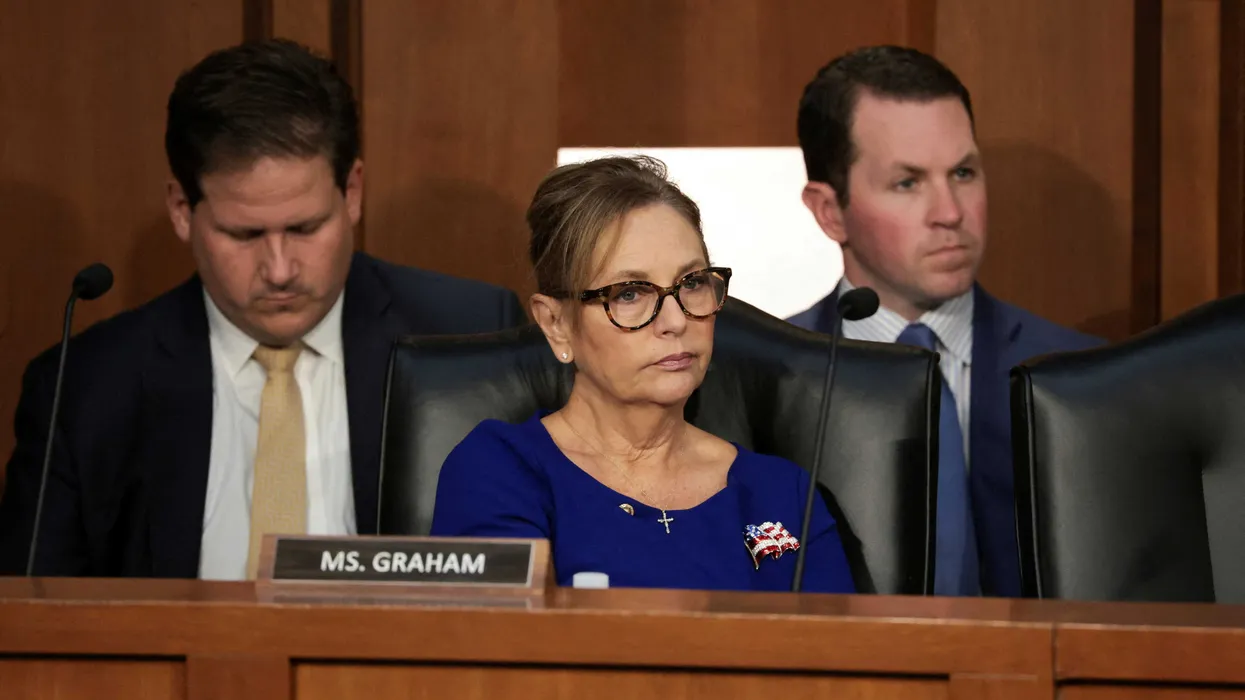
The Federal Election Commission has forced Darline Graham, the Republican candidate for U.S. Senate in South Carolina and sister of the late Sen. Lindsey Graham, to refund campaign donations from powerful backers that surpassed legal limits, according to a Wednesday NOTUS report.
The report found that Graham violated campaign finance rules and must refund or redesignate roughly 10 percent of her campaign's cash on hand, which currently stands at $251,000.
Under FEC rules, individual donors may give a federal-level political candidate up to $3,500 per election, including primaries, runoffs, and general elections. Because the cap applies separately to each election, a donor can lawfully give the maximum multiple times across a cycle — a distinction that also shapes how overages are fixed, since excessive contributions are typically resolved by refunding the money or redesignating it toward another election, still subject to the same per-election caps. Such contribution-limit issues are among the routine matters the FEC flags when it reviews campaigns' finance reports.
In a letter to Graham's campaign, the FEC flagged "excessive" donations from powerful business and political figures, including Charles Schwab, the founder of the brokerage firm that bears his name, David Wilkins — the former U.S. ambassador to Canada and a former speaker of the South Carolina House — and Ziad Ojakli, head of public policy at TikTok.
Some of the largest donations exceeded $7,000. Schwab contributed $7,000 to Graham's campaign, while most of the other flagged donations were just over the $3,500 limit. All of the donations flagged by the FEC were made between July 29 and August 5, only a few weeks after Sen. Lindsey Graham's death.
The FEC also flagged contributions from the leaders of Blackstone, the major alternative asset manager, AmTrust, Micco Corporation, and Westrock Capital Partners, as well as from Sen. Lisa Murkowski's (R-AK) PAC, Denali Leadership, whose $10,000 donation went $5,000 over the legal limit for contributions from committees, according to the agency.
In total, Graham received more than $24,000 in contributions over the legal limit during a single week early in her campaign.
If Graham fails to respond and refund the donations by September 21, her campaign will face a possible audit or "enforcement action," according to the FEC. FEC enforcement matters are civil, and cases that move forward are typically resolved through conciliation agreements that can include civil penalties.
Graham is headed for a runoff against Rep. Ralph Norman (R-SC) to decide who will face Democratic candidate Annie Andrews, who has raised $10 million, per CNN.
James Talarico, the Democratic nominee for Senate in Texas, was also forced to give back more than $1 million after violating FEC rules — a case showing that contribution-limit enforcement reaches campaigns in both parties.

