FCC Clarifies Foreign Inverter Import Ban: 45X-Eligible Inverters Treated as Domestic
Key Takeaways
- •The FCC now treats inverters eligible for the Section 45X advanced manufacturing tax credit as domestically produced, replacing the previous 65% U.S. content requirement.
- •Both wired and wireless inverters fall within the import ban because of concerns that foreign adversaries could remotely access the devices.
- •Only international inverters granted conditional FCC approval may be imported into the United States, a designation that requires submitting an application to the commission.
- •The restriction applies immediately to new inverter models, while units already installed or previously approved by the FCC are unaffected and may continue operating.
- •The Dept. of War concluded that foreign-produced inverters eligible for clean energy tax credits do not pose unacceptable national security risks, noting that 45X credit recipients are already barred from receiving material assistance from prohibited foreign entities.
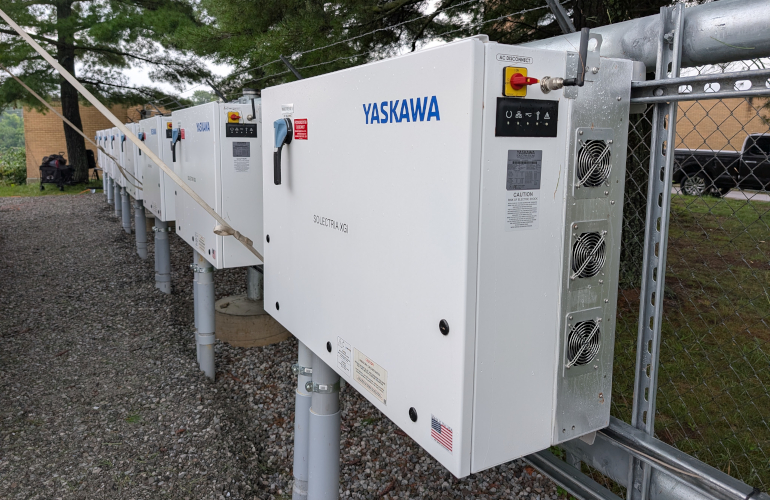
The Federal Communications Commission (FCC) has issued two clarifications to its import ban on foreign-produced inverters, spelling out how "domestically produced" is defined and confirming that both wired and wireless models fall within the restriction.
The commission added foreign-produced inverters last month to a list of communications products and services it deems a risk to national security — a roster the FCC maintains under the Secure and Trusted Communications Networks Act of 2019 — citing alleged supply chain and cybersecurity vulnerabilities for electrical infrastructure. Under the policy, only international inverters that receive conditional FCC approval may be imported into the United States, a designation that requires submitting an application to the commission.
The first clarification reshapes what counts as foreign-made. The FCC previously defined a domestic inverter as one containing 65% U.S. content, a threshold based on Build America Buy America Act calculations, according to Norton Rose Fulbright. That 2021 law sets domestic-content requirements for federally funded infrastructure projects. Following input from the Dept. of War, the commission now says inverters eligible for the advanced manufacturing tax credit (45X) will be treated as domestically produced. Section 45X, created by the Inflation Reduction Act of 2022, provides per-unit tax credits for manufacturing clean energy components such as solar modules, wind turbine parts, batteries and inverters.
The Dept. of War said that foreign-produced inverters eligible for clean energy tax credits "do not pose unacceptable risks" to the country's national security. Manufacturers accessing the 45X credit are already barred from receiving any material assistance from a prohibited foreign entity. On that basis, the Trump administration has determined that foreign-produced inverters complying with section 45X qualify for a domestic production tax credit and are therefore considered "domestically produced," regardless of the manufacturing company's nationality.
The second clarification confirms that both wired and wireless inverters are covered by the ban. The commission had previously voiced concern about inverters that foreign adversaries could access remotely, and the Dept. of War noted that this could happen wirelessly or through Ethernet or similar connections. Inverters, which convert the direct current produced by solar panels and batteries into grid-compatible alternating current, commonly carry such connectivity for remote monitoring and control.
The restriction takes effect immediately on new inverter models. Inverters already installed and/or previously approved by the FCC are unaffected and may continue operating in the United States.
