FBI Investigates Suspected Breach of National Crime Database After 2.67 Billion Queries in 2025
Key Takeaways
- •The FBI is probing a possible breach of the National Crime Information Center, the central database operated since 1967 that US law enforcement agencies use to share criminal justice information.
- •CNN reported the suspected incident on November 21, citing two informed sources, but the FBI has not officially confirmed the breach's extent, and the entry method and exposed data remain unclear.
- •The NCIC logged approximately 2.67 billion name queries in 2025, underscoring how heavily federal, state, and local agencies rely on the system for law enforcement decisions.
- •The investigation follows a September breach in which the ShinyHunters group exposed data of current and former FBI employees via an FBI-operated job site, though no link between the two cases has been established.
- •The suspected breach occurred during a week marked by unrelated disruptions, including a global Microsoft outage and a US air travel shutdown affecting more than 18,000 flights.
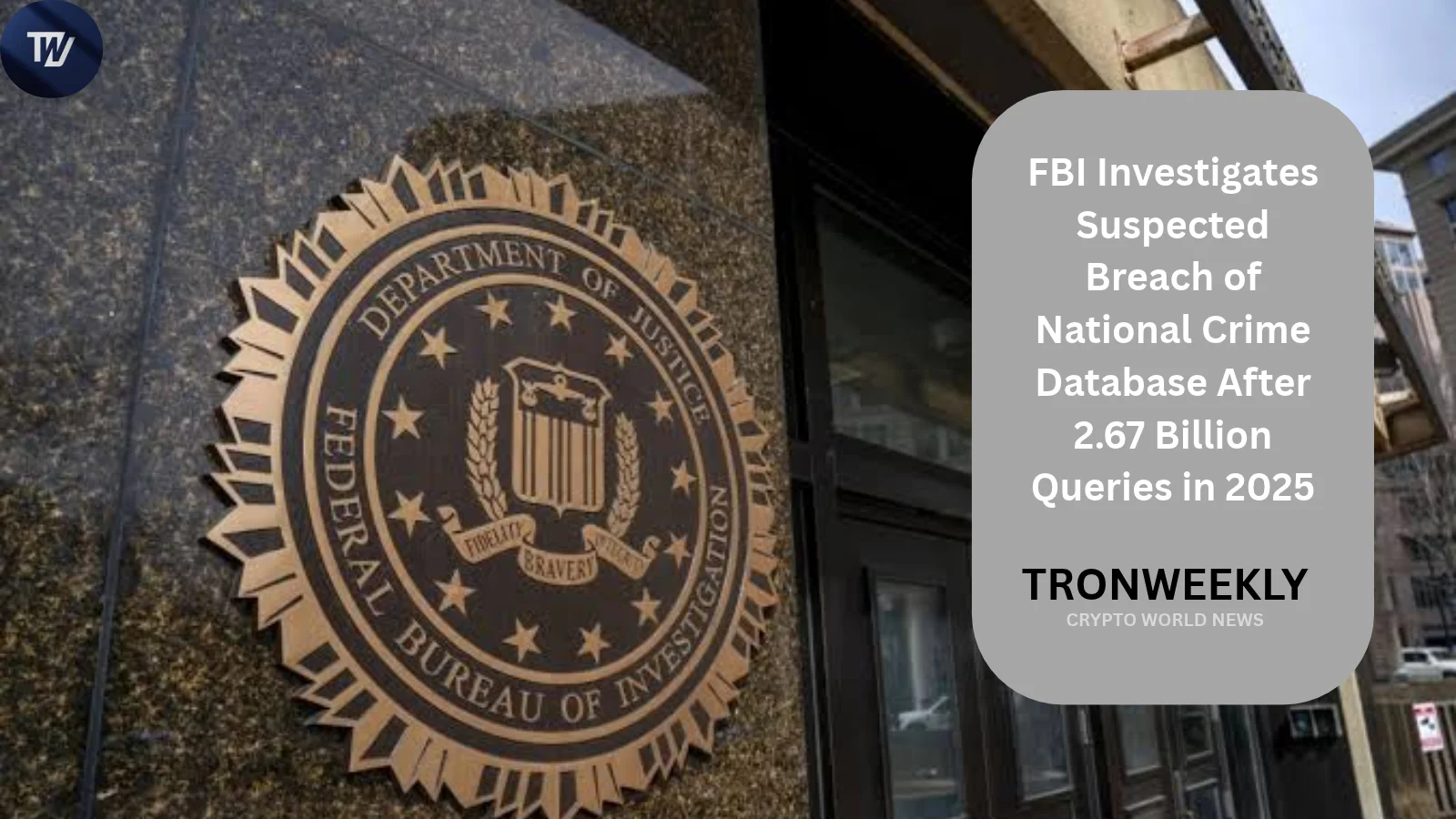
The Federal Bureau of Investigation (FBI) is investigating a possible data breach of its National Crime Information Center (NCIC), the centralized database that enables law enforcement authorities across the United States to share criminal justice information.
The suspected breach was reported by CNN on Friday, November 21, according to sources familiar with the matter. The incident carries significant implications for the security of a system used widely by police forces to view criminal history data and warrant data, and it represents yet another possible cybersecurity breach involving FBI infrastructure in recent months. The case further raises concerns among US government officials amid several technology and infrastructure disturbances that have occurred over the past week.
FBI Investigates Possible NCIC Database Compromise
The FBI is investigating a potential breach of the National Crime Information Center, commonly referred to as the NCIC. The system acts as a centralized source of information sharing for law enforcement agencies throughout the United States. Operated by the FBI since 1967, the database gives federal, state, and local agencies a common reference point for criminal justice records.
NCIC provides authorized users with access to records on outstanding arrest warrants, criminal histories, missing persons, stolen property, and other information maintained by law enforcement agencies. It plays an important role in assisting officers during investigations, traffic stops, background checks, and other public safety operations.
According to CNN, the FBI probe is based on information received from two sources who were well informed about the situation. Nevertheless, the details available so far do not make clear how the suspected hackers gained entry to the system, what information, if any, was exposed, or whether the database's functioning was affected in any way.
The FBI has not officially confirmed the extent of the suspected breach described in the CNN report.
NCIC Recorded 2.67 Billion Name Queries in 2025
The sheer scale of the National Crime Information Center underscores why the alleged leak is noteworthy. According to FBI statistics, the system logged approximately 2.67 billion name checks in 2025. That figure refers to the number of queries made, not the number of people or records held in the database.
The volume demonstrates just how frequently police forces rely on NCIC for information. An incident involving a system of this kind may not be confined to the FBI alone, since federal, state, and local agencies all depend on criminal justice information in order to make decisions in their law enforcement activities.
Nevertheless, the number of queries does not imply how many records, accounts, or individuals were affected by the suspected intrusion.
Previous FBI Security Incident Raises Additional Concerns
The new incident follows a prior cybersecurity breach affecting FBI infrastructure that took place in September. The cybercriminal group known as ShinyHunters, which has claimed responsibility for a series of high-profile data breaches in recent years, gained access to a job site operated by the FBI and exposed the data of current and former FBI employees, as Reuters reported.
That earlier attack did not involve the National Crime Information Center; it targeted an employment site. However, the two incidents together highlight once again the security issues surrounding governmental systems. The suspected NCIC compromise is therefore especially important because of the database's role in facilitating law enforcement operations throughout the nation.
Whether there is any link between the two cases remains unknown. There is currently no concrete proof that the same criminals or the same vulnerability was exploited in both incidents.
Growing Cybersecurity Concerns Across US Infrastructure
The alleged breach of an FBI database is occurring amid a week that has seen multiple disruptions across technology and infrastructure. A global outage of Microsoft services impacted access for hundreds of millions of customers. Separately, a complete shutdown of air travel services in the country affected more than 18,000 flights.
Those events are unrelated to the suspected security incident at the FBI. Yet they underscore the problems faced by organizations responsible for managing digital infrastructure.
For US officials, ensuring the security of government databases is not simply a matter of blocking unauthorized access. It also involves making sure information remains accessible to the relevant officials while at the same time ensuring that no sensitive information is compromised.
The FBI's investigation is expected to determine whether the NCIC experienced unauthorized access to its systems. For the moment, the scope of the alleged security breach remains unclear, and the reporting rests on the two sources cited in CNN's account. Considering how extensively the database is used by US law enforcement agencies, the case may carry serious implications for the government in terms of cybersecurity.

