Fazoli's Closes 50 Restaurants in Nine Months Amid Parent FAT Brands' Chapter 11 Bankruptcy
Key Takeaways
- •Fazoli's U.S. footprint fell from 192 restaurants on Nov. 5, 2025 to 142 by Aug. 17, 2026, a loss of 50 locations that included a complete exit from Alabama, with Indiana shedding the most sites at 11.
- •Parent company FAT Brands filed for Chapter 11 bankruptcy in January 2026, carrying an estimated $1.5 billion to $1.58 billion in debt tied to securitized borrowings from leveraged acquisitions.
- •In June 2026, FBG Bid Co., an entity composed of former FAT Brands bondholders, acquired 13 of the company's restaurant brands, including Fazoli's, through a $595 million credit bid spanning more than 1,700 locations worldwide.
- •Recent closures include Fazoli's final West Michigan restaurant in Battle Creek, leaving only two Michigan locations, along with one in Lincoln, Nebraska, and two in Central Kentucky.
- •Industry pressures are broad, with 42% of restaurant operators reporting unprofitability in 2025 and Italian chains additionally facing volatile ingredient costs and consumer shifts toward other global cuisines.
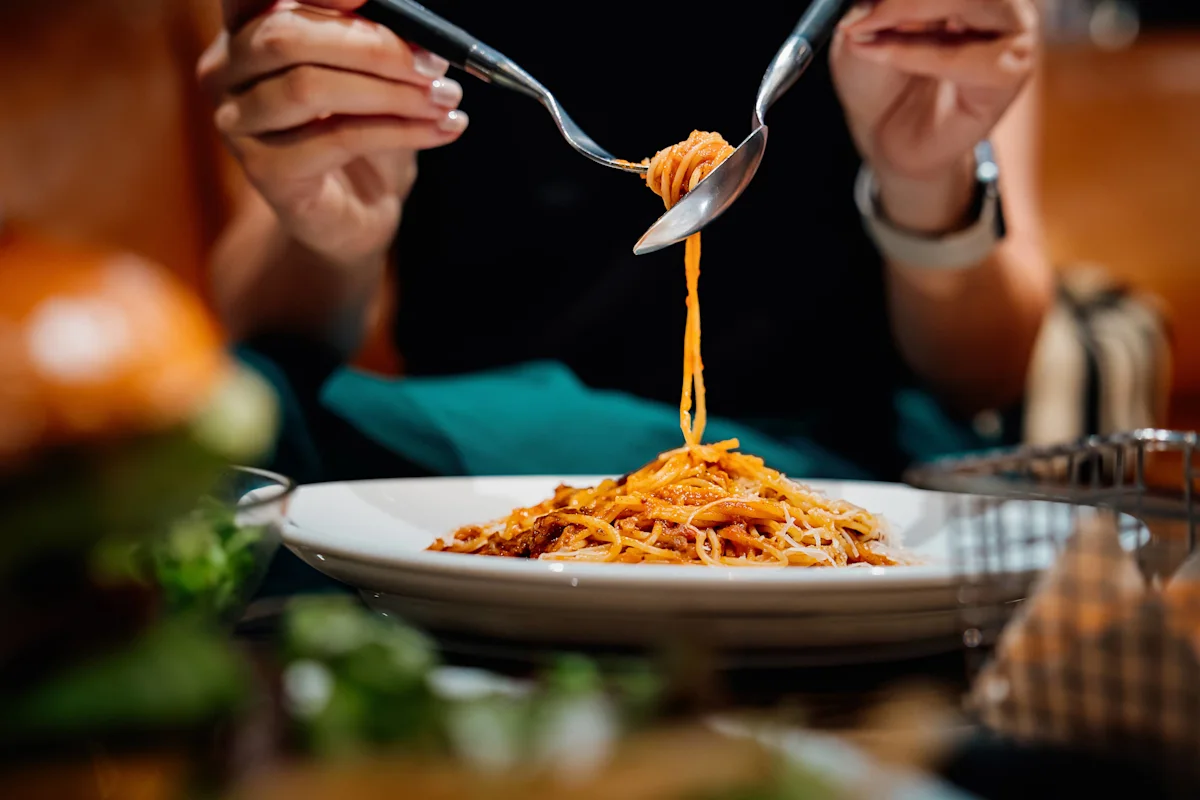
Italian food consistently ranks as the world's most popular cuisine — creamy pasta, hot pepperoni pizza, and indulgent gelato beat out sushi, tacos, and even McDonald's when people are asked to picture their favorite food. A 2019 YouGov poll of more than 25,000 people across 24 countries placed Italian first among 34 national cuisines, ahead of Chinese and Japanese.
That popularity, however, has not shielded Italian restaurants from rising labor and food costs. Over the past few years, some of the biggest names in the category — Bravo Brio, Pizza Hut, Bertucci's, and Buca di Beppo — have filed for Chapter 11 bankruptcy, and earlier this year fast-casual chain Fazoli's joined the list. In January 2026, its parent company, California-based FAT Brands Inc. (ticker: FATAQ), filed for voluntary Chapter 11 bankruptcy in the U.S. Bankruptcy Court for the Southern District of Texas. Chapter 11 lets a company keep operating while it reworks its debts in court rather than liquidate, and the "Q" appended to the ticker is the market convention that flags a company in bankruptcy proceedings.
Fazoli's is now closing restaurants across the country, and the numbers are worse than most people realize.
Fazoli's closes 4 more restaurants across 3 states
Fazoli's recently closed its restaurant in Battle Creek, exiting the West Michigan market completely, WoodTV reported. The restaurant, located at 5445 Beckley Road near Riverside Drive, was the chain's last location in West Michigan. A spokesperson for FAT Brands confirmed the closure to the outlet on July 28.
Following the closure, only two Fazoli's restaurants remained in the Great Lakes State, down from the seven the chain operated in November 2025, according to the company's official restaurant locator.
2 remaining Fazoli's in Michigan
- 1500 North West Avenue, Jackson
- 5705 South Cedar Street, Lansing
In July 2026, Fazoli's also shuttered one of its locations in Lincoln, Nebraska, leaving only three restaurants in the Cornhusker State, 10 11 Now reported. The restaurant at 4603 Vine Street near N. 46th Street closed on July 20. A sign on the front door read: "We regret to announce that Fazoli's in Lincoln is permanently closed. We want to thank our guests and our community for your business."
3 remaining Fazoli's in Nebraska
- 2434 S. 132nd Street, Omaha
- 8002 Cass Street, Omaha
- 2012 Pratt Avenue, Bellevue
Earlier this year, Fazoli's also closed two more Central Kentucky locations. According to a Lexington Herald Leader report from May, the restaurant at 3775 Harrodsburg Road in the Palomar shopping center and the one at 1016 N. Main Street in Nicholasville have closed their doors for good.
Following those closures, Fazoli's retains 26 restaurants in the Bluegrass State, located in Ashland, Bowling Green, Danville, Elizabethtown, Florence, Frankfort, Georgetown, Hazard, Henderson, Lexington, London, Louisville, Madisonville, Morehead, Murray, Owensboro, Paducah, Paintsville, Pikeville, Richmond, Somerset, and Winchester.
Fazoli's closes 50 restaurants in 9 months, exits 1 state entirely
Using a web archive, TheStreet tracked precisely how many Fazoli's restaurants have closed over the last nine months. According to the company's official location directory, there were 142 Fazoli's restaurants across the United States on Aug. 17, 2026. A web archive screenshot from Nov. 5, 2025, shows 192 restaurants.
The data suggest that over the last nine months Fazoli's has closed a total of 50 restaurants, exiting Alabama entirely. Indiana lost the most restaurants, at 11, with 18 remaining. States that now have only one Fazoli's restaurant include California, Mississippi, North Carolina, Oklahoma, South Dakota, and Virginia.
Fazoli's locations by state — store counts on Aug. 17, 2026, vs. Nov. 5, 2025
| State | Nov. 5, 2025 | Aug. 17, 2026 | Change |
|---|---|---|---|
| Alabama | 2 | 0 | -2 |
| Arizona | 2 | 3 | +1 |
| Arkansas | 4 | 4 | 0 |
| California | 1 | 1 | 0 |
| Colorado | 5 | 5 | 0 |
| Florida | 7 | 5 | -2 |
| Georgia | 5 | 3 | -2 |
| Illinois | 7 | 6 | -1 |
| Indiana | 29 | 18 | -11 |
| Iowa | 5 | 3 | -2 |
| Kansas | 4 | 4 | 0 |
| Kentucky | 33 | 26 | -7 |
| Michigan | 7 | 2 | -5 |
| Mississippi | 1 | 1 | 0 |
| Missouri | 16 | 10 | -6 |
| Nebraska | 5 | 3 | -2 |
| North Carolina | 1 | 1 | 0 |
| Ohio | 16 | 15 | -1 |
| Oklahoma | 1 | 1 | 0 |
| South Carolina | 3 | 2 | -1 |
| South Dakota | 2 | 1 | -1 |
| Tennessee | 13 | 10 | -3 |
| Texas | 10 | 9 | -1 |
| Virginia | 2 | 1 | -1 |
| West Virginia | 2 | 2 | 0 |
| Wisconsin | 9 | 6 | -3 |
| Total | 192 | 142 | -50 |
What sets Fazoli's apart from other Italian restaurants?
There are approximately 44,848 Italian restaurants across the United States, generating around $112.5 billion in revenue annually, according to data from IBIS World.
Here is what differentiates Fazoli's from major players like Olive Garden and Domino's Pizza:
- Service model: Fazoli's is a quick-service restaurant built around drive-thru speed, delivering pasta, baked dishes, and sides in minutes, TheTakeout reported.
- Lower average ticket: A 2026 analysis of major Italian-inspired chain restaurants, calculating the mean cost of six categories — appetizers, entrées, side dishes, desserts, drinks, and kids' meals — concluded that Fazoli's prices are the most affordable, according to TastingTable.
- Breadstick superiority perception: Fast-casual food analyses often highlight that Fazoli's breadsticks, baked continuously in small batches and heavily brushed with garlic butter, routinely beat Olive Garden in consumer taste tests, as Chowhound reported.
Aside from breadsticks, Fazoli's menu offerings include freshly prepared pasta entrees, sub sandwiches, salads, pizza, and desserts. The restaurant was founded in 1988 in Lexington, Kentucky, aiming to offer high-quality Italian food quickly and conveniently. Its core motto was "Fast. Fresh. Italian."
"At Fazoli's, we promise more than just a meal; we offer an experience where every guest is an integral part of our family. Here, breaking breadsticks is not just a tradition; it's an invitation to savor every delicious moment. Join us at Fazoli's, where every visit is a memorable chapter in our shared story of Italian delight," reads Fazoli's Our Story page.
From one restaurant in Kentucky, Fazoli's grew into a nationally recognized brand. At its peak, it had 208 locations across 28 states, becoming one of the largest quick-service Italian chains in the U.S.
Why has Fazoli's been closing so many restaurants?
On Jan. 26, FAT Brands — which owns a portfolio of 18 restaurant concepts with more than 2,200 locations worldwide, including Fatburger, Johnny Rockets, and Round Table Pizza, among others — filed for Chapter 11 bankruptcy. FAT Brands had brought Fazoli's into that portfolio in 2021, buying the chain for roughly $130 million from private-equity firm Sentinel Capital Partners, which had owned it since 2015.
"Our dynamic portfolio of brands has demonstrated tremendous resilience in a challenging restaurant operating environment over the last few years. We are well positioned for long-term profitability and growth. The Chapter 11 process will provide us with the opportunity to strengthen our capital structure to support our concepts and ensure they remain at the forefront of their sectors," stated FAT Brands CEO Andy Wiederhorn.
FAT Brands has been overwhelmed by debt tied to securitized borrowings. Its total debt was estimated at around $1.5 billion to $1.58 billion, the result of leveraged acquisitions and financing strategies. The company planned to use the filings to deleverage its balance sheet, maximize value for its stakeholders, and support continued growth of its brands.
The restaurant operator had already closed 32 locations before filing for bankruptcy protection, TheStreet's Kirk O'Neil reported. Under its Chapter 11 process, FAT Brands has been closing select restaurants across the Fatburger, Smokey Bones, and Fazoli's brands. U.S. bankruptcy law also lets debtors reject leases and other contracts on sites they aim to exit, a mechanism restaurant companies in Chapter 11 have commonly used to shrink their footprints while reorganizing.
Fazoli's officially gets new owners
In June 2026, FAT Brands — or at least most of what it once held — secured new owners. FBG Bid Co., an entity composed of some of the previous bondholders of the bankrupt company, bought several of its restaurant chains in a $595 million credit bid. A credit bid lets creditors acquire assets using the debt owed to them instead of cash — the mechanism by which the former bondholders took ownership of the brands.
The transaction included 13 restaurant brands spanning more than 1,700 locations worldwide: Round Table Pizza, Fatburger, Marble Slab Creamery, Johnny Rockets, Fazoli's, Great American Cookies, Buffalo's Cafe & Express, Hurricane Grill & Wings, Pretzelmaker, Native Grill & Wings, and Ponderosa and Bonanza Steakhouses, according to the official press release.
Further shifts in the chain's footprint will be visible in the same public location directory that documented the slide from 192 to 142 restaurants over nine months.
Why are Italian restaurants struggling?
While Italian restaurant chains face challenges unique to them, widespread obstacles are confronting the entire U.S. restaurant industry. More than nine in 10 operators cite food, labor, insurance, energy, and swipe fees as the biggest challenges, according to the National Restaurant Association. Moreover, 42% of restaurant operators confirmed their restaurant was not profitable in 2025. Consumer demand remains strong, but spending power is limited, affecting overall foot traffic and average spending.
Italian restaurants also face additional challenges:
- Shift in consumer preferences: "Sales in Italian restaurants are declining as customers explore other global cuisines, creating a business surge for restaurants offering diverse culinary experiences," according to an IBIS World July 2026 report.
- High volatility of ingredient prices: Italian cuisine relies heavily on wheat (pasta), cheese, and specialized oils — categories that have seen some of the most fluctuating raw ingredient prices, "ultimately affecting profitability and manufacturing costs," Fortune Business Insights noted.
Rising input costs and supply disruptions have significantly affected pizza kitchens, "from tariffs on imported cheese to pandemic-era shocks in food production." In 2025, purchases of food and beverages accounted for about 23.4% of revenue at the average pizzeria, according to an MMCG Invest report.
This story was originally published by TheStreet on Aug. 17, 2026, where it first appeared in the Restaurants section.

