'Farmageddon': GOP Insiders Warn Trump-Era Agricultural Crisis Threatens Republican Senate Hopes in 2026 Midterms
Key Takeaways
- •Republicans are defending a large share of contested Senate seats in 2026, and Democrats need to flip four or more GOP-held seats to win a Senate majority.
- •Politico's Jonathan Martin reports that Democrats flipping Ohio and Iowa while retaining Michigan would likely give them the four seats needed for Senate control.
- •Farm Belt Republicans face economic pressure from tariffs, expensive diesel and fertilizer, and imported beef, which have created an agricultural crisis.
- •Senator Kevin Cramer of North Dakota said Trump is in serious trouble in farm country and expressed pessimism.
- •Republican concern extends beyond the Heartland, with adverse polling in the South and leftward tilts in Maine and Alaska due to fuel- and trade-dependent economies.
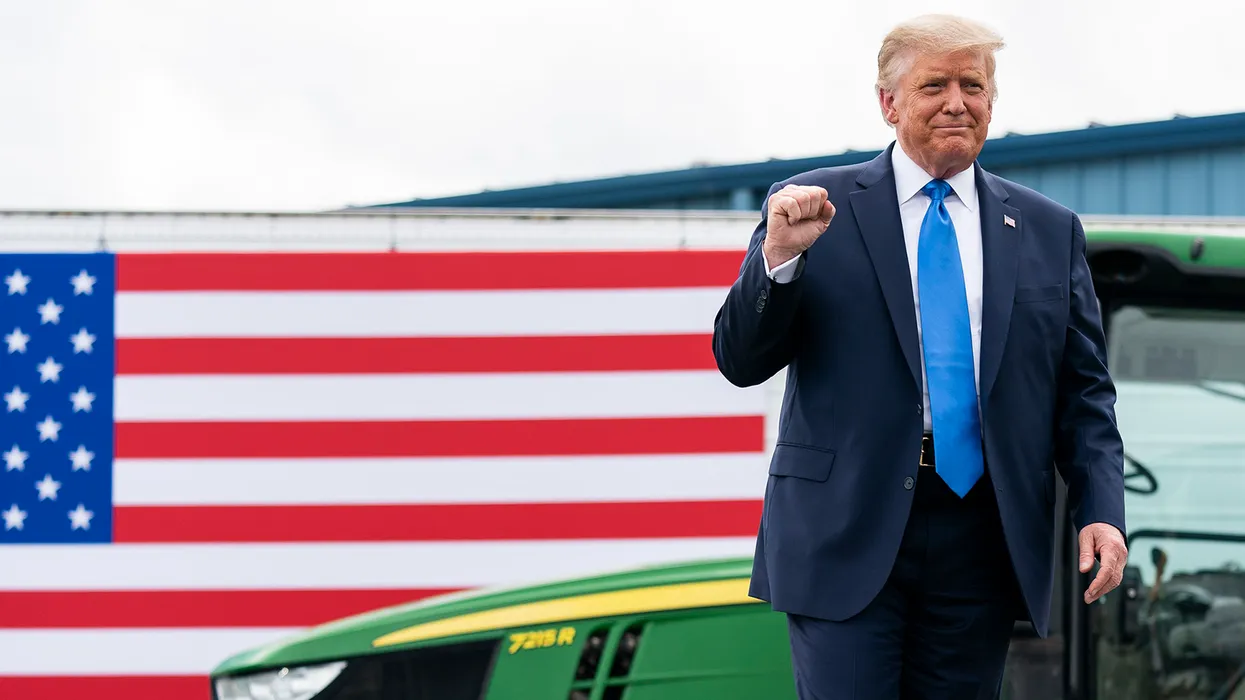
Republican insiders, speaking anonymously in major publications, are increasingly acknowledging that Democrats have a strong chance of flipping the U.S. House of Representatives in the 2026 midterms. The party's greater concern is holding the U.S. Senate, where Democrats would need to flip four or more GOP-held seats to secure a majority. The high bar reflects the 2026 Senate landscape, in which Republicans are defending a sizable share of contested seats while Democrats defend fewer, and midterm electorates have historically swung against the party of an incumbent president — a pattern that cut against Democrats in 2010 and 2014 and Republicans in 2018. According to Politico's Jonathan Martin, the American Farm Belt could doom Republicans' hopes of controlling the Senate in 2027.
"The Senate map is less complicated than it appears," Martin reports in Politico. "As with every modern presidential campaign, it runs through the Midwest. If Democrats flip Republican-held seats in Ohio and Iowa while retaining Michigan, they will almost certainly net the four seats total needed to take control of the Senate for President Donald Trump's final two years. As the traditional start of the campaign season draws near, though, Republicans are increasingly worried they may be consumed by a worsening prairie fire…. The triple-whammy of tariffs, expensive diesel and fertilizer and now imported beef has created a crisis for agriculture-state Republicans."
That pressure lands on a Farm Belt economy where crop and livestock profitability is highly sensitive to input costs — fertilizer and diesel are among farmers' largest expenses — and to trade policy, since a substantial share of U.S. soybean, corn, and meat production depends on export markets. The farm economy has faced strained conditions in recent years, with federal forecasts tracking net farm income below the record levels seen earlier in the decade, and the 1980s farm debt crisis remains a widely cited precedent for how quickly rural finances can deteriorate when credit tightens and commodity prices fall.
Sen. Kevin Cramer (R-North Dakota) acknowledged that President Donald Trump faces a problem in the Farm Belt.
"He's in serious trouble in farm country. He being Trump — and Trump is us. I'm not very optimistic," Cramer told Politico.
Adam Hamilton, the Methodist pastor running against GOP Sen. Roger Marshall in Kansas, told Politico: "Now, some of those people are still not willing to say, 'Hey, we don't like Trump,' but they do expect their senator is going to speak up for them. What I'm hearing when I go across the state is people saying — and these are Republicans, not Democrats — we can't have six more years of this, or even two more years of this…. How many farms are going to go bankrupt?"
Iowa State Rep. Josh Turek, a Democrat running for the U.S. Senate in that state, told Politico: "We're going through a second farm crisis right now, Farmageddon."
Martin reports: "Should Iowa turn back to Democrats after supporting Trump in all three of his elections, and not electing a Democratic senator since 2008, it would be an unmistakable tell about the sort of voters who also backed Barack Obama twice. The alarm among Republicans, though, is that the contagion may spread beyond the Heartland. While GOP incumbents in Kansas and Nebraska are facing the fight of their careers, Republican lawmakers in the South are also seeing unusually adverse polling data, while states at opposite ends of the country, Maine and Alaska, are tilting left because of their fuel- and trade-dependent economies."
