Fake World Assets: The Onchain Gacha Phenomenon Consuming Ethereum
Key Takeaways
- •Fake World Assets became Ethereum's largest gas consumer by fees within four days of launch, generating approximately $1.53 million in daily fees at its July 25 peak.
- •By August 1, the protocol had recorded 10,000 ETH in volume, 100,000 purchases, and over $6.15 million in total value locked.
- •The FWA protocol features two participant roles where NFT holders serve as liquidity providers earning fees, while players pay to spin for randomly selected NFTs they can keep or redeem for ETH.
- •Approximately 70% of purchasers currently choose to convert their winnings to FWA rather than retaining the underlying NFT collectibles.
- •Moonrock Capital founder Simon Dedic attributes much of the current activity to generous token incentives rather than genuine demand, warning that the protocol's sustainability remains unproven once rewards taper.
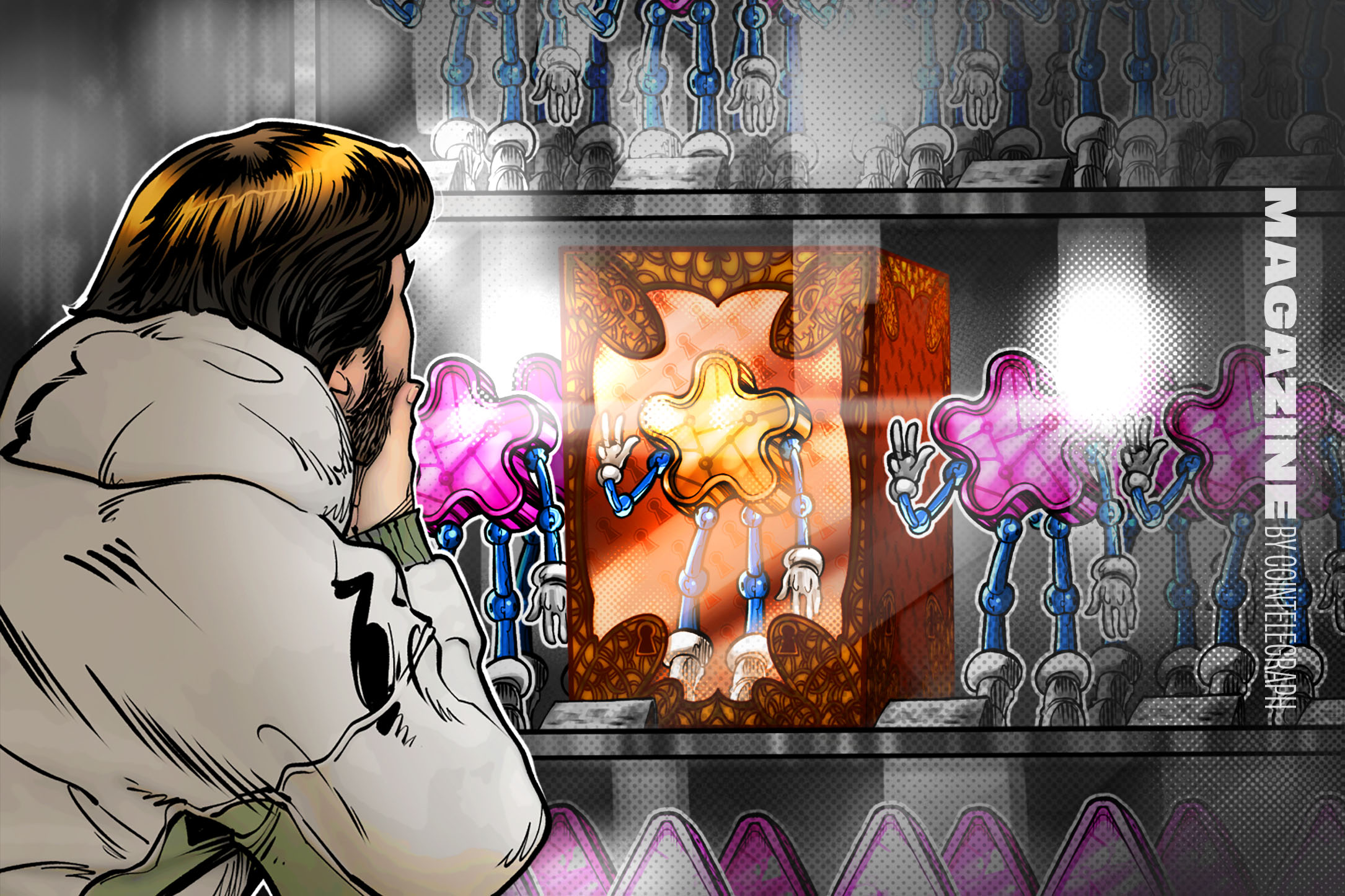
A new phenomenon has captured the attention of Crypto Twitter: Fake World Assets (FWAs), the latest iteration of the onchain gacha craze where users pay to receive randomly selected collectibles that are typically worth very little — but occasionally worth a great deal.
Within four days of launch, FWAs consumed enough Ethereum gas to briefly become the blockchain's largest gas consumer by fees over a 24-hour period — a metric often used as a proxy for genuine onchain economic activity, since every transaction requires users to pay for computation. At its July 25 peak, the protocol generated approximately $1.53 million in daily fees, surpassing both Tether and Circle to rank among Ethereum's top consumers of blockspace. Its creator, TokenWorks, declared: "4 days since launch. Fake World Assets are the next big thing."
While TokenWorks is hardly an impartial observer, total value locked (TVL) continues to climb, reaching over $6.15 million by July 31, according to DeFiLlama. Fee revenue has since eased to roughly $350,000 per day, equating to an annualized run rate of approximately $268 million. By August 1, FWA had recorded 10,000 ETH in volume and 100,000 purchases. Some of this activity appears driven by users seeking early FWA token incentives, though genuine interest in the gamified mechanic is also evident.
Not everyone is convinced the excitement will endure. Simon Dedic, founder of venture capital firm Moonrock Capital and an early backer of onchain collectible platforms, told Cointelegraph Magazine:
"I'm very bullish on gamified commerce... my skepticism on FWA is specific."
Dedic argues that much of the current activity stems from generous token incentives rather than authentic demand.
"The whole thing is purely aimed at crypto degens so they can gamble and speculate."
What Are Fake World Assets?
Crypto has spent years attempting to bring real-world assets onchain, from stocks and bonds to collectible cards and Brazilian cattle. Tokenization of real-world assets has become one of the sector's most actively pursued growth narratives, with institutions including BlackRock and Franklin Templeton launching tokenized funds. TokenWorks inverted that concept by creating Fake World Assets — essentially NFTs — playfully subverting an acronym normally associated with one of crypto's most serious institutional narratives.
Rather than purchasing a specific collectible like a Bored Ape, users pay to spin an onchain "gacha" machine for a chance to win a randomly selected NFT backed by Ether. Prizes are drawn from dozens of well-known collections, including CryptoPunks, Azuki, Lil Pudgys, and Art Blocks. The protocol operates at fwa.fun.
The term "gacha" is derived from gachapon/gashapon, Japanese vending machines invented in the 1960s that dispense a random toy in a capsule. This mechanic migrated to digital gaming, with the loot boxes in Dragon Collection (2010) frequently cited as the first major gacha game. A similar randomness governs real-world Pokémon trading card "booster packs," which offer collectible cards of varying rarity and value. In traditional gaming, gacha and loot box mechanics have drawn regulatory scrutiny: Belgium's Gaming Commission classified certain loot boxes as gambling in 2018, and the Netherlands investigated similar mechanics under its betting and gaming laws.
These physical cards have subsequently been tokenized onchain by projects such as Collector Crypt, Beezie, and Courtyard. As Cointelegraph Magazine previously reported, onchain gacha reached a record $324 million in volume during June. Hundreds of these tokenized cards have since been wrapped for use on FWA.
The concept continues to expand, with developers experimenting with randomized "token packs" containing ERC-20 tokens. Meanwhile, StockRip on the Robinhood chain demonstrates how tokenized stocks can be wrapped into NFT-based gacha packs.
AzFlin, founder of DAO launchpad daos.world and a former Uniswap engineer, remarked:
"Just when you think everything in crypto has been invented, something new springs up."
The Appeal of Onchain Gacha
The gacha mechanic sits at the intersection of crypto, collectibles, and gambling. As pseudonymous crypto commentator 2Lambroz explained, from the player's perspective, "you're buying a lottery ticket on the pool."
"People enjoy playing the lottery, and it's important to take that seriously," said Benjamin Lockwood, a Wharton economist whose research into state-run lotteries found that people value the experience itself, not just the chance of winning.
Meir Statman, behavioral finance pioneer, professor at Santa Clara University, and author of A Wealth of Well-Being, told Cointelegraph Magazine:
"There is a parallel to 'onchain gacha' in people bidding on the contents of abandoned storage units. Most find items worth placing in the trash, but some find items they can sell on eBay. One found a painting worth hundreds of thousands of dollars. These combine hope for riches with playfulness. This is what lotteries offer."
Two Sides of the Protocol
The FWA protocol has two participant roles. NFT holders serve as liquidity providers (LPs), depositing collectibles alongside ETH and earning a share of fees while their position remains in the pool. Players pay for the opportunity to pull a randomly selected NFT, then decide whether to keep the collectible or redeem most of its attached ETH value. According to Blockworks Research, approximately 70% of purchasers currently choose to convert their winnings to FWA.
As 2Lambroz describes, LPs are essentially betting that their NFT remains in the pool long enough to accumulate fees before being selected, while players pursue the chance of winning a prize worth substantially more than the cost of a spin.
Self-proclaimed Ethereum maximalist Materkel offered:
"The most fun NFT/casino primitive in over a decade of crypto, where users actually get to be both players and the house at the same time […] Money legos on Ethereum are back!"
Can the Hype Last?
While Dedic attributes much of the activity to token incentives, he remains optimistic about gamified commerce over the longer term.
"The further Gen Z moves into being the generation with the strongest buying power, the more shopping is going to be gamified and come with a dopamine kick attached."
Rather than offering random NFTs from the previous cycle, Dedic believes the mechanism is better suited to assets people already want to own — collectibles like Pokémon cards, watches, and even whiskey.
"I see enormous potential in selling much-demanded assets in a gamified way. I see very little in building Ponzi schemes to create demand for assets nobody wanted in the first place."
The decisive test will arrive when novelty fades and incentives are reduced. Whether TVL, fee revenue, and purchase volume hold up once token rewards taper will signal whether onchain gacha has uncovered a durable retail use case that crypto has long sought. If not, the phenomenon will join the roster of crypto experiments that burned brightly before fading away.

