FAA Nationwide Ground Stop Traced to L3Harris Router Maintenance as White House Situation Room Mobilized Over Cyberattack Fears
Key Takeaways
- •The FAA halted flights nationwide on Friday after a communications failure disrupted air-traffic control, forcing airlines to delay and cancel thousands of flights.
- •The disruption originated when an L3Harris contractor switched telecom lines from copper to fiber at a remote FAA facility, causing routers to be flooded with more than 1,000 connection attempts every four to five seconds and degrading some radar feeds.
- •Senior officials, including the FBI director and the director of national intelligence, convened over fears of a foreign cyberattack, but investigators found no evidence of malicious activity and ruled out a foreign actor.
- •Transportation Secretary Sean Duffy warned L3Harris, the prime contractor that owns the legacy telecom network, would be held accountable, while the probe has yet to determine whether a faulty router or poor installation caused the outage.
- •L3Harris said it and its telecom partners have completed over 70% of the copper-to-fiber conversion for the National Airspace System, leaving further changeovers on the live air-traffic network still to come.
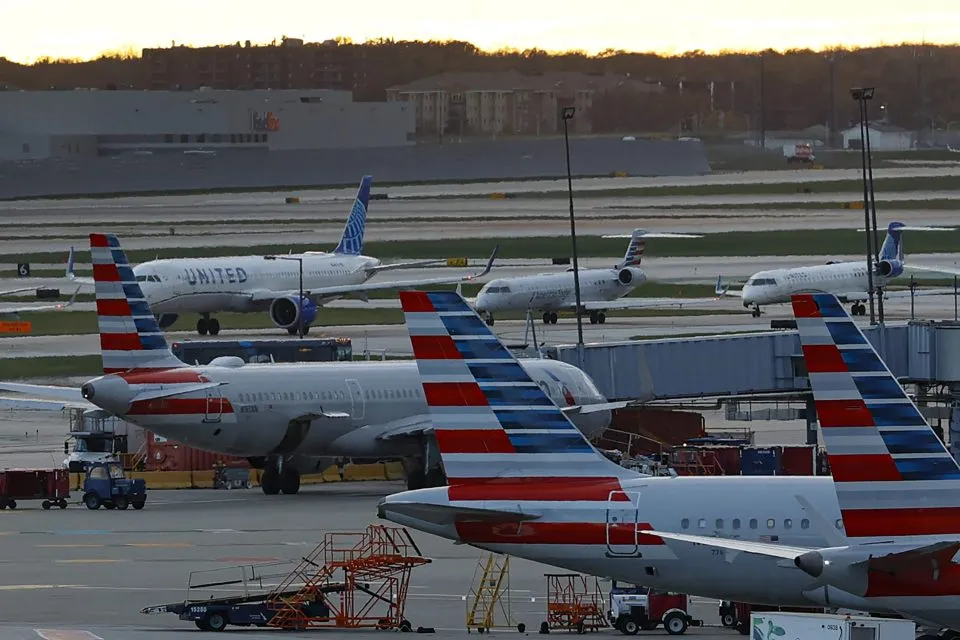
The Federal Aviation Administration ordered a nationwide ground stop on Friday, forcing airlines to delay and cancel thousands of flights, after detecting a communications problem that affected air-traffic control. Officials said there was no evidence of a cyberattack or other malicious activity, but the speed with which the telecom issue spread was alarming enough to briefly elevate it to the highest echelons of the U.S. government.
Speaking at a press briefing on Saturday, FAA Administrator Bryan Bedford said the White House Situation Room and the entire national security infrastructure were activated, adding that the FBI was also present at facilities to investigate.
“I think we’ve all concluded that it’s not a cyber issue,” Bedford declared.
Transportation Secretary Sean Duffy said FBI Director Kash Patel, the director of national intelligence, and the Defense Department took part in a conference call because they were concerned there had been a cyberattack from another country. However, he added, officials did not see any online chatter to indicate a hacking attempt. Once the FAA isolated the location where the telecom problem originated and took it offline, the system began functioning properly again.
“We feel very comfortable that that was the root cause of the impact on our system,” Duffy said. “It wasn’t a foreign actor.”
The underlying cause proved more mundane. According to Duffy, the trouble began when a contractor working for L3Harris was performing routine maintenance at a remote FAA facility, switching telecommunication lines from old copper wire to fiber optics. The changeover caused routers across the air traffic control system to be flooded with more than 1,000 connection attempts every four to five seconds, he explained. Because the surge disrupted some radar feeds, the FAA ordered the ground stop to ensure safety.
The episode made clear that this conversion work is happening on a live network: the copper-to-fiber changeover runs through the same communications pathways that air-traffic control depends on, so a maintenance error at one remote facility was able to ripple through the entire system.
“So what we’re working to determine was whether we had incompetence, meaning was it user error or installator error from L3Harris, or did they install a faulty router,” Duffy said. “We haven’t determined what the fault was. Was it the router or were they not doing great work for us at L3Harris?”
He later pointed out that L3Harris owns the legacy telecom network, while the department is working with “the greatest telecom companies in the world,” such as AT&T, Verizon, and Lumens, to build a new architecture.
Duffy also stressed that L3Harris owns the network and serves as the prime contractor, warning that the department will hold people accountable.
“Many of our contractors, many of our partners, they take our money and they provide really poor service to us,” he complained. “And we have demanded more. We’ve demanded better because the American people deserve better. And we’re getting better performance from everyone who’s doing business with us now. We need L3Harris or whoever provided that router to us to do a better job.”
In a statement, an L3Harris spokesperson said the company has been modernizing the communications infrastructure for the National Airspace System in close coordination with the FAA. Together with its telecom partners and the agency, the company said it has completed more than 70% of the conversion from legacy copper wires to a fiber optic system.
“We are supporting the FAA in its investigation to understand the conditions that led to the Nov. 13 ground stop of our nation’s air travel,” the spokesperson said. “L3Harris takes the nationwide ground stop and its impact on travelers, airlines and air traffic operations seriously.”
That leaves the remainder of the conversion — and further changeovers on a network carrying live air-traffic communications — still ahead, while the investigation has yet to answer the question Duffy posed: whether the fault lay in the router hardware or in the installation work around it.
The scare came amid a period of heightened cybersecurity concerns. Hackers recently raised the temperatures in freezers across Europe and at U.S. military bases, causing food to spoil, and last month saw so many cyberattacks that it was dubbed “Black October.” Cybersecurity experts also rushed to fix vulnerabilities in the PHP programming language, which is used in nearly 70% of all websites. After the United States launched its war on Iran, the regime warned it would retaliate via cyberspace and threatened to cut undersea cables that carry internet traffic. Separately, consumers are still grappling with the aftermath of a Microsoft outage that shut down email, collaboration and AI functions. The company said Friday it had no indication that the ground stop was related to its global outage.
This story was originally featured on Fortune.com.

