Ex-CIA Station Chief Dan Hoffman Warns on Fox News That Trump's Business-Deal Diplomacy With Putin Has Failed
Key Takeaways
- •Former CIA station chief Dan Hoffman apologized on air for doubting that President Trump's approach can bring Vladimir Putin to end the war in Ukraine, saying commercial incentives have failed to draw Moscow into genuine negotiations.
- •Hoffman warned that Putin will interpret Trump's optimism about a possible deal as a sign of greater leverage, noting more than 200 hybrid 'gray zone' attacks on Europe since the 2022 invasion.
- •He argued Trump strengthened Putin's position by stepping back from the bipartisan Lindsey Graham Sanctions Act and other penalties while the U.S. provides Ukraine with less military assistance than before.
- •White House envoys Jared Kushner and Steve Witkoff reportedly told European officials that the strategy of using business partnerships had failed and was no longer central, aligning with Hoffman's on-air assessment.
- •Hoffman said nations act on interests rather than friendships, that Putin's objective remains overthrowing Ukraine's government, and that there is no indication the Kremlin wants to stop the war.
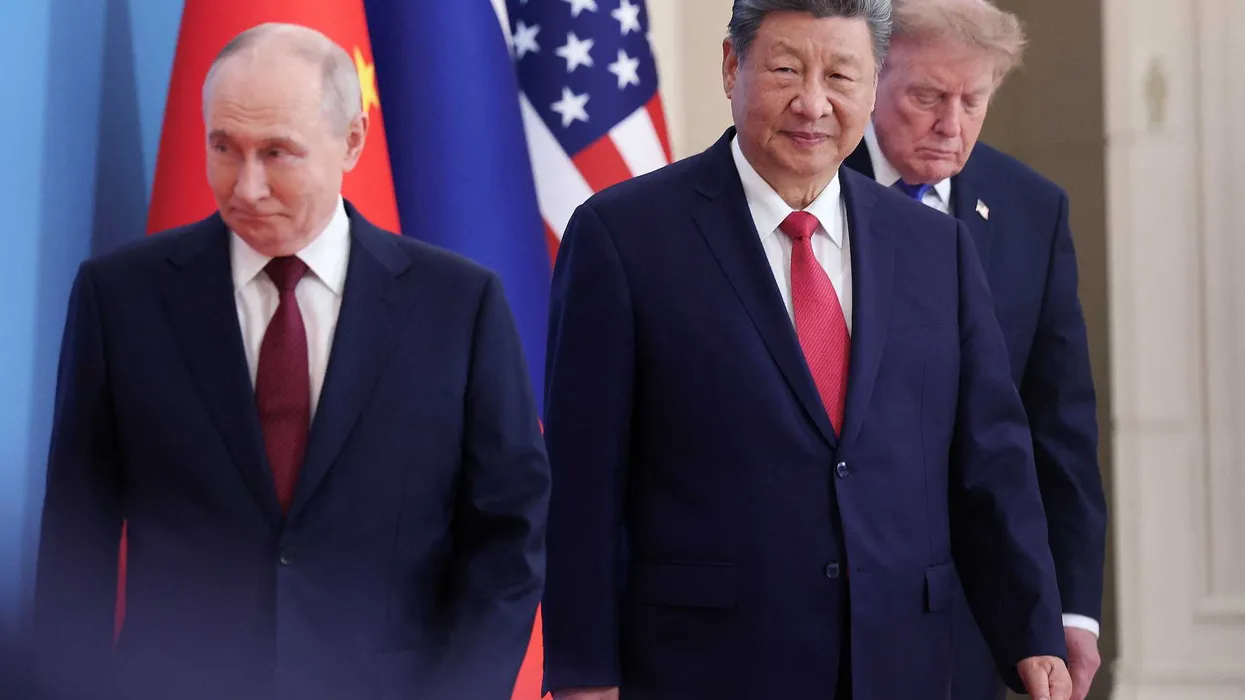
Fox News contributor Dan Hoffman, a former CIA station chief with 30 years at the agency, apologized on air Friday for his "skepticism" toward President Donald Trump's approach to confronting Russian President Vladimir Putin. In Hoffman's assessment, the administration's effort to entice Russia into negotiations by dangling the prospect of commercial deals has not worked, and the president appears to have lost sight of a core tenet of diplomacy: it is guided not by who he considers his "friends," but by the realities of U.S. "interests."
Hoffman was responding to Trump's assertion on Thursday that there was a "strong possibility" a deal could be reached to stop Russia's attacks on Ukraine.
"I think Vladimir Putin will hear the president's words and believe that he has more leverage," Hoffman said. "That's what Putin ultimately wants. He knows that his gray zone attacks on Europe, over 200 of them since Russia invaded Ukraine back in 2022, have had their effect. And Putin wants to discourage Europe from providing Ukraine with the military assistance that Ukraine needs to carry on their existential war… His objective is still the same. It's to overthrow the democratically elected government of Ukraine. Sure, he'll feign interest in negotiations, but that's just designed to influence U.S. policy."
"Gray zone" is the term security officials use for hybrid operations — sabotage, cyberattacks, and drone incursions among them — that fall below the threshold of open warfare, incidents that European and NATO officials have repeatedly attributed to Moscow since the invasion began.
In Hoffman's view, the president has made a series of key missteps that have strengthened Putin's hand. Trump backed down on the Lindsey Graham Sanctions Act — a bipartisan Senate bill that would impose steep new economic penalties on Moscow and on countries continuing to purchase Russian oil — and other sanctions against Russia, measures Hoffman asserted "would certainly cripple Russia's economy." At the same time, he noted, "the United States is not providing Ukraine with the same level of military assistance that we once were."
Hoffman also argued that it was time to move on from the strategy of luring Russia to the table with potential business deals. Earlier in the week, it was reported that White House special envoys Jared Kushner and Steve Witkoff — tasked with leading the negotiations — admitted to European officials that the approach had failed and that business partnerships were "no longer central" to their strategy. That reported concession placed Hoffman's on-air verdict alongside what the administration's own negotiators had reportedly conceded in private.
"We've tried to entice Russia to come to the negotiating table with all sorts of commercial deals," Hoffman noted, suggesting, "Perhaps we might look at a different tack." What that different tack would mean in practice is the open question hanging over the negotiations, with Hoffman pointing to the two levers he argued Washington has lately declined to pull: sanctions pressure and sustained military assistance.
Hoffman was asked whether anything good could come out of the president's relationships with Putin and Chinese President Xi Jinping, ties Trump has described in glowing terms, even calling Putin his "friend." His answer was unequivocal.
"I'm sorry to say there's no real reason for optimism here," Hoffman said. "I think it's a good thing for the president to have met with the leaders of Russia and China, but nations don't have friends, typically. They have interests. And it's an opportunity for the president to explain to Russia that we want to see an end to the war. But then we have to back that up with policy designed to influence or change Russia's behavior."
Fox News does not typically air messaging that contradicts Trump so directly, yet Hoffman's conclusion offered no softening.
"I'm sorry to have to bring more skepticism to the discussion the day after Thanksgiving," he said, "but that's the reality of dealing with the KGB operative in the Kremlin."
"There's no indication whatsoever that he wants to stop the war," he added.

