Everland's Firefly Festival and Summer Night Safari Draw Crowds Seeking After-Dark Magic
Key Takeaways
- •Everland's firefly habitat resulted from conservation research spanning nearly 30 years, with successful captive breeding first achieved in 1998 and the public exhibit opening in 2017.
- •The firefly experience attracted roughly 30,000 visitors during its first two weeks following a July 24 launch, while the Summer Night Safari drew over 120,000 guests in its first 50 days.
- •Laon, a male lion cub born at Safari World in June, is the first lion born at the park in eight years and was hand-reared by zookeepers after his mother could not care for him.
- •Both the Firefly Festival and Summer Night Safari are included free with standard park admission, and Everland is extending weekend operating hours until 11 p.m. during the peak summer season.
- •Firefly populations have declined globally due to light pollution, pesticide use, and habitat destruction, making captive breeding programs like Everland's increasingly important for species preservation.
Everland's Firefly Festival and Summer Night Safari Draw Crowds Seeking After-Dark Magic
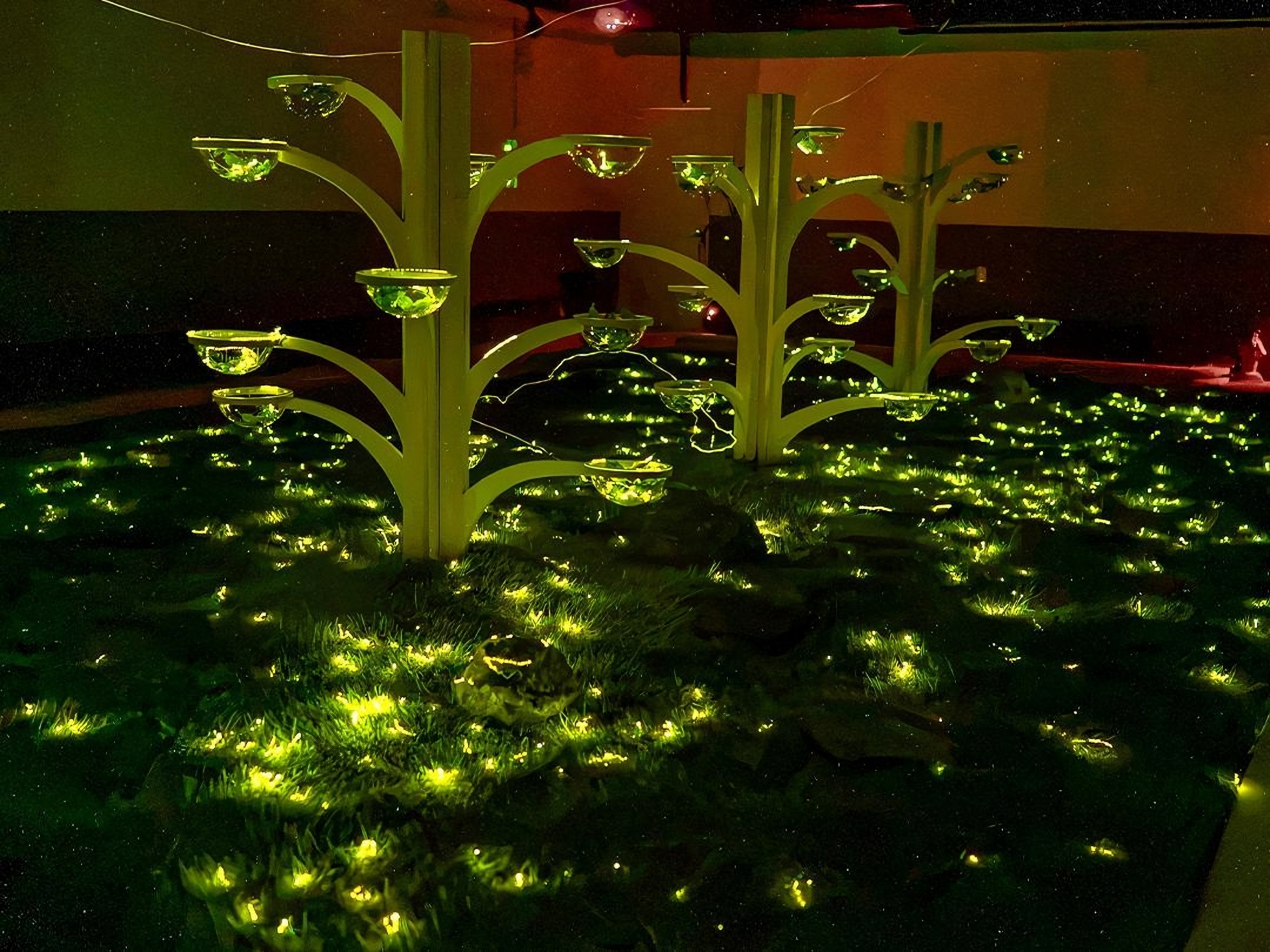
YONGIN, Gyeonggi Province — A dim, canvas-draped shelter at Everland, South Korea's largest theme park, marks the entrance to one of the summer season's most sought-after attractions. Visitors step inside to learn that a firefly spends an entire year maturing, only to live roughly ten illuminated days as an adult.
Descending into the basement-level exhibition hall, guests emerge into a darkened space pulsing with thousands of live fireflies, creating the impression of a bioluminescent forest.
"Fireflies carry tiny lanterns on their abdomens — one light organ for females, two for males," explained Kim Jin-mok, the zookeeper who oversees the sanctuary. "These sparks are a language of survival. They serve as a warning to predators, a quiet plea for defense and a glowing love song to attract a mate in the dark."
Kim emphasized the ecological importance of the insects. "Fireflies are environmental bellwethers. They can only thrive in untouched, pristine ecosystems, so their presence is a living gentle reminder to protect our wild spaces. Beyond that, there is something deeply soothing about their gentle light — it brings a sense of calm and wonder that people desperately need."
Decades of Conservation Behind the Display
The firefly habitat is the product of nearly three decades of work. Everland's team began researching firefly conservation as urban development encroached on native populations. After successfully breeding fireflies in captivity in 1998, the resort has accumulated 28 years of specialized expertise. The habitat opened to the public in 2017, providing children with a hands-on ecology lesson and adults with a rare nighttime nature experience.
South Korea's rapid industrialization and urban sprawl over recent decades have severely reduced natural firefly habitats, making captive breeding programs like Everland's increasingly significant for species preservation. Firefly populations have declined worldwide due to light pollution, pesticide use, and habitat destruction, placing the insects on watch lists in numerous countries.
Since this year's firefly experience opened on July 24, it has drawn approximately 30,000 guests in its first two weeks alone. Both the Firefly Festival and the Summer Night Safari are included free with standard park admission, organized by Samsung C&T Resort Group. Word of mouth has driven many visitors to return for second and third visits.
Visitor reactions have been emotional. "I felt tears come to my eyes watching their light," one guest wrote online. "It's something you simply never see in the neon glow of the city." Another visitor commented, "Giving my child the gift of seeing real, wild fireflies felt truly special."
Summer Night Safari Extends Hours
After sunset, the attraction expands to Safari World, where the Summer Night Safari operates until 9 p.m. As temperatures drop, the park's large predators — including lions, tigers, and brown bears — become more active. Visitors ride low-noise electric buses through the darkened enclosures, accompanied by suspenseful background music and live commentary from guides.
The night safari has attracted over 120,000 visitors in its first 50 days of operation. Everland's after-dark safari format follows a model pioneered by Singapore's Night Zoo in 1994, which has since been adopted by wildlife parks across Asia seeking to showcase nocturnal animal behavior that daylight hours rarely reveal.
A new addition to Ppuppa Town is drawing particular attention: Laon, a male lion cub born at Safari World in June. He is the first lion born at the park in eight years. After his mother was unable to care for him, zookeepers hand-reared the cub. Laon now weighs over 5.5 kilograms and has become a crowd favorite.
Water Festival and Extended Hours
Everland's annual Water Festival adds to the nighttime offerings. At Carnival Square, the BamBam Summer Night party features live K-pop performances and EDM DJ sets, with water cannons spraying over the audience. Multimedia fireworks and the Moonlight Parade complete the evening entertainment.
During peak summer holiday weekends, Everland is extending nighttime operating hours until 11 p.m. Discounted night passes are available for visitors arriving after 6 p.m. The 2Park deal offers free entry to Everland on the same day as a visit to the adjacent Caribbean Bay water park.
"We wanted to give people a chance to slow down and reconnect with nature's miracles," an Everland official said. "Whether you're standing in a sea of fireflies or watching a lion prowl under the stars, these summer nights offer a rare glimpse into the untamed beauty of life."
Source: The Korea Times | Samsung C&T Resort Group
