Evergrande Founder Hui Ka Yan Sentenced to Life in Prison by Shenzhen Court
Key Takeaways
- •The Shenzhen Intermediate People's Court sentenced Hui Ka Yan, also known as Xu Jiayin, to life imprisonment after he pleaded guilty to eight financial crimes, and ordered the confiscation of his personal property.
- •Evergrande Group was fined 8.82 billion yuan and its subsidiary Evergrande Real Estate was fined 7 billion yuan, for combined penalties of roughly 15.82 billion yuan, or about $2.35 billion.
- •A total of 56 people were sentenced in connection with the company's financial misconduct, with other Evergrande executives receiving prison terms of up to 18 years.
- •Evergrande defaulted on its debt in 2021 after accumulating more than $300 billion in liabilities, making it the world's most indebted property developer.
- •A Hong Kong court ordered Evergrande's liquidation in 2024 after restructuring failed, and creditors still face uncertainty over how much of their money can be recovered.
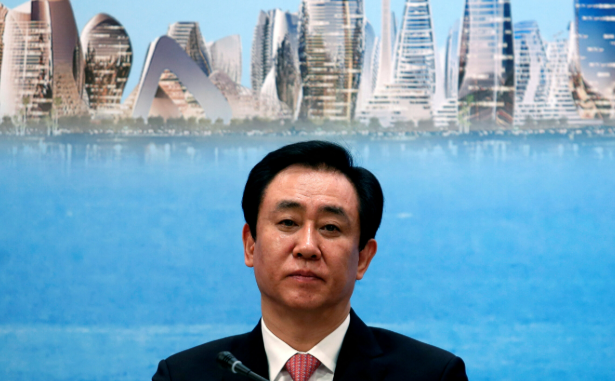
A court in Shenzhen has sentenced Hui Ka Yan, the founder of China Evergrande Group, to life in prison, closing a dramatic legal chapter in the collapse of one of China's largest property developers. The ruling arrives nearly five years after Evergrande defaulted on most of its more than $300 billion in liabilities — a failure that sent shock waves through China's property market and financial system and became one of the most prominent examples of the risks created by excessive borrowing and aggressive expansion in the country's real estate sector. For a developer once seen as a bellwether for China's property boom, the verdict underscores how deeply the company’s collapse has been tied to broader concerns about leverage, unfinished homes and confidence in the sector.
The development was also highlighted by crypto market account @coinbureau on X, as the fallout from Evergrande continues to attract international attention.
Eight Guilty Pleas and a Life Sentence
The Shenzhen Intermediate People's Court sentenced Hui — also known as Xu Jiayin — to life imprisonment after he pleaded guilty in April to eight financial crimes. The charges included misuse of funds, fundraising fraud, illegally taking public deposits, illegally extending loans, fraudulent securities issuance and bribery. Authorities also accused Hui and Evergrande of using financial manipulation to inflate the company's assets and conceal its liabilities.
The court additionally ordered the confiscation of Hui's personal property. Several other Evergrande executives were sentenced alongside him, with prison terms ranging from several years to as long as 18 years. In total, 56 people were sentenced in connection with the broader fallout from the company's financial misconduct.
The sentence marks a dramatic end for a businessman who once ranked among Asia's wealthiest individuals.
Billions in Corporate Fines
The punishment extended well beyond Hui personally. Evergrande Group was fined 8.82 billion yuan, while Evergrande Real Estate, its major mainland property subsidiary, was fined another 7 billion yuan. Together, the penalties amount to approximately 15.82 billion yuan — roughly $2.35 billion based on current exchange rates.
The fines add another layer to the company's long-running restructuring and liquidation process, but the criminal verdict does not resolve the enormous losses suffered by Evergrande's creditors, homebuyers and other stakeholders. The collapse left a complicated financial trail that is still being dealt with years after the initial default, and the size of the penalties highlights how far the company’s legal and financial troubles extended beyond a single executive.
From Property Giant to the World's Most Indebted Developer
Hui founded Evergrande in 1996, and the company grew rapidly alongside China's enormous property boom, becoming one of the country's biggest developers by relying heavily on borrowing and presales to finance its expansion. At its peak, Evergrande stretched far beyond traditional residential property development, building a sprawling corporate empire with interests in areas including electric vehicles, finance, healthcare and other businesses.
That aggressive expansion also produced an enormous debt burden. By the time the company defaulted in 2021, Evergrande had accumulated more than $300 billion in liabilities, making it the world's most indebted property developer.
How the Collapse Began
Evergrande's downfall accelerated after Chinese authorities introduced measures designed to limit excessive borrowing in the property sector. As credit conditions tightened, the company struggled to refinance its enormous obligations. The situation grew increasingly severe as Evergrande faced declining sales, liquidity shortages and mounting pressure from creditors, and it eventually defaulted on its debt in 2021.
The failure became a symbol of China's broader property crisis, which subsequently spread across the country's real estate industry. Other developers also ran into financial difficulties as home sales weakened and access to funding became more challenging.
Impact on China's Property Market
The consequences reached far beyond Evergrande itself. China's property market had become a major component of the country's economic growth, and the crisis affected developers, banks, suppliers, construction workers and millions of homebuyers. Many projects faced delays or were left unfinished as developers struggled with funding. The property downturn also damaged consumer confidence and became a major challenge for China's policymakers.
Evergrande's failure was therefore more than a corporate bankruptcy — it became one of the clearest signs of the structural problems facing China's real estate sector.
What Happened to Homebuyers?
Among the most painful consequences of Evergrande's financial collapse were the unfinished housing projects. Many Chinese homebuyers had purchased properties before construction was completed, leaving them facing uncertainty when developers ran out of money. The unfinished projects contributed to public anger and increased pressure on Chinese authorities to stabilize the property market. While government measures have attempted to support construction and protect homebuyers, the damage from the property downturn has remained difficult to reverse.
Evergrande's collapse also raised broader questions about the risks associated with China's presale housing model and the use of borrowed money to finance property development.
From Billionaire to Prison
Hui Ka Yan's personal trajectory has become one of the most dramatic stories of China's property boom and bust. He rose from relatively modest beginnings to become one of the country's most prominent business figures, and at the height of Evergrande's expansion he was among the world's wealthiest people, with his fortune reaching tens of billions of dollars. The collapse of his company changed that position completely.
Chinese regulators had previously imposed penalties on Hui over financial misconduct, including a fine and a permanent ban from the securities market. The latest criminal conviction represents a far more severe consequence.
A Crisis That Is Not Over
Although Hui's sentencing closes a major legal chapter, the financial consequences of Evergrande's collapse are still unfolding. A Hong Kong court ordered the company's liquidation in 2024 after restructuring efforts failed to produce a viable solution for its enormous debt burden, and creditors continue to face uncertainty over how much of their money can ultimately be recovered. For China's economy, the property crisis also remains a significant challenge.
The Evergrande case serves as a warning about the dangers of excessive leverage, particularly when rapid growth depends heavily on continued access to credit and rising asset prices. The life sentence handed to Hui Ka Yan is therefore not simply the conclusion of one billionaire's downfall — it is also a major symbol of China's effort to address the financial misconduct and excessive debt that helped fuel one of the country's biggest property crises.

