Could the Battery Be the Most Valuable Part of an EV?
Key Takeaways
- •China’s EV market is expanding quickly, with the average electric vehicle on Chinese roads about 1.8 years old, while used EV prices have fallen sharply in price wars.
- •A battery that is no longer suitable for driving can still retain useful capacity for stationary storage and other non-automotive applications.
- •Researchers expect the end-of-life battery market to grow significantly by 2035, supporting industries focused on testing, remanufacturing, repurposing, and material recovery.
- •Electric vehicle batteries can be reused for grid balancing, renewable integration, commercial storage, backup power, and residential systems before recycling.
- •The article says a five- or seven-year-old EV could eventually have a battery worth more than the rest of the vehicle in some market segments.
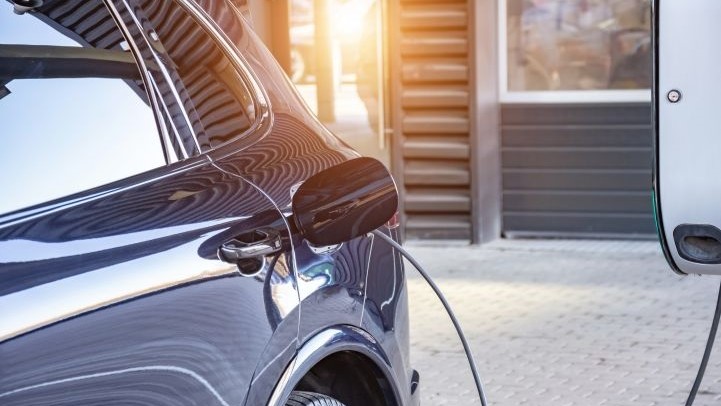
Rapid depreciation in China’s electric vehicle market is often cited as evidence that EVs are becoming disposable consumer electronics. Yet the opposite may prove true. While the vehicle loses value, the battery is increasingly emerging as a long-lived energy asset with multiple commercial lives ahead of it.
For decades, critics of electric vehicles have pointed to one unavoidable question: what happens when millions of batteries reach the end of their lives? Images of mountains of discarded battery packs have become a familiar part of debates over the energy transition, reinforcing the idea that electrification simply replaces one environmental problem with another.
The emerging evidence suggests something different.
The battery may become the single most valuable component of the vehicle long after the car itself has lost much of its economic value, and that shift matters because it changes how EVs are viewed not just as transportation but as a source of storage capacity that can be used again in other parts of the power system.
China’s EV market is showing the future
China has become the world’s largest laboratory for electric mobility. Its EV fleet is expanding so quickly that the average electric vehicle on Chinese roads is now only about 1.8 years old, compared with more than eight years for conventional petrol vehicles. The figure reflects extraordinary sales growth rather than unusually short ownership periods, but it shows how quickly new technology is entering the market.
At the same time, fierce competition between BYD, Tesla and dozens of domestic manufacturers has triggered unprecedented price wars. Used electric vehicles have depreciated far faster than many analysts expected, with some retaining little more than 40% of their original value after just three years.
To many observers, that appears to confirm a weakness in electric vehicles.
In reality, it may be revealing the weakness of treating the vehicle as a single asset, especially as the battery can still retain value even when the car is no longer competitive in the showroom.
We have been valuing the wrong component
Throughout automotive history, the engine and the vehicle have aged together.
Once a petrol or diesel car reached a certain age, its engine, gearbox and fuel system all deteriorated at roughly the same pace. Refurbishment was expensive, replacement rarely made economic sense, and the vehicle eventually became scrap. The powertrain had little value outside the car itself.
Electric vehicles fundamentally change that relationship.
The battery degrades far more slowly than the rest of the vehicle and, crucially, remains useful even after it no longer meets automotive requirements. A battery that has lost 20% of its original capacity may no longer provide the driving range expected by consumers, but it can still deliver many years of stationary electricity storage. That difference is part of why the battery is increasingly treated as an industrial component with a life beyond the car’s first owner.
The vehicle becomes obsolete.
The battery often does not.
Batteries are becoming independent energy assets
This is the transition now being observed by researchers tracking the battery value chain.
According to Hans Eric Melin of Circular Energy Storage Research and Consulting, batteries entering the market today are increasingly expected to generate positive economic value over their entire lifetimes. Rather than ending with recycling, many packs are likely to be refurbished, reused in other vehicles, repurposed for stationary energy storage and only recycled after several decades of productive use.
By 2035, the market for end-of-life batteries is expected to be many times larger than it is today, creating a new industrial ecosystem around battery testing, remanufacturing, repurposing and material recovery.
The battery is gradually becoming an asset class in its own right, with implications for manufacturers, repair businesses, recyclers and energy-storage operators.
Try doing that with an internal combustion engine
The contrast with conventional vehicles is clear.
An ageing diesel engine rarely becomes more valuable over time. It cannot easily be turned into part of a home energy system. It cannot stabilize an electricity grid. It cannot store solar power during the day for use at night. Once its automotive life ends, its remaining value is generally limited to scrap metal or spare parts.
Electric vehicle batteries follow a different economic path.
Even when they are no longer suitable for demanding automotive use, they often retain 70% to 80% of their original capacity. That creates opportunities for grid balancing, renewable energy integration, commercial storage, backup power and residential battery systems before valuable materials such as lithium, nickel, cobalt and copper are eventually recovered through recycling.
Instead of a linear decline toward waste, batteries increasingly move through a cascade of productive applications, which is why the end-of-life discussion is shifting from disposal toward sorting, testing and redeployment.
The battery could soon be worth more than the car
The most surprising implication is what this means for used vehicle economics.
As EV technology continues to improve, consumers may replace vehicles not because the battery has failed, but because newer models offer faster charging, longer range or more advanced software. The vehicle itself depreciates rapidly while the battery continues to retain significant technical and commercial value.
It is therefore entirely plausible that within the next decade a five- or seven-year-old electric vehicle could reach a point where the battery represents a substantial share of the vehicle’s remaining value. In some market segments, the battery may eventually be worth more than the rest of the vehicle combined.
That possibility would fundamentally change how used vehicles are financed, insured, traded and dismantled, especially as valuation methods catch up with a component that can outlast the body around it.
The waste debate is already becoming outdated
Much of today’s discussion still assumes that millions of batteries will eventually become an environmental burden.
Increasingly, that assumption appears to misunderstand the economics.
Waste generally emerges when an object has no further productive use.
Electric vehicle batteries are moving in the opposite direction. Their technical life increasingly exceeds the commercial life of the vehicle they were originally designed for. Every improvement in diagnostics, refurbishment and recycling only strengthens that economic case.
That is why the policy and industry focus is moving toward building the systems needed to collect, assess and reroute packs efficiently before they are recycled. Ironically, one of the most criticized components of the energy transition may become one of its most valuable long-term assets.
The future of electric mobility may therefore not be defined by how long the car lasts.
It may be defined by how many different lives its battery can have.
By Leon Stille for Oilprice.com
More Top Reads From Oilprice.com
Saudi Crude Tanker Goes Dark to Slip Through Bab el-Mandeb
Hormuz Tanker Crossings Sink to Lowest Level Since May as War Risk Spikes
ADNOC Issues Seventh Crude Tender Since June Despite Hormuz, Red Sea Risks

