European Gas Futures Fall 3.2% as Hormuz Diplomatic Reports Ease Supply Concerns
Key Takeaways
- •Dutch TTF and UK NBP gas contracts each declined 3.2% on Friday, putting both benchmarks on track for weekly losses exceeding 8%, the steepest since mid-June.
- •The sell-off was fueled by trader profit-taking and eased supply fears after reports of U.S.-Iran diplomacy, including an Iranian proposal to reopen the Strait of Hormuz within seven days if certain conditions are met.
- •LNG carriers are increasingly using alternative routes around the Arabian Peninsula, reducing concerns that physical LNG shipments could halt completely.
- •European Union gas storage is approximately 70% full, about 12 percentage points below the level of a year earlier, leaving smaller reserves ahead of winter and raising the risk of greater price volatility.
- •Scheduled maintenance at Norwegian pipeline facilities is limiting deliveries to Europe, while European buyers compete with Asian purchasers for LNG cargoes ahead of peak winter demand.
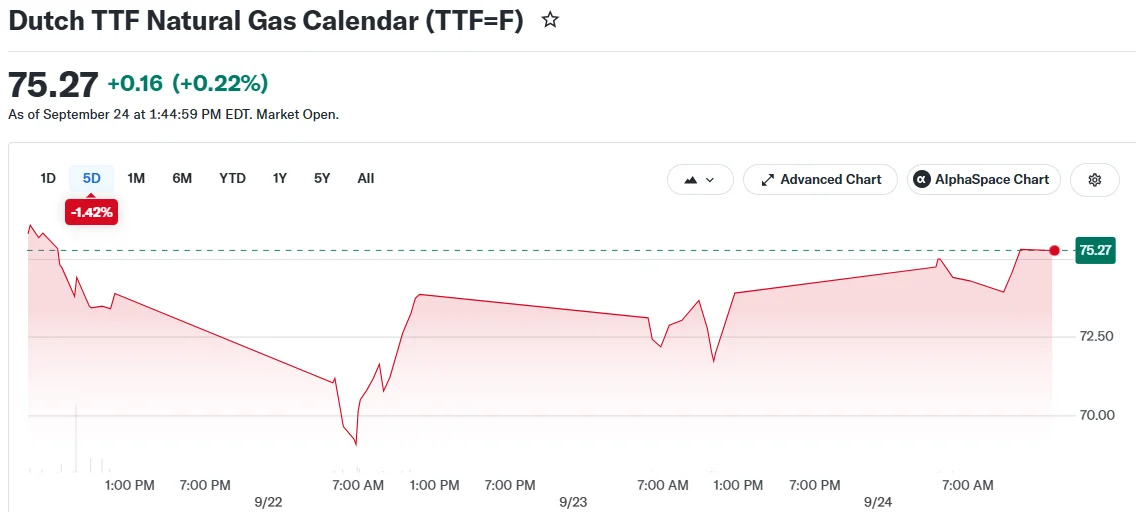
European natural gas futures declined sharply on Friday as traders took profits following several weeks of gains and reports emerged of diplomatic contacts between Washington and Tehran over access to the Strait of Hormuz.
Dutch Title Transfer Facility (TTF), Europe’s leading benchmark hub for gas trading, and United Kingdom National Balancing Point (NBP) contracts each fell 3.2% during Friday’s session. Both benchmarks were on course for weekly losses of more than 8%, their steepest declines since the middle of June and a marked reversal from the elevated levels recorded earlier in September.
Diplomatic developments weigh on prices
The main catalyst for the retreat was a reduction in concerns that tensions around the Strait of Hormuz could cause a major disruption to energy supplies. Reports indicated that U.S. and Iranian officials were discussing a phased framework to restore normal passage through the strategic waterway.
BREAKING: Iran offers U.S. a 7-DAY plan to reopen the Strait of Hormuz and restart negotiations, per FT. Iranian Foreign Minister Abbas Araghchi says Hormuz could be reopened by the end of the seventh day if certain conditions are met, with broader talks also set to resume.… pic.twitter.com/TcnmfVrcZY — Coin Bureau (@coinbureau) September 25, 2026
The narrow shipping route has been a focal point of regional hostilities for nearly seven months. Connecting the Persian Gulf to the Gulf of Oman, the strait is one of the world’s most important energy chokepoints, carrying a significant share of globally shipped oil and liquefied natural gas, including Qatari exports that supply European and Asian buyers. Neither Washington nor Tehran has so far indicated a willingness to surrender leverage over the passage, and no final agreement has been reached. Nevertheless, commodity markets adjusted their assessment of the risk of a broader military confrontation, reducing the security premium previously reflected in Persian Gulf energy prices.
Liquefied natural gas carriers have also begun making operational adjustments. Vessel operators are increasingly using alternative maritime routes around the Arabian Peninsula, easing concerns that physical LNG shipments could stop completely.
The temporary easing of geopolitical tensions encouraged traders to close positions before the weekend. The resulting profit-taking added to the downward pressure on prices after the market’s recent advance.
European storage remains below last year’s level
Friday’s decline did not remove the underlying challenges facing Europe’s gas market. Statistics from Gas Infrastructure Europe show that underground storage facilities across the European Union are approximately 70% full, about 12 percentage points below the level recorded during the same period last year.
The reduced inventory leaves suppliers with smaller reserves ahead of winter. Lower storage buffers could contribute to greater price volatility if unusually cold weather develops or additional supply disruptions occur. The European Central Bank has previously pointed to this vulnerability, noting that changes in natural gas prices can feed into broader consumer inflation measures.
Scheduled maintenance at Norwegian pipeline facilities is adding to the supply constraints. Lower Norwegian pipeline flows are limiting deliveries to Europe while storage levels remain below historical averages. European buyers are also competing with Asian purchasers for LNG cargoes in the global spot market as both regions seek supplies before peak winter demand begins — a competition that has intensified as Europe’s gas balance has leaned more heavily on seaborne imports since the sharp reduction of Russian pipeline deliveries in recent years.
Despite Friday’s correction, European gas prices remain substantially above benchmarks from earlier in 2024. The effects of the ongoing conflict on maritime shipping routes and global supply networks have not fully disappeared.
Energy analysts said a comprehensive and lasting agreement between the United States and Iran on navigation through the Strait of Hormuz could lead to further price moderation. Until then, natural gas markets are expected to remain highly sensitive to diplomatic developments, with storage injection rates, the completion of Norwegian maintenance, and winter weather forecasts among the factors traders are likely to watch in the weeks ahead.
At Friday’s close, TTF contracts had fallen below €73 per megawatt-hour, reversing the gains recorded in the previous session.
Source: Blockonomi.

