Europe Channels Billions Into North Africa's Renewable Energy Ambitions
Key Takeaways
- •The European Commission pledged nearly $5.8 billion through its T-MED initiative to develop renewable energy projects across the MENA region, with the goal of delivering at least 15 GW of new capacity by 2035.
- •The MENA region holds approximately 2,300 GW of renewable energy potential, exceeding twice the EU's current installed capacity, with production costs 30-40% lower than in Europe.
- •EU financing is projected to catalyze up to $29 billion in private investment by 2035, though fully unlocking the region's potential would require nearly $115 billion in total investment.
- •Germany's $30 billion Sila Atlantik project aims to connect Morocco and Germany via 4,800 km of subsea cables capable of transmitting up to 15 GW of power, but has been delayed by governance disagreements.
- •The EU announced a $794 million financing package in June to upgrade Egypt's electricity network, comprising a $690 million EIB Global loan and up to $104 million in EC grants.
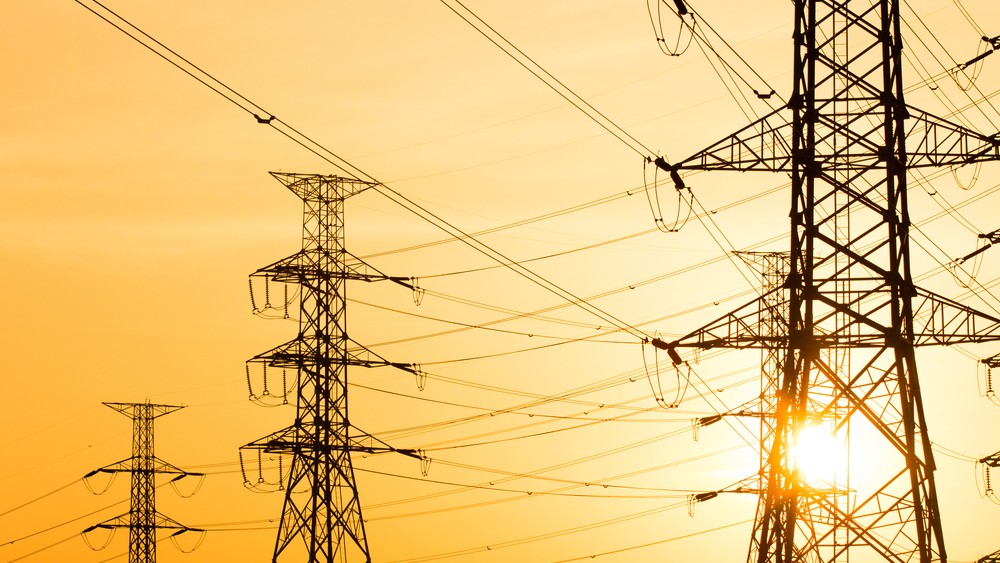
Europe is steadily deepening its energy partnership with North Africa, aiming to build a robust clean energy corridor between the two regions over the coming decade. The effort aligns with the EU's binding commitment to reach climate neutrality by 2050 and builds on momentum from the REPowerEU plan, launched in 2022 to accelerate the shift away from imported fossil fuels following Russia's invasion of Ukraine. The European Union and several individual European nations have directed significant investments into Morocco and Egypt in recent years, drawn by climate conditions highly favorable to renewable power generation. This expanding relationship is expected to help both regions reduce their dependence on fossil fuels while accelerating the broader green transition.
In June, the European Commission (EC) pledged nearly $5.8 billion toward renewable energy projects across the Middle East and North Africa (MENA) through its T-MED initiative. The plan envisions deploying solar panels across the Sahara Desert and wind turbines along the southern and eastern Mediterranean coasts, capitalizing on optimal weather conditions for large-scale clean energy production. The electricity generated would be transmitted to Europe's grid via high-voltage subsea transmission cables.
While much of Europe is already accelerating the expansion of domestic renewable capacity, investing in a region with superior solar and wind resources could help European nations meet their electrification targets and climate commitments more rapidly. According to EC estimates, the MENA region holds approximately 2,300 GW of renewable energy potential—more than twice the EU's current installed capacity. Solar and wind power can be produced there at 30 to 40 per cent lower cost than in Europe.
The EU financing is expected to catalyze up to $29 billion in private investment by 2035, supporting growth across solar, wind, hydrogen, and electricity grid infrastructure. Green hydrogen is a particular focus, as North Africa's abundant renewable resources could enable large-scale production of clean hydrogen and its derivatives—fuels the EU considers essential for decarbonizing sectors such as steel, chemicals, and shipping that are difficult to electrify directly. However, the EC estimates that fully unlocking the region's renewable potential will require nearly $115 billion in total investment. The EC anticipates that governments, development banks, project developers, and private investors will increasingly recognize the region's strategic value, while it encourages MENA countries to streamline permitting procedures, improve grid access, and strengthen regulatory frameworks to attract capital.
European Commissioner for Energy and Housing Dan Jørgensen underscored the urgency of investing in green energy amid ongoing geopolitical challenges that have contributed to energy shortages and elevated fuel prices. "The EU's bill for fossil fuel imports has increased by over €47 billion in the past 100 days, but not a single molecule of energy in addition," Jørgensen stated. "Our energy security must be based on electrified energy systems that are based on clean energy, modern grids and increased connectivity," he added. His remarks reflect a wider global movement to diversify energy production and supply chains in the interest of strengthened energy security.
The EC expects the T-MED initiative to deliver at least 15 GW of new renewable energy capacity by 2035 and support the creation of over 100,000 jobs, while deepening the energy relationship between Europe and the MENA region. Although this is not Europe's first clean energy investment in North Africa, it ranks among the most ambitious to date.
In 2019, the EU and the European Investment Bank invested €106.5 million in the Noor Ouarzazate solar power complex, a 580 MW facility located approximately 10 km north-east of the city of Ouarzazate. That project is expected to reduce carbon emissions by roughly 760,000 tonnes annually.
In June, the EU announced a financing package of up to $794 million to upgrade and expand Egypt's electricity network. The package comprises a $690 million loan from EIB Global, the European Investment Bank's development arm, along with up to $104 million in EC grants.
Separately, Germany has launched a $30 billion project called Sila Atlantik in partnership with Morocco to develop what would be the world's longest intercontinental undersea power link. The project aims to connect Morocco and Germany through two high-voltage subsea cables capable of supplying up to 5 per cent of Germany's annual electricity demand. However, the initiative has been delayed by disagreements over structure and guarantees, Reuters reported in June.
If completed, the cables would span approximately 4,800 km and transmit up to 15 GW of solar and wind power from Morocco to Germany. The German firm Sila Atlantik was established to oversee the project following the collapse of a similar proposed Morocco-U.K. renewable electricity link, known as Xlinks, in 2025.
The European Commission's T-MED initiative represents the latest and most far-reaching effort to expand the MENA region's renewable energy capacity and strengthen clean energy trade between the two regions. It is expected to attract substantial private investment while supporting broader diversification goals aimed at reinforcing energy security across Europe, North Africa, and the Middle East.
By Felicity Bradstock for OilPrice.com
