European Commission Opens Targeted Consultation Ahead of Planned 2027 MiCA Revision
Key Takeaways
- •The European Commission has launched a targeted consultation on MiCA to inform a planned 2027 revision, addressing specific regulatory gaps rather than pursuing a complete overhaul of the existing framework.
- •Non-EU crypto issuers face particular scrutiny, as the review examines which entities can access the EU market and what regulatory conditions apply to firms based outside the bloc.
- •Stablecoins are treated as a dedicated workstream in the consultation because their payment and settlement functions present distinct financial-stability risks compared to other crypto assets.
- •Tokenized payments expand the review's scope beyond token issuance oversight to include how blockchain-based instruments are used to transfer value and interact with existing payment services rules.
- •The MiCA revision unfolds alongside comparable crypto regulatory initiatives in the UK, Hong Kong, Singapore, and South Korea, creating a complex patchwork of compliance requirements for internationally operating firms.
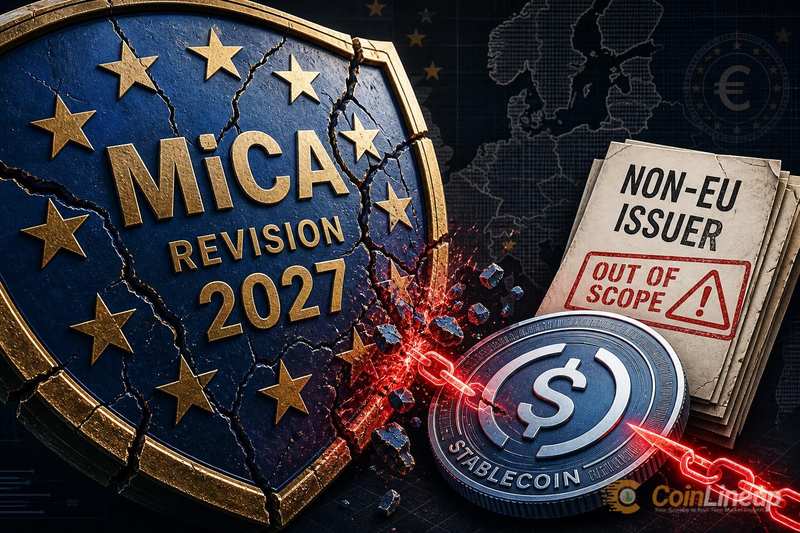
The European Commission has launched a targeted consultation on reviewing the Markets in Crypto-Assets Regulation (MiCA), a step that feeds into a planned 2027 revision of the bloc's landmark crypto framework. The consultation signals that the EU has identified specific gaps in the existing rules rather than pursuing a wholesale rewrite.
MiCA is already in force as the EU's comprehensive rulebook governing how crypto-asset service providers, token issuers, and stablecoin operators can operate across the bloc. Its stablecoin provisions took effect in June 2024, followed by crypto-asset service provider rules in December 2024, making the EU the first major jurisdiction to implement a unified crypto licensing regime. Because the regulation is already active, the current effort focuses on reviewing and adjusting existing rules, not establishing a new framework. For firms already compliant with MiCA, the revision would build on the current regime and modify its scope rather than reset it.
The consultation document sets out the specific areas where policymakers are seeking feedback before drafting legislative changes.
Non-EU Issuers and Stablecoins Under the Microscope
Non-EU crypto issuers — firms based outside the bloc that offer tokens or services to EU users — are a named focus of the review. The central question the Commission is exploring is who can access the EU market and under what conditions.
Stablecoins are flagged as a separate priority. Because they are designed to maintain a steady value and are widely used for payments and settlement, they carry distinct risks compared to more volatile crypto assets. The consultation document treats stablecoins as a dedicated workstream rather than grouping them with other digital assets. Global standard-setters including the Financial Stability Board and the Bank for International Settlements have similarly prioritized stablecoin oversight, reflecting cross-border concerns about systemic and financial-stability risks.
Linking the scrutiny of issuers and stablecoins points to compliance exposure for overseas firms serving EU customers. The practical concern centers on market structure: which entities can offer products into the EU, and what regulatory obligations attach when they do.
The broader regulatory tightening is not unique to Europe. Jurisdictions elsewhere are also moving on comparable timelines, including South Korea's plan to tax crypto gains starting in 2027. The UK, Hong Kong, and Singapore are each advancing their own crypto-licensing frameworks, meaning firms operating internationally face a patchwork of diverging compliance requirements that the MiCA revision may help clarify for the EU dimension.
Tokenized Payments Expand the Review's Scope
Tokenized payments — where value is transferred using blockchain-based tokens instead of traditional payment rails — are listed alongside issuers and stablecoins as a review priority. Their inclusion widens the consultation's focus beyond issuance oversight toward how crypto is actually used to move money.
The overlap with stablecoin policy is direct, as stablecoins serve as the primary instrument in tokenized payment flows. The interplay between payment services rules and crypto regulation has already attracted regulatory attention, including an EBA no-action letter on how the Payment Services Directive (PSD2) and MiCA interact.
Legal analysts have framed the review as an effort to keep MiCA fit for purpose as the market evolves, a theme explored in a Skadden analysis of the MiCA review.
For firms weighing EU exposure, the key watchpoints before 2027 will be how the final scope defines non-EU issuers and how tightly stablecoin and payment obligations are drawn. The outcome could reshape market-access conditions for a wide range of crypto businesses operating in or serving European customers.

