EU Expands Russia Sanctions With Transaction Ban on HTX and 13 Other Crypto Platforms
Key Takeaways
- •The EU imposed a transaction ban on HTX and 13 other crypto platforms as part of its Russia sanctions enforcement.
- •The listed platforms are based in several jurisdictions, including the UAE, Panama, Georgia, the Marshall Islands, Kyrgyzstan and Belarus.
- •EU persons and companies are prohibited from doing business with the sanctioned crypto platforms.
- •HTX had already been banned by the U.K. in May and reportedly moved reserves to an unknown third party.
- •Analysts view the EU measure as a new regulatory risk for crypto platforms and jurisdictions with weak sanctions-screening controls.
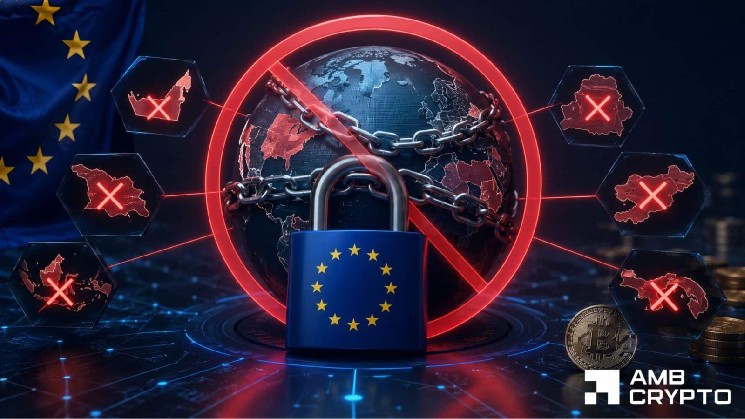
The European Union has expanded its sanctions targeting Russia by imposing a transaction ban on Justin Sun-owned $HTX and 13 other crypto platforms, in a move aimed at curbing the use of digital assets to bypass existing restrictions.
The platforms are based across the United Arab Emirates, Panama, Georgia, the Marshall Islands, Kyrgyzstan and Belarus. They include BitPapa, A7 networks and other services. According to the EU Council, the platforms acted as conduits for blocked Russian entities seeking to move funds and evade sanctions already in place.
The transaction ban bars EU persons and companies from doing business with the listed crypto platforms. In practice, such restrictions require regulated firms with EU exposure to screen counterparties, wallets and service providers against sanctions lists, adding compliance pressure on exchanges, payment companies and other crypto intermediaries. The inclusion of $HTX is notable because the exchange was also banned by the U.K. in May.
The source report said $HTX moved its reserves to an unknown third party and has been switching hot wallets in response to the risk of possible asset freezes, making sanctions screening more difficult.
The EU action against crypto services operating in third countries marks a tougher approach to sanctions enforcement involving digital assets. It also shows how crypto platforms outside the bloc can become direct targets when regulators determine that they are being used to facilitate sanctions evasion.
What the EU crackdown means for the crypto industry
Russia turned to crypto for oil exports and other international trade after being sanctioned and later removed from SWIFT. During that period, it accelerated work on its crypto regulatory framework. Crypto’s widely cited non-sovereign nature made it an alternative channel for moving funds for sanctioned countries. Venezuela and Iran have also used crypto to bypass Western sanctions.
The EU’s ability to ban offshore platforms, target third-country services or potentially cut off a wider jurisdiction creates a significant regulatory pressure point for crypto businesses and the countries that host them. For platforms that depend on international liquidity, banking relationships, market makers or institutional clients, being placed under a transaction ban can limit access to counterparties even when the company is not based in the EU.
According to Chainalysis, “For the crypto industry, this package signals a shift in how regulators view platforms’ role in sanctions enforcement.”
The firm added, “Platforms that fail to prevent sanctioned entities from using their services are now targets themselves, and the third-country ban mechanism means entire jurisdictions could be cut off from European markets if they host platforms facilitating evasion.”
For the EU, the country-level ban is presented as a new tool for addressing crypto-based sanctions evasion. It is also intended to deter countries from hosting platforms that help Russia evade EU sanctions.
The U.S. has also used crypto-related sanctions tools. It froze more than $1 billion in crypto funds tied to Iran as part of measures linked to efforts to end the ongoing West Asia crisis. It also sanctioned several local crypto firms and their leadership.
The latest EU move underscores that crypto is no longer being treated as a reliable loophole for sanctioned entities or alleged criminal actors. Instead, digital-asset infrastructure is increasingly becoming a chokepoint for sanctions enforcement.
The EU has now extended its transaction ban to 14 crypto exchanges in a step that could affect an entire country or jurisdiction accused of aiding sanctions evasion. Analysts view the measure as a new regulatory risk for crypto platforms and host countries with weak sanctions-screening controls.

