EU Carbon Taxes Push Bitcoin Mining to Russia, Study Claims
Key Takeaways
- •The study found a statistical correlation between EU carbon pricing and Russian power-sector emissions, concluding that bitcoin mining migrates to Russia at off-peak times when bitcoin and EU carbon allowance prices rise.
- •Researchers analyzed daily emissions data from the EU, Russia, and the rest of the world from 2019 to 2025 linked to bitcoin's daily closing prices, and the correlation appeared only for Russia, not other non-EU regions.
- •Russia's lack of carbon pricing makes mining more profitable there, which is significant because electricity is typically the single largest operating cost in proof-of-work mining.
- •The study did not observe physical relocation of mining machinery and instead attributes the pattern to operational switching by companies holding hardware in both jurisdictions.
- •The authors acknowledge limitations such as China's May 2021 mining ban disrupting the link, and note that Russia's 2025 regional mining bans, extended to Moscow, could complicate further relocation.
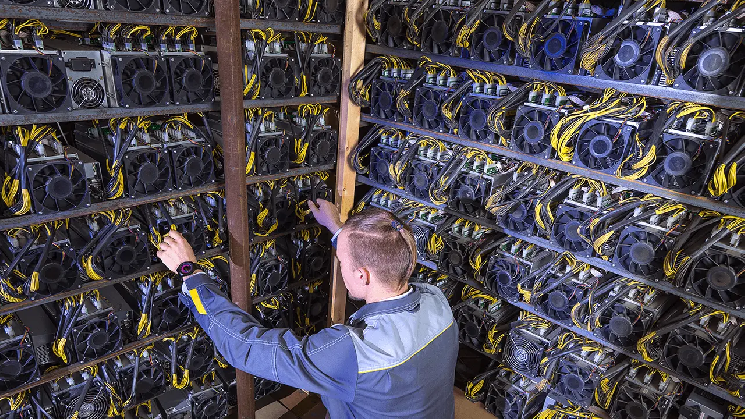
A new academic study suggests that the European Union’s strict controls on carbon emissions may be pushing bitcoin mining activity — at least operationally — toward jurisdictions that impose no carbon emissions taxes.
The research, titled “Does Carbon Pricing Displace Crypto-Mining Emissions? Quantile Evidence on Carbon Leakage from EU27, Russian and Rest-of-World Power Grids,” was published by three Vietnamese investigators: Pham Ngoc Toan, Le Tran Trung Hieu, and Nguyen Vu Trung Nguyen. It set out to determine whether carbon pricing within the EU could be a meaningful driver behind the movement of bitcoin mining operations to Russia.
The carbon pricing at issue operates through the EU Emissions Trading System, the bloc’s flagship cap-and-trade scheme, in place since 2005. Under it, power generators must surrender an allowance for every tonne of CO2 they emit, tying the cost of fossil-fuel electricity to the carbon market.
To test this hypothesis, the authors analyzed daily power sector emissions from the EU, the rest of the world, and Russia between 2019 and 2025, linking the data to bitcoin’s daily closing prices.
The results identified a statistical correlation between carbon pricing in Europe and carbon emissions in Russia, leading the study to conclude that bitcoin mining operations “migrate” to Russia at off-peak times, when both bitcoin and EU carbon allowance prices climb higher. Notably, the same statistical relationship did not appear when the researchers tested the link between the EU and the rest of the world, a contrast that underscores the relevance of the finding.
In climate policy, that pattern is known as carbon leakage — emissions avoided in one jurisdiction re-emerging in another under weaker rules, the very phrase in the study’s title. Preventing such leakage is also the stated rationale for the EU’s Carbon Border Adjustment Mechanism, a border levy on carbon-intensive goods such as cement and steel that began phasing in during 2023.
Unlike the EU, Russia has no carbon pricing structure, which allows mining operations to be more profitable there. The difference is amplified in proof-of-work mining, where electricity is typically the single largest operating cost.
However, because the study did not observe any physical relocation of mining machinery to Russia, it stresses that the phenomenon may have an operational origin instead: companies holding hardware in both jurisdictions may shut down equipment in the EU and switch it on in Russia in order to maximize their profit margins.
The study also acknowledges several limitations, including the negative effect that China’s May 2021 bitcoin mining ban — which dismantled what was then the world’s largest concentration of mining power and pushed operators to new jurisdictions — had on the established link, as well as the disregard of other relevant factors.
In addition, regulation on the Russian side has moved quickly: the country legalized industrial crypto mining only in August 2024, and starting in 2025 the government implemented a crypto mining ban in certain regions, with an expansion to Moscow approved this year — measures that could complicate the operational relocation of these activities to Russia and reduce the possibilities available to mining companies.
Originally reported by Bitcoin.com.

