EU Adopts 21st Russia Sanctions Package, Targeting 14 Crypto Operators and 94 Banks
Key Takeaways
- •The EU's 21st sanctions package against Russia names 14 cryptocurrency operators and 94 banks as direct targets within a single enforcement action covering energy, financial services, and crypto sectors.
- •The package treats digital-asset service providers as financial access channels on par with traditional banks, signaling that the EU views crypto infrastructure as a core enforcement priority rather than a peripheral concern.
- •This latest measure tightens earlier EU restrictions that already limited the provision of crypto-asset wallet and custody services to Russian persons and residents.
- •Crypto businesses operating across jurisdictions face heightened compliance requirements, including the need to update sanctions screening for newly listed operators and banks to address indirect counterparty exposure.
- •The sanctions raise the diligence bar for any crypto-linked financial activity connected to listed parties, with counterparts and banking partners of affected entities facing additional regulatory scrutiny.
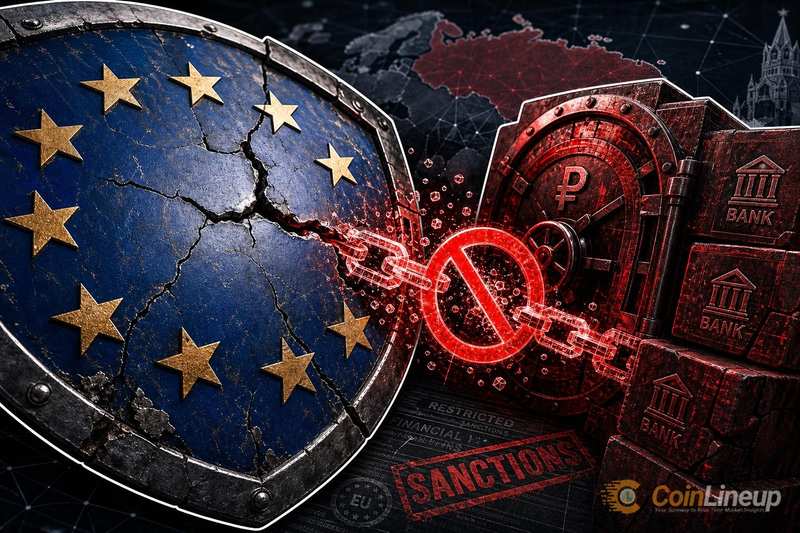
The European Union has adopted its 21st package of sanctions against Russia, targeting 14 cryptocurrency operators and 94 banks in a move that extends financial-sector pressure into digital-asset infrastructure alongside traditional banking. The EU's sanctions regime against Russia has evolved through successive packages since 2014, accelerating after the full-scale invasion of Ukraine in February 2022, and this latest iteration deepens the bloc's focus on crypto channels specifically.
According to the Council of the EU press release, the package hits Russian energy, financial services, and crypto sectors. By naming crypto operators alongside banks, the EU places digital-asset service providers on the same enforcement footing as traditional financial institutions. The rollout was covered as part of broader EU action on Russia, as reported by the Associated Press.
Scope of the Sanctions Package
The package distinguishes between traditional financial institutions and digital-asset service providers within a single enforcement action:
- 14 crypto operators named directly as targets
- 94 banks listed as part of the financial-sector restrictions
- Part of the EU's 21st sanctions package tied to Russia
The distinction between banks and crypto operators is notable because both categories face different oversight regimes, yet the package treats both as financial channels the EU intends to restrict. Earlier EU sanctions packages had already introduced restrictions on providing crypto-asset wallet and custody services to Russian persons and residents, making the targeting of 14 named operators a further tightening of that thread.
Crypto Operators in the Sanctions Framework
By naming 14 crypto operators directly, the package signals that the EU views digital-asset service providers as financial access routes rather than a peripheral concern, per the Council's framing. The pairing of crypto firms with 94 banks points to a broader financial-enforcement approach spanning both legacy and digital rails.
For exchanges, over-the-counter (OTC) desks, and other service providers, direct listing means potential exposure through counterparties—not only through direct dealings. Regulatory scrutiny of crypto businesses has also featured in other jurisdictions, including U.S. Justice Department enforcement actions tied to illicit crypto flows. The U.S. has previously sanctioned Russia-linked crypto exchanges such as Garantex, and coordination among G7 nations on sanctions enforcement has increasingly encompassed digital-asset service providers.
Compliance Implications
Sanctioning both operators and banks can affect screening, counterparty checks, and internal risk controls, raising the diligence bar for firms connected to either set of listed entities. Crypto businesses operating across jurisdictions may need to update sanctions screening to account for the newly listed operators and the 94 banks, as indirect exposure through banking relationships is a common compliance gap.
Counterparties and banking partners of affected entities may face additional scrutiny. The core regulatory takeaway is that broader sanctions coverage across both banks and crypto operators raises diligence expectations for any crypto-linked financial activity connected to the listed parties. As the EU moves further into its second decade of sanctions packages, the trajectory suggests continued identification of new crypto and banking entities in future iterations.

