EU Adopts 21st Sanctions Package Against Russia With New Crypto Ban Tool and 218 Listings
Key Takeaways
- •The EU’s 21st sanctions package adds 218 individuals and entities connected to Russia’s financial, energy, crypto, and military sectors.
- •Sanctions now cover 14 crypto platforms across six jurisdictions, with new rules allowing transaction bans on non-EU providers tied to Russian evasion efforts.
- •Financial measures include asset freezes on 94 banks and major financial institutions, plus transaction bans on 33 additional Russian lenders.
- •Energy restrictions expand controls on Russian oil revenue, shadow-fleet vessels, refineries, oil traders, and related shipping support networks.
- •Military-industrial measures add 56 people and companies and impose tighter export controls on 51 entities linked to dual-use goods and technology.
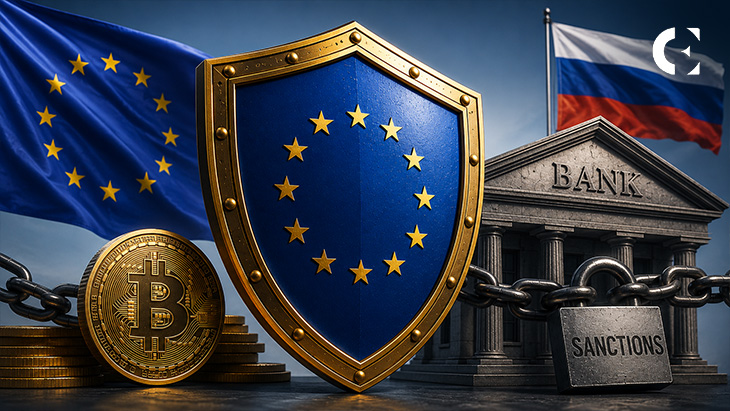
European Union officials adopted the 21st sanctions package against Russia on July 23, 2026, marking the bloc's largest round of listings in four years of measures that began with Russia's full-scale invasion of Ukraine in February 2022. The measures add 218 individuals and entities, targeting financial services, cryptocurrency platforms, energy companies, and military suppliers.
Crypto restrictions form a central component of the package. EU sanctions now cover 14 crypto platforms based across six jurisdictions—Georgia, Panama, the UAE, the Marshall Islands, Kyrgyzstan, and Belarus. Officials linked those businesses to payment routes used to circumvent earlier sanctions.
New EU Crypto Rules Reach Third-Country Platforms
New rules establish a mechanism for banning transactions with crypto providers operating outside the European Union. Authorities can invoke the measure when a platform facilitates Russia's evasion of financial restrictions. Under the framework, EU companies would lose the right to send funds or provide services to a designated provider.
Council officials also added four designations connected to the cross-border A7 payment network, including newer links between the network and African markets. The package expands earlier crypto controls rather than replacing them.
Financial measures extend well beyond digital assets. Asset freezes now apply to 94 banks and major financial institutions, while transaction bans cover an additional 33 Russian lenders. Restrictions also target one Kyrgyz bank connected to Russia's SPFS messaging system, Moscow's domestic alternative to the SWIFT network for cross-border payments, along with three other non-Russian banks.
Energy Measures Target Oil Revenue and Shipping
Oil controls represent another major pillar of the package. EU officials paused the automatic price-cap adjustment until July 15, 2027, stating the pause would prevent Russia from gaining additional revenue during market disruption linked to the Strait of Hormuz. The G7-led price cap, in effect since December 2022, limits the price at which Russian seaborne oil can be sold when Western shipping and insurance services are used.
Shadow-fleet restrictions now encompass vessels providing bunkering and other support services. Another 41 ships joined an existing list of 632 sanctioned vessels, expanding the EU's effort to constrain the network of older tankers Russia has used to export oil outside Western maritime infrastructure. Measures also target eight companies, one individual, and a crewing agency tied to those shipping networks.
Oil-sector listings include three Russian refineries and one large Belarusian refinery. A Georgian refinery in Kulevi will face a transaction ban following a six-month delay. Five oil traders also received restrictions for facilitating the movement of Russian petroleum products.
Military Supply Chains Face Wider Export Curbs
Military-industrial measures add 56 people and companies, including 37 linked directly to long-range drone production. A further 51 entities face tighter export controls covering dual-use goods and technology.
Restricted items include drone equipment, electronic warfare systems, metals, alloys, and semiconductor-processing tools. Listed companies operate in China, India, Kazakhstan, Kyrgyzstan, Turkiye, and the UAE, jurisdictions where EU sanctions do not apply directly and enforcement relies on cooperation from local authorities. EU officials said those firms supported supply routes used by Russia's defense sector.
Additional measures cover Russian combatants, propaganda figures, and companies tied to gold, diamonds, mining, and metallurgy. Visa restrictions will take effect once the Council sets an effective date. Legal acts supporting the package have already been published in the EU Official Journal.
Source: CoinEdition

