Ethereum Price Slides Toward $1,500 as ETF Outflows and Extreme Fear Pressure BitMine and SharpLink
Key Takeaways
- •Ethereum traded around $1,800 on Nov. 18 after a prolonged November slide, raising pressure on corporate treasury holders such as BitMine Immersion Technologies and SharpLink, whose asset values and staking income move with the token's price.
- •Net withdrawals from U.S. spot Ethereum ETFs reached roughly $801.6 million through Tuesday, with BlackRock products such as ETHA and ETHB accounting for most of the outflows.
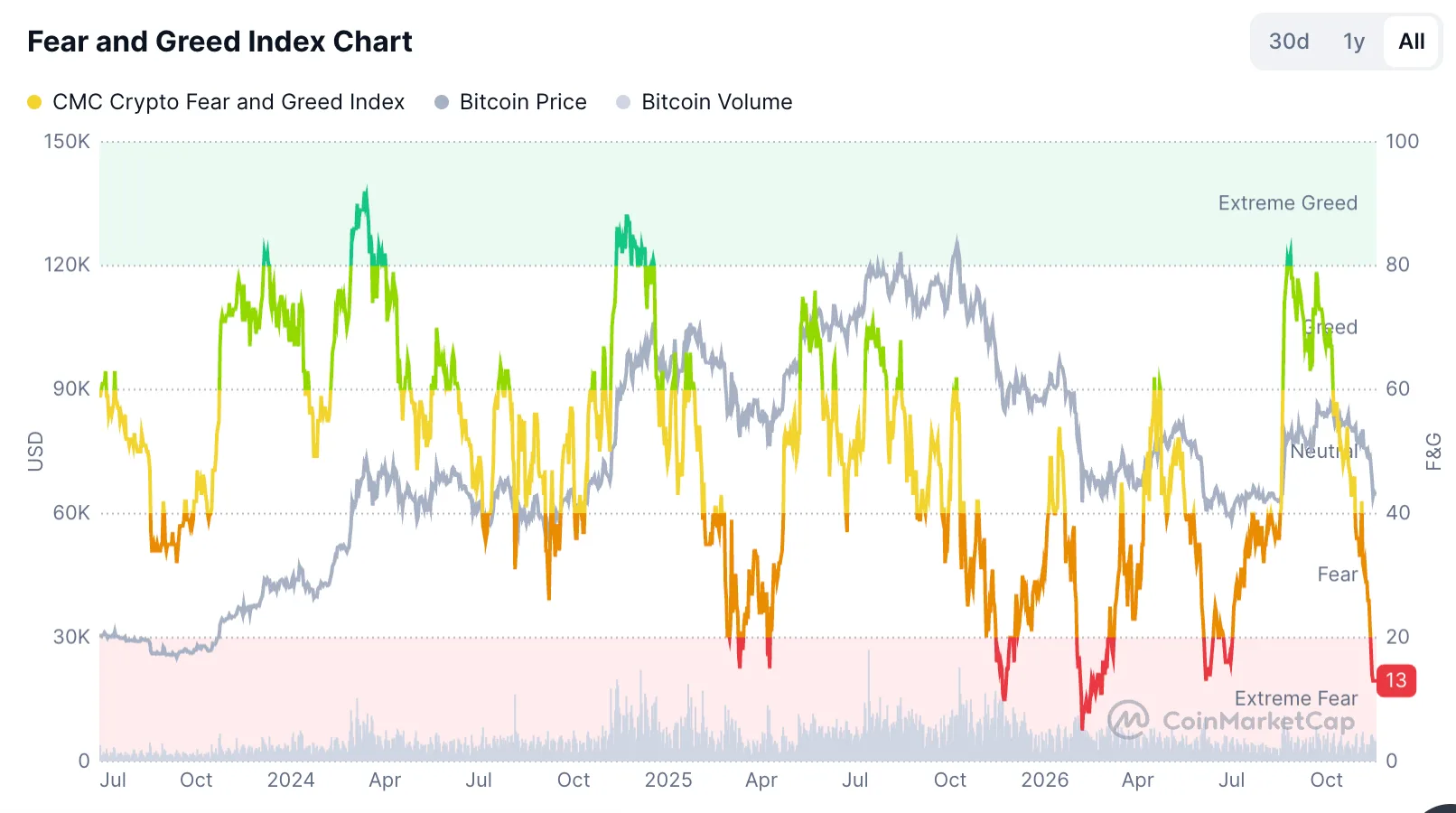
- •The Crypto Fear and Greed Index dropped to 13, marking its lowest reading since July 3 and placing market sentiment deep in extreme fear territory.
- •Ethereum's total value locked has fallen to $37 billion from more than $92 billion, while quarterly network fees have slipped to $29 million from $76 million in the year-ago period.
- •BitMine holds 6,077,745 ETH, nearly 5% of supply, after continued purchases, while SharpLink maintains 888,938 ETH, about 0.72%, leaving both exposed to shrinking treasury values and reduced staking revenue as prices decline.
Ethereum (ETH) traded near $1,800 on Nov. 18 after extending its November sell-off, and the decline has increased pressure on corporate holders of the token, including BitMine Immersion Technologies and SharpLink. Treasury companies like these hold digital assets directly on their balance sheets, meaning the value of their holdings and their staking income move with the token's market price.
U.S. spot Ethereum exchange-traded funds (ETFs) recorded approximately $801.6 million in net withdrawals through Tuesday, while overall crypto market sentiment remained in the extreme fear category.
Sentiment Sinks Into Extreme Fear
Ethereum faces the risk of further downside in the coming weeks. One factor is the prevailing sense of fear across the crypto industry. The Crypto Fear and Greed Index has dropped into the extreme fear zone at 13, its lowest level since July 3 of this year, according to CoinMarketCap data. The gauge has been in a strong sell-off since it moved into the greed zone at 81.
Second, American investors have continued selling their Ethereum ETFs. Data shows that daily outflows stood at over $29 million on Tuesday, much higher than the $8.3 million recorded the day before. The funds have seen over $809 million in outflows this month, compared with $1.6 billion in October. Most of the withdrawals have come from BlackRock ETFs such as ETHA and ETHB. In most cases, ETH ETF outflows lead to additional weakness in Ethereum. Because spot ETFs are the primary regulated vehicle through which U.S. investors gain ETH exposure, their daily flow reports have become one of the most closely watched gauges of institutional demand for the token.
Futures open interest has also continued to fall, a sign that demand has waned. It has dropped to over $22.6 billion, down sharply from the September high of $36 billion, indicating that demand among leveraged traders has continued to decline. The metric measures the total value of outstanding futures contracts, making it a direct read on how much leveraged capital remains deployed in the market.
On-Chain Fundamentals Weaken
Ethereum's other fundamentals have continued to worsen. The network's total value locked (TVL) has dropped to $37 billion, down from more than $92 billion, according to DeFiLlama data. TVL tracks the capital deposited across decentralized finance protocols on the network and is widely used as a proxy for on-chain activity. Additional data shows the number of active addresses stands at over 542,000 this quarter — the same level as in the past two quarters — a sign that the network has not grown over the last three quarters.
The amount of fees generated by the network has also dropped in recent quarters, falling to just $29 million this quarter from $76 million in the same period last year. The weakness could persist following the Fusaka upgrade, as lower fees on Ethereum mean the network now burns fewer tokens. Post-upgrade fee and burn figures are therefore among the on-chain data points readers can track in the coming quarters.
Technicals Point to More Weakness
The daily chart shows the ETH token has been under pressure for the past few months. It has already formed a death cross pattern, which occurs when the 50-day and 200-day moving averages cross each other, and it is also forming a bearish pennant pattern, a common continuation signal in technical analysis. Based on these patterns, the coin will likely continue falling, potentially toward the psychological level of $1,500.
SharpLink and BitMine Stocks at Risk
The ongoing decline in Ethereum's price is expected to affect Ethereum treasury companies such as SharpLink and BitMine. BitMine has continued buying ETH coins, and it now holds 6,077,745 coins, accounting for nearly 5% of the supply.
SharpLink has maintained its ETH holdings at 888,938 coins, representing about 0.72% of the supply. As a result, these stocks will likely continue falling as Ethereum continues to decline, since the value of their Ethereum holdings will drop and the companies will generate less money from staking revenue. This linkage between the token's price, treasury value and staking income is the central reason investors in the sector track the companies' disclosed holdings alongside ETH's market price.
The same dynamic is playing out at other companies that hold Ethereum in their treasuries. Other notable holders include Bit Digital, The Ether Machine, Galaxy Digital, and BTCS, all of which face the risk of continued share weakness in the near term. Holdings updates from these treasury companies, together with daily ETF flow reports and Fear and Greed readings, offer observable checkpoints for readers following the story.
This article provides financial market analysis, not investment advice. Ethereum and cryptocurrency treasury stocks carry substantial volatility and capital-loss risks. Investors should independently assess company disclosures before making investment decisions.
This article is based on a report first published by The Market Periodical.

