Ethereum Price Slips Below $1,650 as Vitalik Buterin Warns Against Rushing Glamsterdam Upgrade
Key Takeaways
- •Ethereum fell below $1,650 on Nov. 28, trading at $1,646.10 down 1.42% over 24 hours, while daily volume dropped 29% to $7.64 billion.
- •Vitalik Buterin warned against rushing the Glamsterdam upgrade because EIP-8037's higher gas costs for account creation and contract deployment could disrupt applications built under existing rules, though he continues to back the proposal for scaling.
- •Core developers agreed on Nov. 26 to retain the current Glamsterdam specifications and scheduled a Hoodi testnet activation for Dec. 15, 2026, while a mainnet date has not been announced.
- •Ethereum exchange reserves rose by 516,000 ETH during the 11 days ending Nov. 27, and US spot Ethereum ETFs are on course for a ninth consecutive week of net outflows.
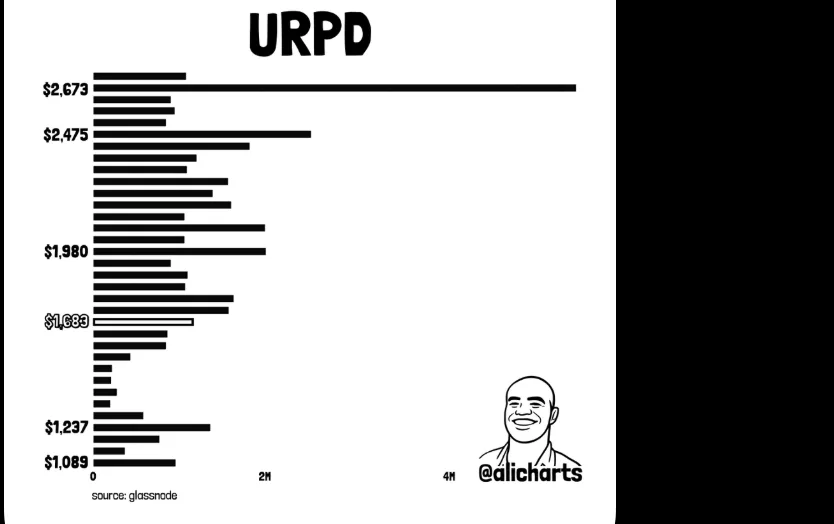
- •Analyst Ali Martinez identified $1,584 as a key downside level, noting that about 1.14 million ETH has a cost basis near $1,680 and roughly 1.37 million ETH was acquired around $1,237.
Ethereum price fell below $1,650 on Saturday, Nov. 28, amid rising exchange reserves, as Ethereum co-founder Vitalik Buterin warned against rushing the network's upcoming Glamsterdam upgrade over smart contract compatibility risks under the proposed gas rules.
CoinGlass data showed that Ethereum (ETH) traded at $1,646.10 at 19:57 UTC, down 1.42% over 24 hours. Its market capitalization stood at $201.13 billion.
Buterin Flags Smart Contract Risks Under Proposed Gas Rules
On Nov. 28, Buterin responded on X to concerns surrounding EIP-8037, one of the proposals included in Glamsterdam, the next scheduled network upgrade on Ethereum's roadmap. Under the proposed rules, creating accounts and deploying smart contracts on Ethereum would require more gas.
Buterin remains in favor of EIP-8037 as part of Ethereum's scaling plans. However, he acknowledged that some developers built their applications around existing gas rules, and he called on core developers to work closely with projects that could face difficulties once the new rules take effect.
The discussion also raised questions about smart contract security. Devansh Mehta questioned whether developers would need to replace existing contracts and repeat security audits whenever Ethereum introduces similar changes. Buterin explained that most upcoming changes would have limited effects on applications and cautioned against encouraging developers to introduce centralized mechanisms for modifying contracts.
Developers Retain Glamsterdam Schedule as Price Comes Under Pressure
Ethereum developers originally planned to activate Glamsterdam on the Hoodi testnet on Oct. 26. However, security researchers identified compatibility risks involving existing contracts, prompting developers to postpone the test. On Nov. 6, the Ethereum Foundation asked application developers to examine their contracts for potential issues and enlisted security firms ChainSecurity and Dedaub to review applications that the proposed gas rules could affect.
Core developers agreed on Nov. 26 to retain the existing Glamsterdam specifications, including the gas cost adjustments. Buterin subsequently called for the Ethereum Foundation, Ethlabs and other teams to provide additional assistance to affected projects.
Developers now plan to activate Glamsterdam on Hoodi on Dec. 15, 2026, at 19:12 UTC. They have yet to announce a mainnet activation date. Testnet deployments serve as a validation step ahead of mainnet, making the Dec. 15 Hoodi run the next scheduled checkpoint for the upgrade while the mainnet timeline remains open.
Exchange Reserves Rise While ETF Outflows Persist
Ethereum price slipped below $1,650 after trading above $1,680 in the previous 24 hours. Market capitalization stood at $200 billion, while daily volume fell 29% to $7.64 billion.
CryptoQuant data showed that exchange reserves rose by 516,000 ETH during the 11 days ending Nov. 27. Higher reserves mean exchanges hold more ETH, although the metric does not establish whether holders intend to sell. Exchange balances are nonetheless commonly tracked as a supply-side indicator, since tokens held on exchange wallets are available for trading.
Meanwhile, SoSoValue data showed that US spot Ethereum ETFs remained on course for a ninth consecutive week of net outflows, with withdrawals recorded throughout the week. ETF flow readings are similarly followed as a gauge of demand routed through regulated spot vehicles.
Additionally, crypto analyst Ali Martinez outlined a bearish scenario for ETH using realized price distribution (URPD) chart data. His analysis showed that approximately 1.14 million ETH had a cost basis near $1,680, and Ethereum price has since moved below that level. Martinez identified $1,584 as another level to watch in his assessment of the cryptocurrency's downside risk. According to Martinez, a decline below $1,584 could bring attention to the next major concentration of acquisition prices at $1,237, where his analysis showed that holders acquired approximately 1.37 million ETH.
Source: The Market Periodical

