Sepolia Testnet Fork Scheduled for October 6 as Ethereum's Glamsterdam Upgrade Advances
Key Takeaways
- •Ethereum's Glamsterdam upgrade is scheduled to fork on the Sepolia testnet on October 6, 2026, serving as a rehearsal rather than a mainnet launch.
- •Ethereum's roadmap targets Glamsterdam mainnet deployment in Q4 2026, but that date has not been confirmed and the upgrade's meta EIP remains in draft form.
- •The upgrade pairs an execution-layer component named Amsterdam with a consensus-layer component named Gloas, advancing the roadmap goals of 'Scale L1' and 'Scale Blobs.'
- •Core proposals include enshrined proposer-builder separation (EIP-7732), block-level access lists (EIP-7928, with networking change EIP-8159), and state-creation gas repricing (EIP-8037) targeting roughly 120 GiB of annual database growth.
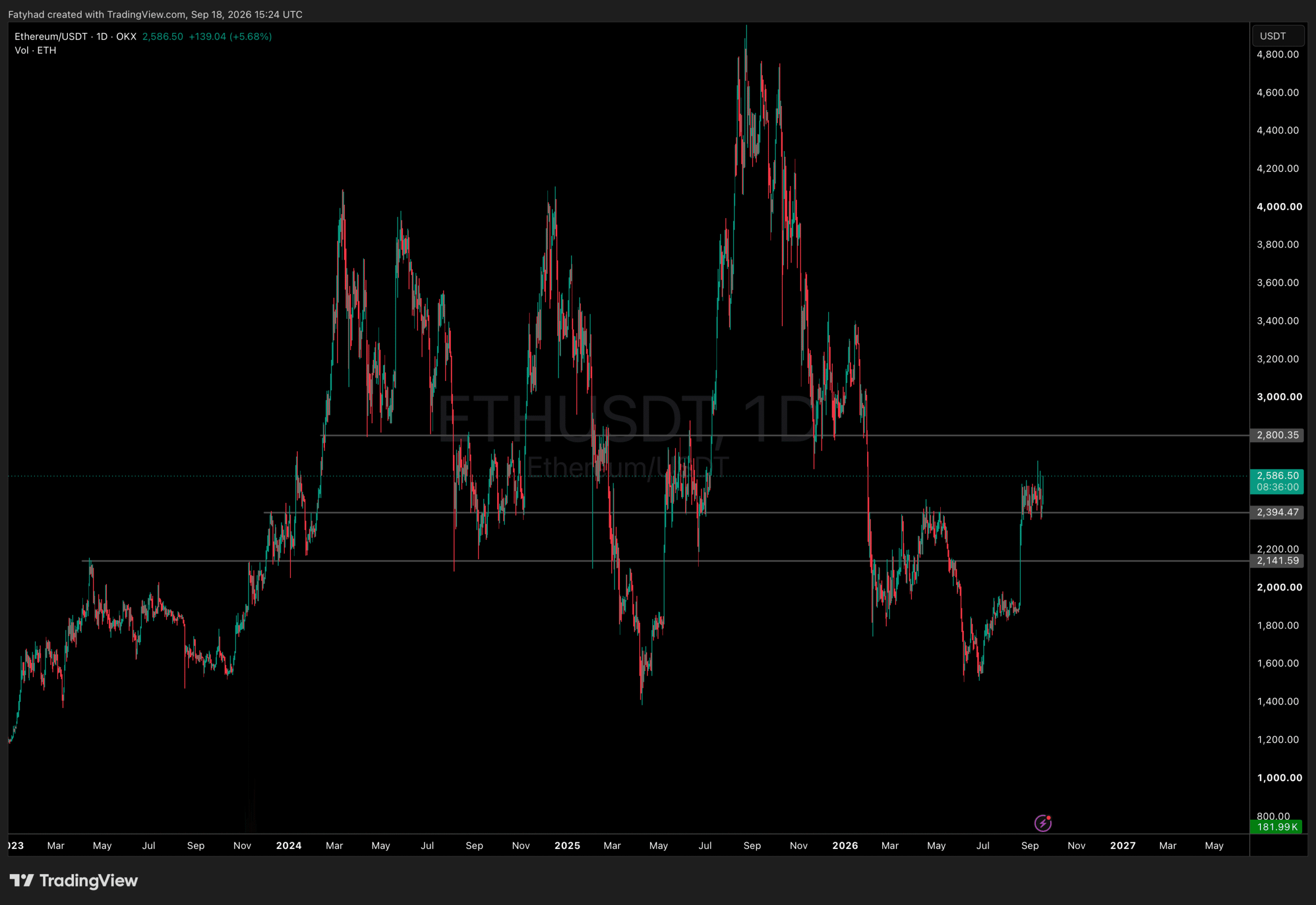
- •ETH traded around $2,586 after a 5.7% daily move, while average transfer fees have fallen from $0.715 on April 21 to $0.094.
Ethereum's Glamsterdam upgrade now has a firm date attached to its next milestone: the Sepolia testnet fork is scheduled for October 6, 2026. Sepolia is one of Ethereum's public testnets, where upcoming protocol changes are rehearsed before reaching mainnet. The scheduling marks genuine progress toward one of the network's most ambitious scaling overhauls in years — though it is a rehearsal date, not a launch date. Ethereum's official roadmap still lists mainnet deployment as expected in Q4 2026, and the page states plainly that the date has not been confirmed.
The calendar, rather than the price tape, was the focus of the day's Ethereum news, with ETH changing hands around $2,586 after a 5.7% daily move. The distinction between a testnet fork and a production release matters for anyone tracking the protocol's development pipeline. Because Glamsterdam spans both the execution and consensus layers, the Sepolia run also doubles as the point where validator and staking operators rehearse the client updates those layers require before mainnet. The roadmap currently marks Glamsterdam's status as testing on devnets, with Sepolia flagged as the next milestone rather than a countdown clock to mainnet.
The upgrade's scope is frozen for the moment but could still shift, because the meta Ethereum Improvement Proposal — the master document defining what ships — remains in draft form. That is routine procedure: devnets, the short-lived test networks run by client teams, surface bugs; proposals graduate to public testnets such as Sepolia; and only then does anything touch live ETH.
I am not sure you are prepared for Glamsterdam on Ethereum pic.twitter.com/O57rRe7XDr
— Ben {chmark} Adams ⟠ (@ben_a_adams) September 16, 2026
Inside the Name: Gloas, Amsterdam, and What Comes After Fusaka
Glamsterdam is a portmanteau of its two halves. Amsterdam is the execution-layer component, named for a past Devconnect host city. Gloas is the consensus-layer component, named after a star. The joint naming convention reflects how Ethereum ships changes across both its execution and consensus layers. Together, the two components follow the Fusaka upgrade's foundational refinements and push forward two objectives from Ethereum's published roadmap: "Scale L1" and "Scale Blobs." In roadmap terms, "Scale L1" is about throughput for activity that settles directly on Ethereum itself, while "Scale Blobs" concerns the blob capacity that rollups draw on when posting data back to the chain.
The underlying goal is to keep the network fast, affordable and decentralized without pricing out the people running nodes from home. Hardware requirements are treated as a constraint rather than an afterthought.
The 200M gas limit test tied to this upgrade cycle illustrates how much groundwork sits between the current devnet phase and a locked production date. Glamsterdam is a step in a longer sequence, not the destination.
Ethereum is getting cheaper while the network keeps getting stronger. The average Ethereum transfer fee has dropped from $0.715 on April 21 to just $0.094 today, even with ethereum:native trading at a higher market value than during that April peak. Part of the decline comes… pic.twitter.com/ogXxNFuw9s
— Everstake (@everstake_pool) September 18, 2026
The Three Technical Pillars, and Why Q4 Is a Window, Not a Promise
Glamsterdam is built around three aims: parallelization, expanded capacity, and keeping the database from bloating.
Enshrined Proposer-Builder Separation (ePBS, EIP-7732) moves the handoff between block proposers and builders into the protocol itself, reducing dependence on third-party relay middleware — a function today handled out-of-protocol by software such as MEV-Boost relays. Per the roadmap, it also widens the block-propagation window from roughly two seconds to about nine seconds, using a new Payload Timeliness Committee and dual-deadline logic. That extra room matters as blocks grow heavier: wider windows are what keep rising gas limits compatible with home-run validators rather than data-center operations.
Block-Level Access Lists (BALs, EIP-7928) give validators an upfront map of which transactions touch which data, enabling parallel disk reads and faster node syncing. That map is the precondition for real parallelism, since Ethereum today executes each block's transactions strictly in sequence. A companion networking change, Block Access List Exchange (eth/71, EIP-8159), gives nodes a way to actually exchange those lists.
State-creation gas repricing (EIP-8037) targets predictable database growth of roughly 120 GiB per year. A predictable curve is what lets home operators budget storage years ahead instead of guessing. Developers are calibrating at a 150M reference block gas limit to tune that pricing ahead of the 200M gas limit floor the upgrade would eventually unlock.
Taken together, the changes amount to a reorganization of how Ethereum processes transactions and manages an on-chain database that grows with every block. Even so, mainnet timing still depends on what further devnet and testnet runs turn up. That devnets-first cadence is the path every Ethereum upgrade follows before reaching mainnet. For market participants reading the roadmap for near-term catalysts, the practical takeaway is that the upgrade cadence is real and moving, but Q4 2026 remains a target window until testnet data says otherwise.
Source: 99Bitcoins

