Ethereum Delays Glamsterdam Upgrade on Hoodi Testnet Over Smart-Contract Gas Risks
Key Takeaways
- •Ethereum developers postponed the Glamsterdam upgrade on the Hoodi testnet on October 22, canceling the planned October 26 activation and leaving the mainnet deployment without a confirmed date.
- •Security firm ChainSecurity identified gas-accounting risks in EIP-8037, which introduces costs for state creation, and EIP-8038, which reprices state access, under which external calls given insufficient gas could fail permanently instead of remaining retryable.
- •ChainSecurity reported finding 13 real-world examples of the security impact and is already in discussions with affected projects.
- •The Ethereum Foundation is still determining how many mainnet contracts were affected, and progress now depends on a rescheduled Hoodi activation, putting the tentative early-December mainnet target in doubt.
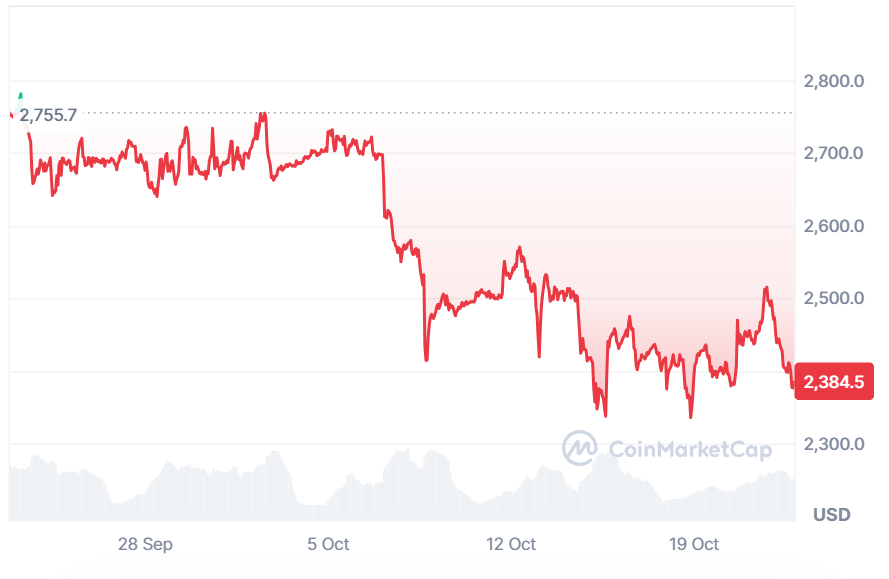
- •Ether fell almost 5% to $2,382 within 24 hours, though the broader crypto market also declined sharply, with Bitcoin dropping to $81,000 and total market capitalization sliding 4% to $2.7 trillion.
Ethereum developers have postponed the Glamsterdam upgrade on the Hoodi testnet, citing smart-contract compatibility concerns. The decision, taken on October 22, canceled the network's planned October 26 activation and left the mainnet deployment without a confirmed date.
According to the Ethereum Foundation's announcement, the delay will allow developers to investigate how EIP-8037 interacts with existing smart contracts on mainnet. Separately, blockchain security firm ChainSecurity identified risks involving the upgrade's revised-accounting rules, which could lead to transaction failures. Testnet activations such as Hoodi's normally precede mainnet deployments, giving developers a chance to validate protocol changes under live network conditions — a staging step that in this case creates a buffer to examine the gas-accounting questions before any mainnet activation is scheduled.
Security Findings Behind the Delay
Ethereum core developer Christine Kim said the activation was called off because of security issues, writing on X that ChainSecurity had identified the problems. The concerns center on gas-accounting risks in two Ethereum improvement proposals included in the upgrade: EIP-8037, which introduces costs for state creation, and EIP-8038, which reprices state access.
ChainSecurity argued in its analysis that Glamsterdam could change how the network responds to external calls that run out of gas. Instead of such calls simply retrying after gas refills and repricing, they could now fail permanently.
"Contracts often catch failed external calls so they can record a failure, continue a batch, or choose a fallback. But if a call fails because it was given too little gas, continuing can turn a retryable operation into a permanent failure," the firm said.
ChainSecurity reported that it found 13 real-world examples of the security impact and is already in discussions with affected projects. The finding is relevant well beyond the testnet: under the revised rules, operations that contracts treat as retryable could instead fail outright, and the Ethereum Foundation is still determining how many contracts were affected and by how much — a scope review aimed at sizing the exposure across deployed mainnet contracts.
Glamsterdam's Future Remains Undecided
With the Hoodi activation paused, Glamsterdam's roadmap is uncertain. The scheduled activations on the execution and consensus layers have been removed, as has the gas limit schedule that would have raised Hoodi's gas limit to 200 million at the designated epoch.
No new date has been chosen. Early December had been the tentative target for the mainnet upgrade, but that timeline depended on the Hoodi upgrade going smoothly, and it is now unclear whether Glamsterdam can still ship this year. Progress now hinges on two open items: a rescheduled Hoodi activation and the Foundation's assessment of affected contracts. The upgrade is the only major Ethereum network upgrade planned for the year.
Glamsterdam is designed to expand Ethereum's capacity to support more transactions. It will change how the network executes transactions and significantly increase block gas limits.
Market Reaction
Following the setback, Ether (ETH) fell almost 5% over the past 24 hours. The token, which had crossed $2,500 the day before, was trading at $2,382. The decline may not stem from the Glamsterdam delay alone: the broader crypto market also fell sharply, with Bitcoin dropping to $81,000 and total crypto market capitalization sliding 4% to $2.7 trillion.
This article is for informational purposes only and does not constitute financial advice. Cryptocurrencies carry substantial volatility and the potential for capital losses. Readers should conduct independent research before making investment decisions.
Reporting via The Market Periodical.

