Vitalik Buterin Maps Ethereum's Shift Toward a 'Cryptographic World Computer'
Key Takeaways
- •Vitalik Buterin says Ethereum is moving beyond its original blockchain design toward a 'cryptographic world computer' that combines blockchain infrastructure with advanced cryptography, as outlined in a recent blog post.
- •The upcoming Hegota fork, planned for next year, could be Ethereum's last conventional fork before deeper changes to verification, computation, and network architecture.
- •Planned roadmap features include recursive STARKs, hash-based proofs that fold large computations into a single compact check, and FOCIL, an inclusion-list mechanism designed to counter transaction censorship.
- •Under the future design, users could verify blocks through PeerDAS sampling and SNARK proofs instead of downloading and re-executing every block, while block construction may involve multiple participants rather than a single producer.
- •Buterin acknowledged Ethereum still faces challenges with efficient zero-knowledge proofs and large-scale state management, with progress on both being key to watch as Hegota's rollout approaches.
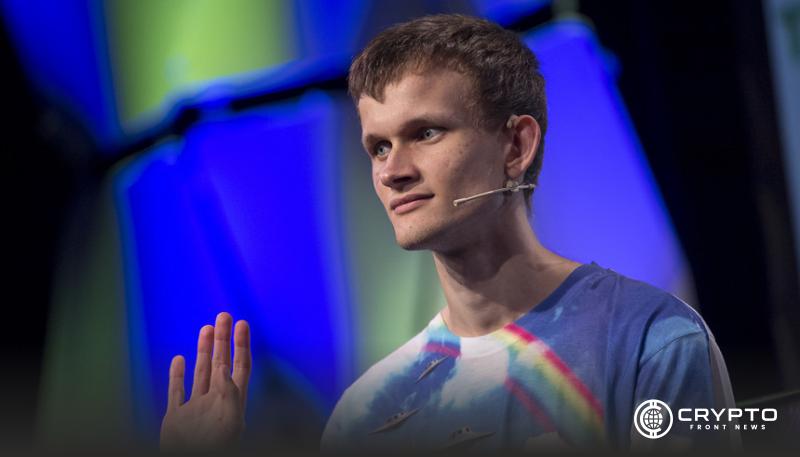
Ethereum co-founder Vitalik Buterin says the network is moving beyond its original blockchain design toward what he describes as a “cryptographic world computer” — a system combining blockchain infrastructure with advanced cryptography. In a recent blog post, Buterin outlined changes planned after the upcoming Hegota fork, including zero-knowledge proofs — cryptographic methods for verifying a statement without revealing the data behind it — optimized consensus, formal verification, in which code is proven correct mathematically rather than by testing, improved state management, and stronger privacy.
Planned upgrades such as FOCIL, an inclusion-list mechanism designed to counter transaction censorship, and recursive STARKs — hash-based proofs that can verify other proofs, folding large amounts of computation into a single compact check — feature prominently in the roadmap, and Buterin suggested Hegota could be Ethereum’s last conventional fork before deeper changes to verification, computation, and network architecture.
Ethereum Moves Beyond Its Blockchain Roots
Buterin noted that Ethereum still retains core blockchain features tied to Bitcoin’s original design, though its technology has changed substantially since launch. Today’s network supports general-purpose computation, proof of stake, zero-knowledge applications, and Layer 2 networks — yet full validation still requires downloading and re-executing every block.
The future design would add specialized computation and multi-party block construction. Notably, verification could shift away from downloading and re-executing every block. Instead, users could rely on PeerDAS sampling, in which nodes confirm data availability by checking small samples of the data rather than holding everything, and SNARK verification, which compresses the work of validating blocks into a succinct proof — easing the computing load that full validation currently demands. Consensus would also move toward a more optimized proof-of-stake system, while block construction could involve multiple participants rather than a single producer.
How the New Design Changes User Tradeoffs
According to Buterin, a future Ethereum could deliver stronger censorship resistance through FOCIL — addressing whether users’ transactions make it into a block even when some validators would rather exclude them. Transaction finality is also expected to improve, with slots lasting roughly four to eight seconds; finality is the point at which a transaction becomes effectively irreversible.
Execution costs would depend more on how applications organize computation. Developers could pay less when work uses dependencies that support parallel processing or pruning. Buterin expects information about ordering and non-commutative state changes — operations whose outcome depends on the sequence they run in — to remain onchain, while other computation could be aggregated before entering a final block.
Decentralized infrastructure could also process data and computation across participants. Buterin said modern cryptography addresses an older verification problem that limited this approach — earlier systems relied on committees, which introduced setup costs, latency, and failure risks.
Hegota Starts Ethereum’s Next Phase
Buterin identified Hegota, planned for next year, as Ethereum’s likely last conventional fork. Afterward, he expects recursive STARKs, automated formal verification, optimized consensus, and quantum-safe development — cryptographic schemes designed to hold up even against future quantum computers.
He also discussed obfuscation as a longer-term possibility, saying viable obfuscation could support encrypted computation involving many participants — programs that run while keeping their inner workings hidden.
However, Buterin acknowledged that Ethereum still faces challenges with efficient zero-knowledge proofs and large-scale state management — progress on both is what to watch as Hegota’s rollout approaches. The envisioned architecture would combine blockchains, cryptographic verification, privacy tools, and decentralized off-chain components.

