Jack Smith Hearing Puts Republican Strategy Under Scrutiny
Key Takeaways
- •An Axios report this week presented Senator Eric Schmitt as drawing buzz as a possible running mate for JD Vance's 2028 presidential campaign.
- •Schmitt's perjury accusation against Jack Smith rested on a claim that Smith lied about attending an Atlanta Hawks game, but Republican senators had misidentified both the teams and the cities involved.
- •Smith testified that his investigation developed proof beyond a reasonable doubt that Trump engaged in serious crimes and a criminal scheme to overturn the 2020 election and prevent the lawful transfer of power.
- •Republican senators focused on Smith's acquisition of their phone toll records, which he testified was legal and common in complex investigations and involved only metadata rather than call contents.
- •The hearing, Smith's third appearance before Congress, took place slightly more than a month before the midterm elections and produced little new information.
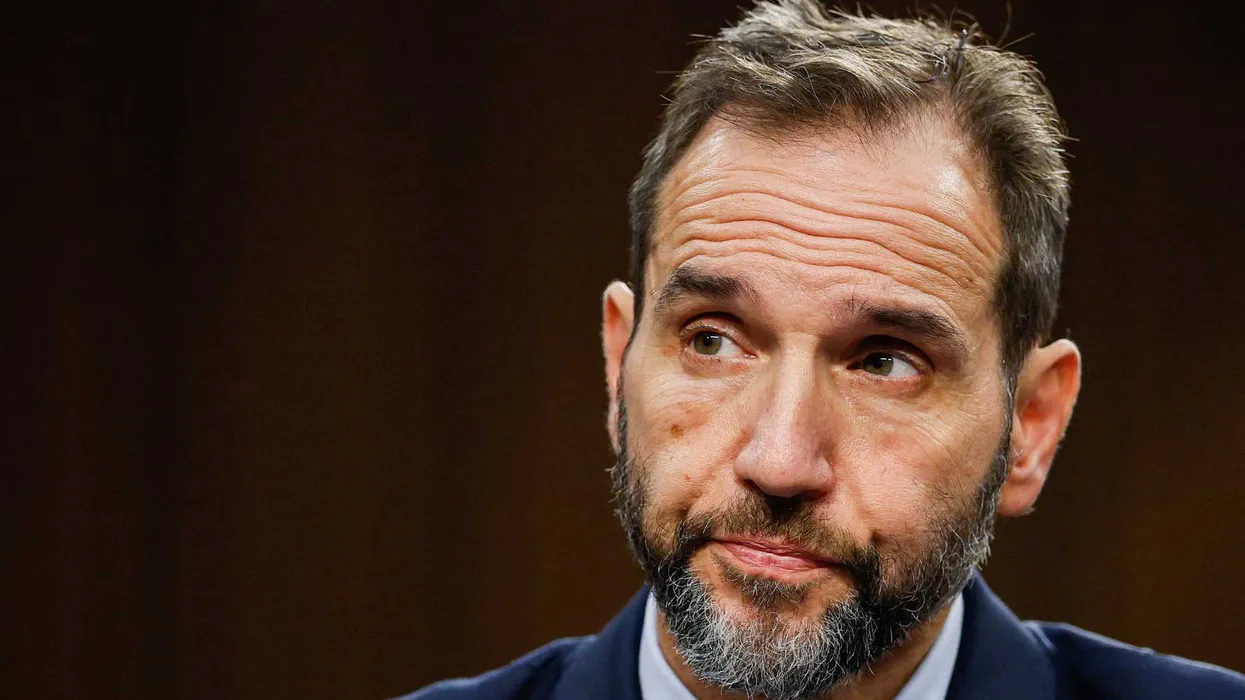
Senator Eric Schmitt of Missouri was presented in an Axios report this week as “drawing buzz” as a possible running mate for JD Vance’s 2028 presidential campaign. Hours later, however, Schmitt faced intense criticism during a Senate hearing after attempting to establish a perjury claim against former special counsel Jack Smith. Congressional testimony is given under oath, and knowingly false statements to lawmakers can be referred for criminal prosecution — the legal weight behind the accusation Schmitt was pursuing.
Smith, a former federal prosecutor who previously handled war-crimes and public-corruption cases, was appointed special counsel in November 2022 to lead the Justice Department’s investigations into Trump’s handling of classified documents and the effort to overturn the 2020 election. Justice Department policy bars the prosecution of a sitting president, and those cases were dismissed after Trump won the 2024 election — leaving Smith to give a public accounting of his work rather than present it to a jury.
Schmitt held up placards containing text messages between Smith and members of his team. He argued that Smith had lied when he said he was not in Atlanta for an Atlanta Hawks game in February 2024. Schmitt, his aides and other Republican senators had misidentified both the teams and the cities involved. Smith had been in College Park, Maryland, to watch the Iowa Hawkeyes play the University of Maryland, according to reporting on the exchange.
Democratic Senator Amy Klobuchar criticized Schmitt for calling Smith a “dirtbag” while also getting the relevant teams and locations wrong. Republican Senator Katie Britt, seated beside Schmitt, appeared horrified during the exchange in an MSNOW clip that later went viral. The moment was also shared in posts on X, X and X.
Even if Smith had been in Atlanta that day, Schmitt’s broader theory would still have required a significant inference. The argument centered on Fulton County District Attorney Fani Willis — the Georgia prosecutor who in 2023 brought a racketeering case against Trump and more than a dozen allies over efforts to reverse his 2020 defeat — and her public acknowledgment of her relationship with her special counsel, Nathan Wade. Schmitt suggested that Smith’s supposed presence in the same city for a basketball game indicated he was attempting to meet with Willis. The exchange became the dominant focus of coverage and overshadowed the rest of the.
The hearing had already raised broader political questions for Republicans because it took place slightly more than a month before the midterm elections. Critics argued that holding the session signaled that Republicans were prioritizing attacks on former President Donald Trump’s perceived enemies over issues such as inflation, gas prices, the war in Iran and government corruption. It was the third time Smith had appeared before Congress to answer questions about his investigations, and the hearing produced little new information.
Several Republican presidential hopefuls used the hearing to criticize Smith. Senator Ted Cruz offered Smith “congratulations,” then said that he had “succeeded where Richard Nixon failed, which is weaponizing the Department of Justice to go after your political opponents.” Nixon resigned in 1974 amid the Watergate scandal, in which his administration sought to use government agencies against political rivals.
Republicans also focused heavily on Smith’s acquisition of phone toll records belonging to some Republican senators during his investigation of Trump and the January 6th insurrection. Smith testified that obtaining such records was legal and common in complex investigations. The records did not contain the contents of the senators’ calls. They consisted only of metadata, including when calls were placed and how long they lasted.
The dispute came as Americans were also confronting concerns about surveillance technology, including Flock cameras — automated license-plate readers that log vehicle movements and are now used in thousands of U.S. communities — and the potential uses of artificial intelligence. The hearing therefore put Republican senators—many of whom are multimillionaires—on television objecting to investigators examining their phone records during a criminal investigation, while voters were also dealing with economic pressures.
Smith’s testimony became the most consequential part of the hearing. The former prosecutor defended the investigation in a measured and direct manner, despite the political hostility directed at him. He said his investigation had established evidence that Trump committed serious crimes and sought to overturn the 2020 election results.
“Our investigation developed proof beyond a reasonable doubt that President Trump engaged in serious crimes against our nation,” Smith said. “Rather than accept his defeat in the 2020 presidential election, President Trump engaged in a criminal scheme to overturn the results and prevent the lawful transfer of power.”
Smith also said he was perplexed by the Republicans’ hostile posture because some of the strongest witnesses in the January 6th case were Republican officials, including officials from the Trump administration, state officials and members of Congress.
During the hearing, South Carolina Senator Darline Graham expressed outrage that investigators had examined the phone records of her late brother, Lindsey Graham. Smith responded that Graham had not been a target of the investigation.
“Do you really believe that Lindsey was going to destroy evidence that was not even in his possession?” she asked.
“No,” Smith replied. “I believe your brother was a patriotic public servant. He was not a target of our investigation, and in fact he likely would have been a witness in our case [against Trump].”
Smith also described what he said had occurred since Trump returned to office in January 2025. “History teaches that the rule of law is rarely destroyed all at once,” he said. “It’s often weakened by attacks on the institutions and the public servants sworn to uphold it. Since January 2025, we have witnessed precisely such an effort.”
The testimony placed the Republican criticism of Smith in the context of concerns among millions of voters about Trump. Trump’s strongest supporters may accept claims promoted by the MAGA movement about Smith, the 2020 election and Trump’s alleged crimes. Other voters who supported Trump in 2024 had not voted for him previously and did so because they believed he would improve the economy.
Some of those voters may not have supported Trump’s celebration of the insurrectionists, believed that he won the 2020 election or rejected the conclusion that he committed crimes. They nevertheless voted for him, in some cases reluctantly, during a period of economic hardship because they expected his policies to improve their circumstances.
The hearing therefore renewed questions about whether emphasizing Trump’s conduct and defending his actions would help Republicans regain those voters. Smith’s appearance before the Senate placed his account of the investigation and the rule of law directly before the public. He had previously served as special counsel, and at the hearing he again defended what he described as his duty to pursue the truth.
Source: Alternet

