Epstein Survivors Express Frustration as Todd Blanche Confirmed as Attorney General
Key Takeaways
- •The Senate confirmed Todd Blanche as Attorney General by a 50-49 vote, with Republican Senators Susan Collins and Lisa Murkowski joining all Democrats in opposition.
- •Jeffrey Epstein survivors actively lobbied against Blanche's confirmation, contending he had demonstrated neither urgency nor genuine interest in expanding the Epstein investigation.
- •Blanche agreed to meet with survivors only after retiring Republican Senator Thom Tillis stated he would not advance the nomination unless the meeting occurred.
- •Between December 2025 and March 2026, DOJ released hundreds of thousands of Epstein-related documents under the Epstein Files Transparency Act but disclosed survivors' names while redacting the names of Epstein's associates.
- •Despite stalled momentum and emotional toll, survivors pledged to continue pressing lawmakers and DOJ for accountability and transparency regarding Epstein's network.
This story was originally reported by Candice Norwood of The 19th.
For Liz Stein, every day is a replay of the worst experience of her life. Whether she is speaking with journalists or meeting lawmakers on Capitol Hill to demand accountability for survivors of the late disgraced financier and convicted sex offender Jeffrey Epstein — who died in federal custody in 2019 while awaiting trial on federal sex trafficking charges — the trauma is constant.
That burden extended through the attorney general confirmation process for Todd Blanche, who ascended from serving as President Donald Trump's criminal defense attorney to the nation's top law enforcement official — a post with direct authority over all federal criminal investigations, including any continuing review of Epstein's network. Blanche has held the role of deputy attorney general — the No. 2 position at DOJ — since March 2025. He became acting attorney general in April after Trump dismissed his predecessor, Pam Bondi, and was officially nominated to lead the department in June.
Throughout the confirmation process, Stein and fellow survivors repeatedly urged senators to reject Blanche, arguing he had demonstrated neither urgency nor genuine interest in expanding the Epstein investigation. Despite initial resistance from two Republican members of the Senate Judiciary Committee, Blanche advanced to a full Senate vote — partly by agreeing to meet with survivors, something he had previously refused to do.
Republican Sens. Susan Collins of Maine, who faces a competitive re-election campaign, and Lisa Murkowski of Alaska subsequently announced they would join Democrats in opposing Blanche. With last-minute backing from GOP Sen. Bill Cassidy of Louisiana, the Senate confirmed Blanche by a 50-49 vote early Saturday morning.
Stein told The 19th that just a year earlier, she had sensed growing momentum toward accountability, fueled by public outrage across the political spectrum and the survivors' collective decision to step into the national spotlight demanding transparency. Blanche's confirmation, however, crystallized a different feeling.
"It feels like the DOJ is weaponizing this case for political reasons, and it feels like we're the pawns being used in that game," she told The 19th.
That momentum now feels stalled, Stein acknowledged, but she insisted it will not deter their efforts.
"I think that every attempt the Department of Justice has made to make us go away has not worked," she said. "We're not going away."
The Epstein controversy has shadowed the Trump administration since the president began his second term, marked by a series of missteps under Bondi that drew criticism from both Democrats and elements of Trump's own base.
In February 2025, Bondi told interviewers her office would soon release new Epstein-related documents that would make people feel "sick" and claimed she had a list of Epstein's clients on her desk. At a White House meeting that same month, she distributed binders to a group of right-wing social media influencers that contained no new information.
By July 2025, DOJ released a memo stating it "did not uncover evidence that could predicate an investigation against uncharged third parties." Prominent Trump supporters pushed back, including podcaster Joe Rogan, who averages roughly 11 million listeners and viewers per episode and accused the administration of "trying to gaslight" the public about what it knew regarding the Epstein case.
For Stein, DOJ's dismissive posture has been unrelenting. In September 2025, she and approximately a dozen other survivors gathered publicly for the first time, standing before the U.S. Capitol in Washington, D.C. They demanded investigations into Epstein's associates, a guarantee of no presidential pardons or concessions for Ghislaine Maxwell — Epstein's longtime associate, convicted in 2021 on federal sex trafficking and conspiracy charges — and the full release of the Epstein files — documents and images documenting his personal relationships, business dealings, and crimes.
Survivors championed the Epstein Files Transparency Act, which became law in November 2025 and required DOJ to publish unclassified records and communications tied to the Epstein investigation and prosecution. Between December 2025 and March 2026, the department released hundreds of thousands of documents, photos, and videos.
During that process, DOJ publicly disclosed the names of survivors who had sought to remain anonymous while redacting the names of individuals associated with Epstein.
Then, the releases ceased.
Behind the scenes, Stein said survivors were "practically begging" for meetings with DOJ officials. "Making ourselves available, putting ourselves out there, and saying, like, 'We want to help you in doing this,'" she recounted. "We have tried countless times to engage the DOJ, and they've had absolutely no interest."
That dynamic persisted after Bondi's dismissal and Blanche's elevation to acting attorney general. On the first day of his confirmation hearings on July 15, Blanche told the Senate Judiciary Committee he could not meet "directly" with survivors. The following day, survivor Dani Bensky challenged that rationale in her own testimony before the panel, citing news reports that Blanche had met with Maxwell for four hours the previous year.
The meeting with survivors ultimately occurred later that week, after Republican Sen. Thom Tillis of North Carolina — who is retiring at the end of his current term — stated he would not vote to advance the nomination unless Blanche first sat down with the group.
Stein characterized Blanche's demeanor in the meeting as "very dark," saying she believed he was simply fulfilling a requirement to secure the position. Survivors asked about the redaction process for the Epstein files and why DOJ had failed to identify new investigative leads, but did not receive satisfactory answers.
"There's no humanity," Stein said. "There was no ability to connect on a human level whatsoever. He was impenetrable as far as having any amount of real compassion or understanding of our experience."
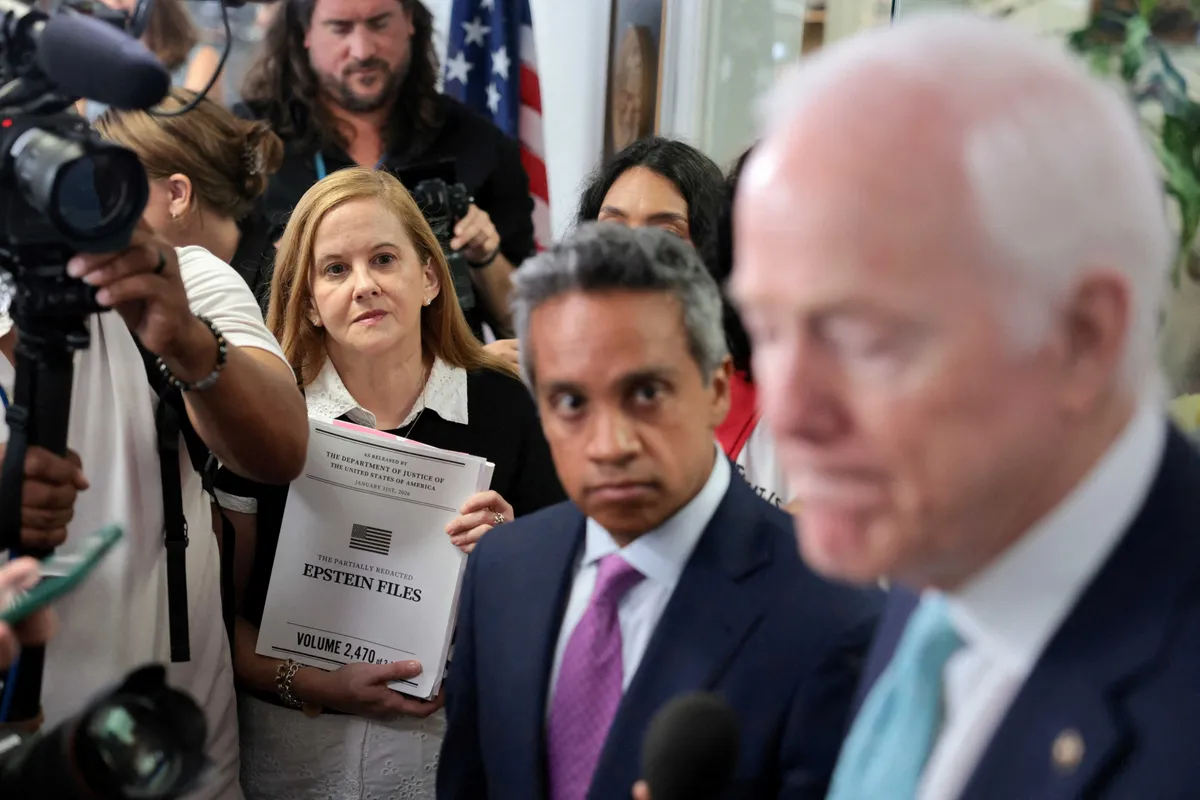
In the lead-up to the Judiciary Committee vote, survivors delivered stacks of Epstein files annotated with potential investigative leads for committee members to review. They also walked the halls of Congress, in Stein's words, "desperately" seeking meetings with lawmakers. Stein said they met with staff for Sen. John Cornyn of Texas, one of the Republican holdouts, but did not secure a meeting with Tillis.
Nevertheless, Republicans — including Tillis and Cornyn — voted along party lines to advance Blanche to a full Senate vote.
Collins and Murkowski were the only Republicans to oppose Blanche's confirmation. In a statement, Collins cited his efforts to shield the Trump family from IRS audits and remarks suggesting he would support national abortion restrictions. Murkowski pointed to an "acceleration" of the politicization of DOJ, including "sweeping immunity protections granted to the president," and also raised concerns about the department's handling of the Epstein files and Blanche's comments to anti-abortion groups.
Reflecting on the survivors' advocacy over the past year, Stein said they have, "more often than not," had productive conversations with members of both parties. Epstein survivors have achieved outcomes that once seemed unattainable. Still, Stein said Democrats have generally been more willing to engage collaboratively. While survivors sometimes receive validation and positive feedback from Republican lawmakers in private, those same legislators hesitate to express such views publicly — even those who have championed anti-sex-trafficking legislation.
Stein said she believes the issue — one in which young women and girls were abused by some of the nation's most powerful figures — should transcend politics, yet it has become deeply partisan. The daily reality of pressing leaders to act carries a significant emotional toll, she said.
Going forward, Stein said the survivors' strategy is to remain steadfast in their mission and objectives. They will not relent, she emphasized.
"But we're human beings," she added. "Imagine the worst thing that's ever happened to you, having to confront it every minute or every day, and talk to people about it all the time, and just constantly rehash it. That's a challenge for anyone."

