Farmers Await More Clarity on Proposed WOTUS Rule
Key Takeaways
- •The EPA and Department of the Army announced a Supplemental Notice of Proposed Ruleming to explore wider options for implementing the Supreme Court's 2023 Sackett v. EPA decision.
- •The Sackett ruling narrowed WOTUS to waters with a relatively permanent surface connection to U.S. waters and to wetlands with a continuous surface connection, rejecting the significant-nexus test.
- •Public comments will be accepted for 30 days after the proposal is published in the Federal Register, and this rulemaking will be used alongside the 2025 rule.
- •For farmers and ranchers, the WOTUS definition determines whether features like ditches and ponds trigger Clean Water Act Section 404 permitting for routine activities.
- •Missouri Farm Bureau President Garrett Hawkins says producers want clearer definitions, more uniform implementation, and greater respect for states' rights.
The Trump administration is once again seeking public feedback to help further define its proposed Waters of the United States (WOTUS) rule, leaving farmers and agricultural groups watching for greater clarity as the regulatory process unfolds.
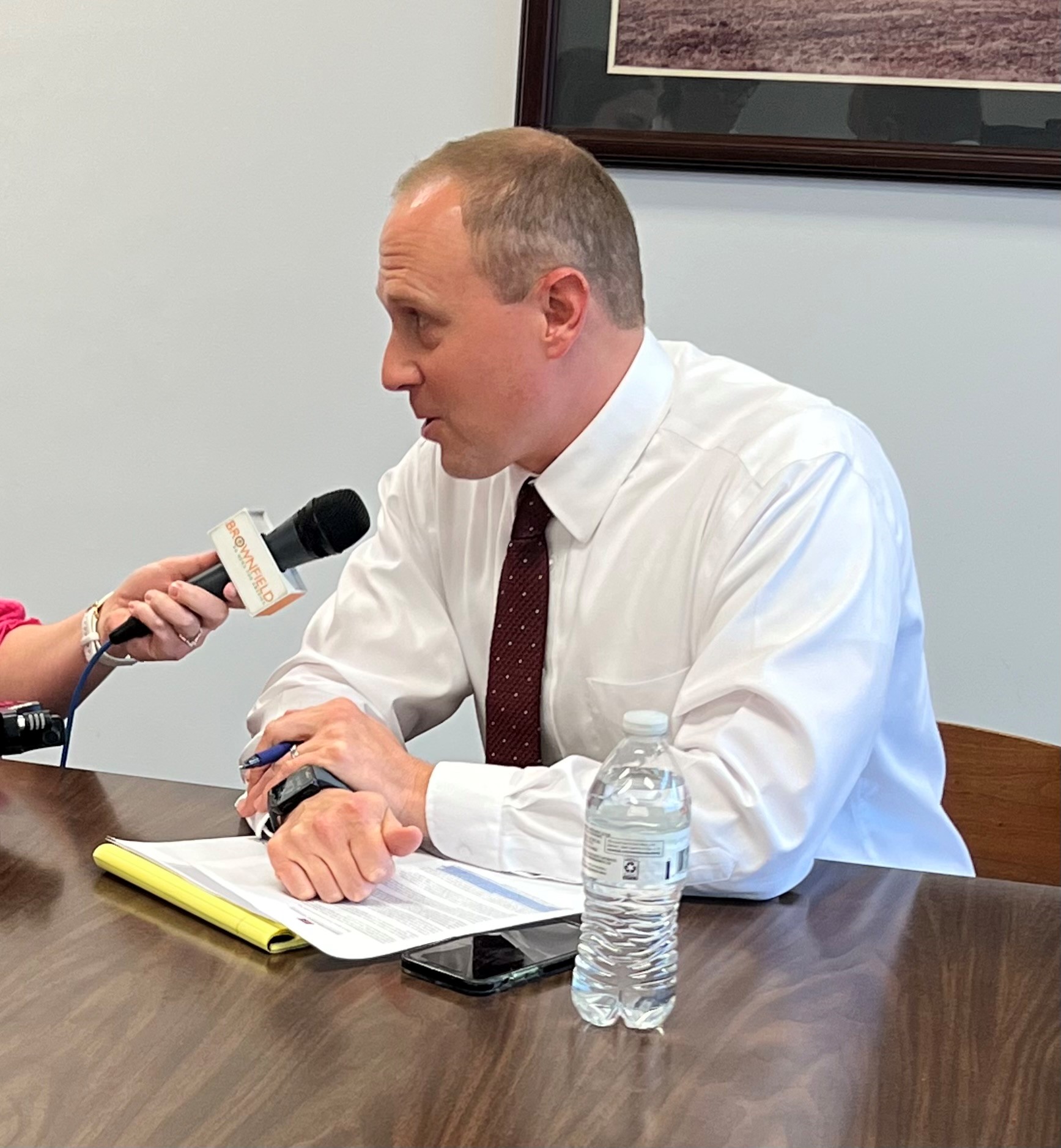
Missouri Farm Bureau President Garrett Hawkins tells Brownfield that producers benefit from clear and consistent policy. "We've been looking for better respect of states' rights in this conversation, and we've been looking for better definition for terms to make sure there is more uniformity for how WOTUS is implemented on the ground," he said. For farmers and ranchers, the practical stakes center on Clean Water Act Section 404 dredge-and-fill permits: when a ditch, pond, or low-lying wet area on agricultural land counts as a federally regulated water, routine activities such as clearing, tiling, or building near those features can trigger federal permitting requirements.
On Friday, the EPA and the Department of the Army announced a Supplemental Notice of Proposed Rulemaking to help evaluate a wider range of options for implementing the Supreme Court's 2023 decision in Sackett v. EPA. That ruling narrowed the scope of federal jurisdiction under the Clean Water Act, holding that WOTUS refers to waters with a relatively permanent surface connection to bodies that are themselves waters of the United States, and to wetlands with a continuous surface connection to such waters. The ruling also rejected the significant-nexus test that had earlier been used to extend federal jurisdiction to more distant wetlands and tributaries, and the case returned to lower courts for further proceedings on how the narrower standard applies in practice.
EPA Administrator Lee Zeldin says the agency's goal is to end burdensome regulatory uncertainty and that public feedback helps strengthen the final rule. The agency says this rulemaking will be used alongside the 2025 rule. Once the proposal is published in the Federal Register, the agencies will accept comments for 30 days. Farm groups and other stakeholders can submit comments through the Federal Register docket during that window.
The definition of WOTUS has shifted repeatedly across administrations, with farmers, ranchers, and landowners long citing the changes as a source of uncertainty about which waters and wetlands on their land fall under federal permitting requirements. What happens next in this rulemaking, and any subsequent litigation over the final rule, will determine how durable the current definition proves to be.
Brownfield's Carah Hart contributed to this story.
