CNN Confronts Energy Secretary Chris Wright With Court Filing Contradicting Congressional Testimony on Grant Cancellations
Key Takeaways
- •Energy Secretary Chris Wright told Congress on April 15 that the project review process did not factor politics into grant evaluations.
- •Trump administration lawyers conceded in a July 15 court filing that grant decisions were based solely on whether recipient states were blue or non-blue.
- •A district court ruled in January that the politically driven grant cancellations violated the Fifth Amendment's equal protection guarantee.
- •Republican strategist Melik Abdul and former federal prosecutor Elliot Williams both criticized the administration for openly admitting to politically motivated grant decisions.
- •Williams indicated that the administration could face further lawsuits over procedural issues and congressional oversight investigations if Democrats regain control of the House.
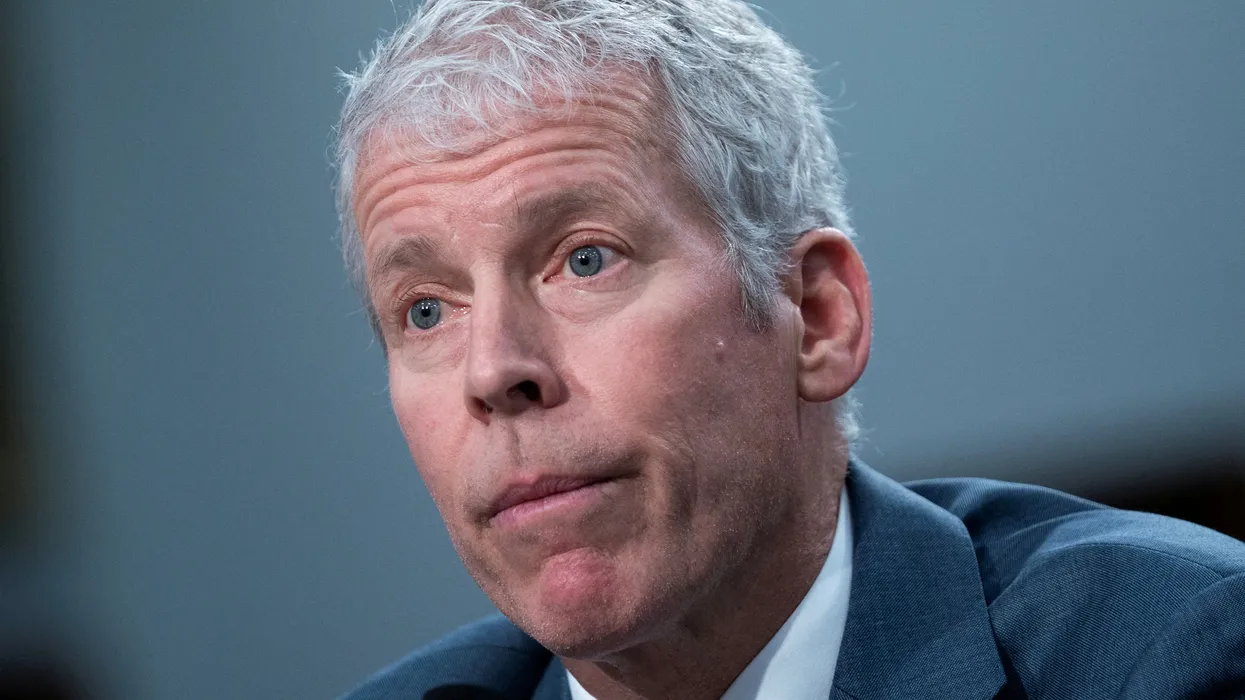
Energy Secretary Chris Wright appears to have made statements to Congress that conflict with a subsequent Trump administration court filing regarding the cancellation of energy grants to Democratic-leaning states, according to a CNN segment that aired Friday.
The grants at issue are part of billions of dollars in Department of Energy funding awarded to states for infrastructure modernization, clean energy deployment, and research initiatives—federal investments that states rely on for long-term energy planning and job creation.
CNN host Victor Blackwell presented the comparison after Trump administration lawyers acknowledged in a July 15 court filing that "the inclusion of grants in the October notice was based solely on the political identity of the grant recipient state, i.e., whether the recipients location was in a blue state or a non blue state."
"But that is not what the energy secretary said to Congress a few months ago," Blackwell observed.
The CNN host then aired footage of Wright's appearance before the House Appropriations Committee on April 15, in which the energy secretary stated unequivocally: "our project review process did not take into account any politics in the evaluation of these projects."
During that same hearing, Rep. Rosa DeLauro (D-CT) challenged Wright's assertion directly, informing him that "the district court this January found that this violated the Fifth Amendment's guarantee of equal protection under the law." The Fifth Amendment's due process clause has long been interpreted by courts as imposing an equal protection obligation on the federal government, meaning federal agencies generally cannot allocate or withhold public benefits based on political affiliation or geography.
Republican strategist Melik Abdul was swift in his criticism of the administration's approach to distributing aid. "This is just unacceptable," Abdul said. "And I think the White House knows this. I was actually surprised that it's something that they owned up to. I guess maybe they didn't have a choice since it was in court, they really didn't have a choice. But this is something that no one should support at all."
Abdul further criticized the administration for "doing it for political reasons and admitting you're doing it for political reasons."
"I just don't know how you can defend it," Abdul added.
Former federal prosecutor Elliot Williams concurred, observing that while the Trump administration "had no choice" but to concede the politically driven nature of their grant decisions "because they were in court … they are [also] shameless about their behavior."
"And I think you've seen the president in the White House just acting with impunity on things like this, thinking that it's politically popular with their base and that they can string things out in the courts long enough and just to make it go away," Williams continued.
Williams pointed out that should Democrats regain control of the House of Representatives in the fall elections, "this is precisely the kind of thing that would get congressional oversight in the form of hearings or letters or investigations or whatever else."
"I also think just the big one that dogs the Trump administration and so many things is process," Williams added. "Did they properly follow the process that the law lays out in canceling grants? And they can be sued over that as well. And so we have not seen the end of this story in the courts. But like so many other things, the political question, as much as it's a legal one."

