Physicist Randy Lyman Says Emotional Mastery, Not Strategy, Drives 8-Figure Exits
Key Takeaways
- •Randy Lyman argues that emotional mastery is the foundation of durable business growth and says it matters more than strategy or grit.
- •Lyman says unresolved emotional energy influences personal and professional outcomes and that leaders who ignore emotions can stall despite strong IQ and planning.
- •Host Don Williams says a talk he heard in Bangkok convinced him that people perform best in gratitude and worst in shame and fear.
- •Williams describes gratitude as a business “cheat code” and says he wants to help a million people build a daily gratitude practice.
- •The episode says a founder’s emotional state can shape boardroom dynamics, with calm leaders defusing tension and tense leaders escalating it.
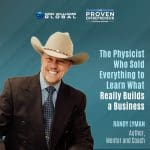
In the latest episode of The Proven Entrepreneur, physicist and serial entrepreneur Randy Lyman argues that emotional mastery, not strategy or grit, is the foundation of durable business growth. The episode, titled “The Physicist Who Sold Everything to Learn What Really Builds a Business,” aired on August 31, 2026, and features a candid conversation between host Don Williams and Lyman, who has built and exited multiple eight-figure companies and earned a spot on the Inc. 500.
Lyman, who holds multiple patents and describes himself as a 64-year-old successful man still comfortable crying his tears, says unresolved emotional energy creates a harmonic resonance that the universe mirrors back, influencing both personal and professional outcomes. He divides reality into three categories: thought and information, the physical body and world, and emotions. According to Lyman, leaders who do not master their emotions often stall despite high IQs and sound strategies. The framework comes from his book The Third Element and is presented as a working model for listeners.
The discussion moves through examples from both the factory floor and the boardroom, underscoring why the conversation reaches beyond personal development into leadership and team culture. Lyman recalls a 1989 Ford truck that showed him the emptiness of material milestones, and he revisits a pivotal afternoon in 1999 when his team told him he was “the problem for the business.” He says, “They were right.” The episode also examines why young men often shut off emotions to survive, only to face consequences later as leaders, and how ideas from quantum physics, including Heisenberg’s uncertainty principle and the 1927 double-slit experiment, can be reconciled with the law of attraction to offer a different lens on entrepreneurship.
Williams traces his own turning point to a talk he heard in Bangkok, Thailand, about a decade ago, delivered by a researcher who is now completing a doctoral program at Oxford on the intersection of neuroscience and spirituality. That talk convinced him that people perform at their best in gratitude and at their worst in shame and fear. He calls gratitude a “cheat code” for business and says his mission is to move a million people into a daily gratitude practice.
The episode’s broader message is that emotional clarity affects team dynamics and performance, especially for founders whose state can shape the room around them. Lyman says tense founders trigger board members who behave “like wolves,” while calm, emotionally clear leaders defuse the room. He links the physics definition of power — the ability to accomplish work — to team performance, arguing that profits, expansion, and industry change follow leaders who serve their people first. He says this perspective matters in a business culture that often emphasizes hard metrics over human factors.
Lyman says his claims are supported by 36 years of practice and hundreds of coaching engagements. For skeptics, he frames the idea through boardroom behavior, arguing that emotional mastery is not a soft skill but a critical leadership competency. Founders can reach him at randylyman.com.
Episode 170 of The Proven Entrepreneur is available now wherever podcasts are heard, at provenentrepreneurshow.com, and on Apple Podcasts, where listeners can subscribe and leave a review. The show says its mission is to help others by growing sales, sharpening customer experience, strengthening culture, and coaching leaders to “show up like rock stars.”

