Report: Elon Musk Capped Starshield Speeds for Ukraine During Russia's Biggest Attack Since the Invasion
Key Takeaways
- •The Wall Street Journal and CBS News confirmed that Elon Musk capped Starshield connection speeds for Ukrainian hardware during Russia's biggest attack since the invasion, leaving some offensive and interceptor drones virtually useless.
- •Reuters reported that the decision to limit Ukraine's connectivity came from inside the White House, and a source told The Telegraph that both Musk and the administration were involved, though no formal finding has determined who initiated the slowdown.
- •Ukrainian President Volodymyr Zelensky publicly accused President Trump of siding with Russian President Vladimir Putin, pointing to actions including the Starshield slowdown and decisions on sanctions as part of a broader pattern.
- •US Senator Elizabeth Warren warned that one individual dictating US foreign policy endangers the country, while Senator Chris Murphy described the withholding of Patriot missile shipments as part of a strategy to pressure Ukraine toward capitulation.
- •House Democrats are drafting oversight plans that target Musk and would require subpoena power, making the upcoming midterm elections decisive for whether those investigations move forward.
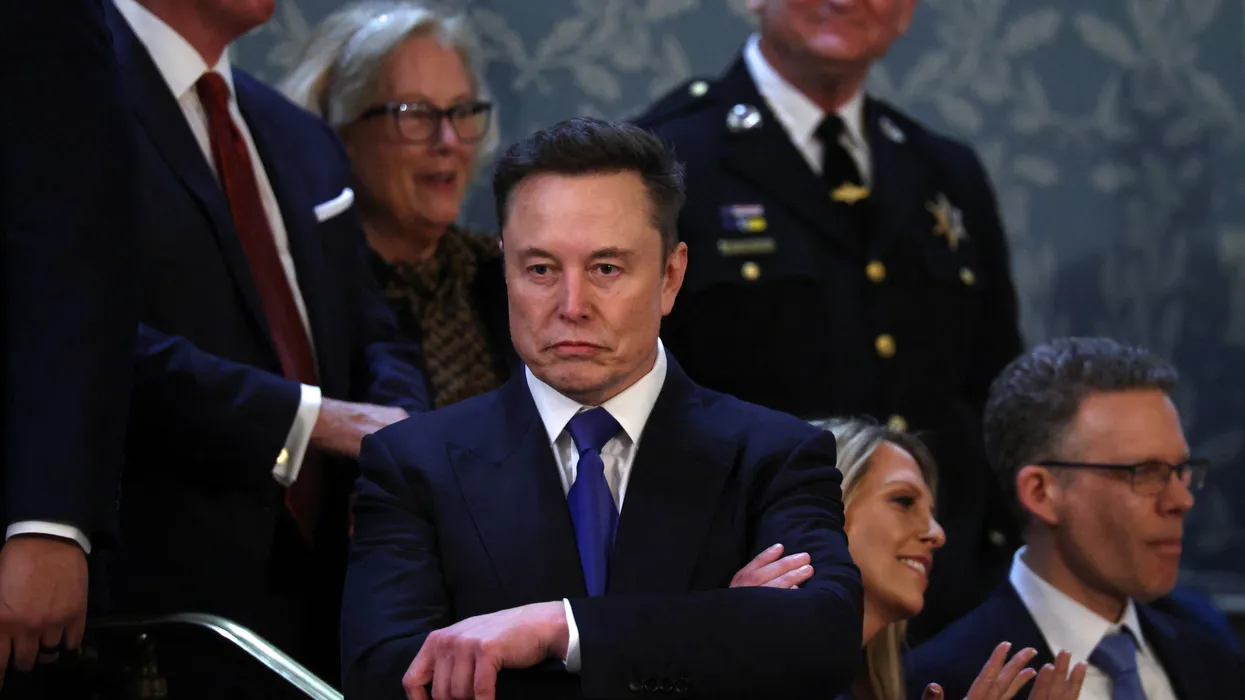
The Wall Street Journal and CBS News have confirmed that Elon Musk was involved in the decision to stall Starshield, the military version of SpaceX's Starlink satellite network, at the moment Ukraine needed it most. As Russia launched its biggest attack since the invasion, Musk "capped the speeds at which Ukrainian hardware could stay connected to the satellite-based network, the people said, rendering some offensive drones and interceptor drones virtually useless," the Journal reported. The account underscores a basic reality of modern drone warfare: connectivity is combat power. Ukraine's offensive and interceptor drones depend on that bandwidth, so a throttle applied at the wrong moment can degrade battlefield capability in real time — and because Starshield is privately owned, that capability rests at the discretion of whoever controls the network.
The reporting indicates Musk is unlikely to have acted alone. Reuters reported last week that the decision to sabotage Ukraine's connectivity came from inside the White House. Musk has said publicly that the administration was responsible, while administration sources have said Musk was — a tangle the Alternet column resolves by concluding that both were. According to the Journal, Musk's team contacted the White House to "coordinate messaging." A source told the Telegraph: "The reality is that they were both in it." No formal finding has settled who initiated the slowdown; for now, the question rests on competing accounts from the principals themselves.
Ukraine's president, Volodymyr Zelensky, is acting as though what has been done cannot be undone. He has put up with President Donald Trump's humiliation tactics for years to maintain access to the weapons and intelligence he needs to liberate his country, but he is no longer biting his tongue. "People have to hear reality," Zelensky said. Whether it is lifting old sanctions on Russia, waiving new ones, or sandbagging Starshield, he argued, the pattern illustrates Trump's affinity for dictators — and that Trump has taken the wrong side of history in deciding to help Russian President Vladimir Putin.
US Senator Chris Murphy, of Connecticut, told Anderson Cooper that Ukraine was winning the war over the course of the last year, despite Trump's refusal to maintain previous levels of support, until Putin "called in a favor, using whatever lever he has over the president."
Murphy called recent choices by the White House — including the decision the night before to withhold Patriot missile shipments to Ukraine — "a pattern of behavior" in which the president "has decided he's gonna put Ukraine in a position where they may be pressured to capitulate … a strategy to put Russia in the most powerful position possible to gain a settlement."
The column argues that while Trump deserves to be treated as if he has crossed a line, so does Musk — and that his involvement in a conspiracy to destroy Ukraine's sovereignty should trigger a credibility crisis. Historian Heather Cox Richardson went further, comparing him to Revolutionary War general Benedict Arnold. "Musk's decision to change the course of a war with 'a seeming flick of a switch,' taking it upon himself, with or without the complicity of White House officials, to reverse the foreign policy of the United States of America for the benefit of Russia's president Vladimir Putin, is a stunning assumption of power reminiscent of Revolutionary War general Benedict Arnold's weakening of the Americans' defenses and draining of supplies at the strategic fort at West Point to enable the British to capture it before he was discovered and defected," she wrote.
Musk appears aware of the potential fallout. "After what was described as a 'night of carnage' in Kyiv because of the blackout," the Telegraph reported, Musk "had been alarmed about the possibility of adverse consumer reaction in Europe."
In the columnist's assessment, that fear is rooted in more than concern for Musk's companies, government contracts and profit margins: he has made an enemy of a sovereign nation whose fate is bound to others allied in the most powerful security apparatus on the planet. Governments protect men like Musk — that, the column notes, is how he became an alleged trillionaire — but government protection becomes optional in times of war. "Zelensky needs Starshield. He doesn't need Musk," the author writes, warning the billionaire to be "careful around open windows."
In the United States, apprehension among Democrats over Musk's "stunning assumption of power" is growing. "If it's one man, Elon Musk, who is dictating our foreign policy, then he puts the United States at enormous risk," US Senator Elizabeth Warren, of Massachusetts, said Wednesday. "He's the one who decides whether Ukraine, out there fighting on the frontlines to protect its democracy, lives or dies? No. We should not have one man in that position."
The New York Times reported last week that if Democrats regain control, they might investigate Musk's AI interests, his foreign entrenchments and his conduct as head of the Department of Government Efficiency (DOGE). His alleged role in the moves against Ukraine adds another item to that list.
Politico reported this week that House Democrats are already drawing up a game plan for when they hold subpoena power. Texas Congressman Greg Casar said: "Our committees need to be doing oversight both into the Trump administration, but I think even more importantly or equally importantly, into the corporations and ultrarich people who have tried to corrupt our government. And, of course, Elon Musk is on that list." Whether the game plan ever gets executed is a question of the calendar: subpoena power follows control of the House, so the midterms will decide if this oversight moves from planning to practice.
In the spring, Democrats introduced a bill that would unwind mergers approved during the second Trump administration. More broadly, the party is focused on anti-monopoly enforcement and price-fixing amid a cost-of-living crisis, as well as political graft. The column notes that Musk's former position at DOGE yielded hundreds of billions in contracts, that he emerged from federal investigations and avoided billions in fines, and that his companies constitute a virtual trust — at a moment when Democrats are in the mood for trust-busting.
Filmmaker Alex Gibney, whose documentary on Musk challenges his reputation as a genius inventor, told Piers Morgan on Tuesday night that, contrary to popular belief, Musk has never invented anything. His real genius, Gibney said, is stock pumping. "That is where he really shines. He's managed to take companies, which have a rather mediocre profit-and-loss record, and make himself through stock pumping the richest man in the world."
Stock pumping, the column observes, is market manipulation — illegal under federal law and New York state law. It recalls the moment Tucker Carlson asked Musk what would happen to him if Kamala Harris won the 2024 election. "How long will my prison sentence be?" Musk replied.
The column concludes that it is hard to avoid the judgment that Musk understands the stakes — that he has crossed the line, that there is no going back, and that all that is left is to pour hundreds of millions into the midterms in the hope of staying out of jail. He is the single biggest backer of Ken Paxton, the impeached Texas attorney general whom the column describes as corrupt, as Republicans bet his millions can rescue Paxton's US Senate race, per Reuters. "He is literally trying to buy a senator," the author writes.
No one elected Elon Musk, the column argues. A majority of the governed did not grant him authority over them, he has no constituency beyond his Twitter followers, and he has demonstrated unconscionable disloyalty. "If he can pull the plug on Ukraine's defense, he can pull the plug on America's," it warns.
Source: Alternet

