Musk Threatens Congress as Lawmakers Eye Probes of Starlink Slowdown, DOGE Record and Election Spending
Key Takeaways
- •The Wall Street Journal reported that Musk decided to slow Starlink service to Ukraine and that the White House ordered it restored, but responsibility for the slowdown remains officially unresolved.
- •Musk stated that Ukraine's military violated Starlink's terms of service by using the civilian service for offensive drone strikes, and that the loophole was closed last week.
- •Musk has contributed more than $350 million to Republican candidate campaigns, with roughly half directed toward Texas Attorney General Ken Paxton's Senate race against Democrat James Talarico.
- •Democrats could compel Musk's congressional testimony if they win majority control of either chamber, since committee chairs set hearing agendas and issue subpoenas.
- •Musk's DOGE effort fell far short of its reported $2 trillion government cut target while closing agencies, accessing private taxpayer information, and firing thousands of federal workers.
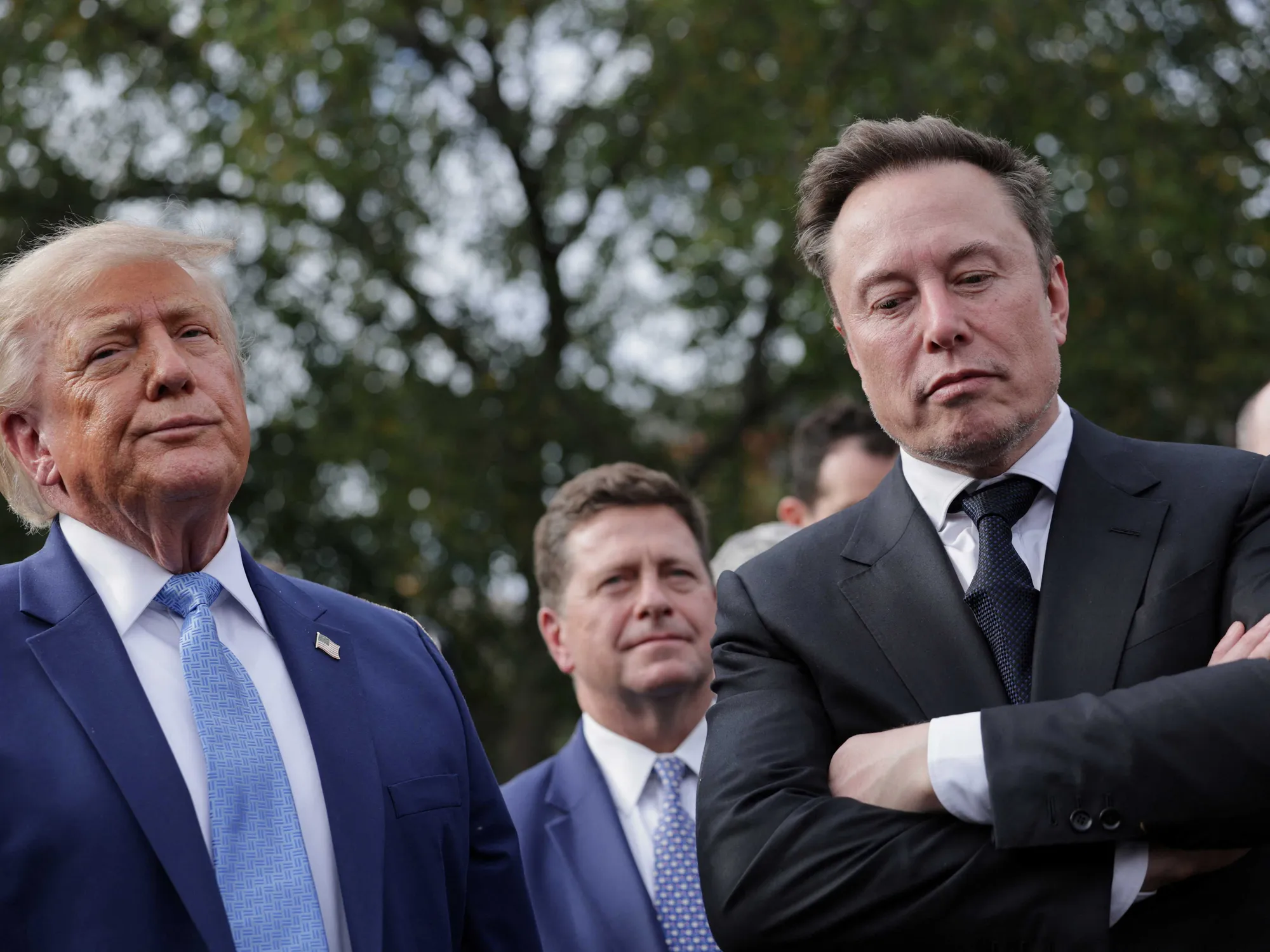
Elon Musk's fortune and his jagged opinions about how everyone else should live have once again been thrust upon the public. From apparent interference in how the United States conducts its foreign affairs to inordinate election spending aimed at shaping who chooses the country's leaders, Musk is making clear that his status as the nation's — and perhaps the world's — wealthiest man imbues him with special responsibilities to dictate values.
It is once again as if Musk believes he has been asked to serve as the nation's leader, conscience, seer, chief economic and technical adviser and opinionated nag. This is the same Musk who, early in the Trump administration, cast himself as a sort of co-president alongside Donald Trump — the same Musk who could unilaterally shut down foreign aid programs and fire hundreds of federal employees, and who could use his social media platform X to fan the fires of public hatred in whatever personal directions suited him.
He then receded into his various businesses, in which Musk is indeed very good, and that appeared to be a more comfortable perch from which to lobby for regulation-free artificial and superintelligence technologies, space exploration and the rebuilding of his Tesla car business — even as ally Trump has been systematically smashing the electric vehicle industry.
Now Musk's name has resurfaced as a prime target for inquiry should the elections produce a change of majority in at least one house of Congress, and he has taken no time at all to issue threats against those who would question him. “Live by the sword, die by the sword,” Musk posted, adding, “Those who pick fights with me should understand that I will find out who is really pulling the strings and come for them, not just their puppets.”
The Ukraine Starshield Decision
Two weeks ago, Starshield — Musk's military communications service under contract to the Pentagon — slowed or even halted for Ukrainian troops in the field, whose drones immediately lost the ability to hit targets inside Russia, including oil refineries and facilities that drive Russian missile attacks against civilian targets in Ukraine. The slowdown was documented in reporting by The Hill.
Starshield is SpaceX's military counterpart to Starlink, the satellite internet network on which Ukrainian forces have relied since Russia's full-scale invasion in 2022. That dependence means decisions about access — who makes them, and on what authority — carry battlefield weight, which is what makes the unresolved question of who ordered the slowdown more than an administrative dispute.
Just who gave the orders for the slowdown that decapitated the system was unclear. The order reportedly came from within the White House, but Trump said it was not him, and the Pentagon said nothing. Musk said only a presidential order would get him involved, though there were reported calls between Trump and Musk.
The timing seemed strikingly coincidental: the slowdown followed closely on Trump's calls for a diesel deal with Russia that trashed his own sanctions program against Russian oil and underscored other efforts to re-welcome Russia from pariah status to new U.S. business partner. In the author's view, it showed Trump aligning with an outwardly preferred Russia with little evident regard for Ukrainian state sovereignty or democracy.
On Saturday, Musk posted anew that the “Ukraine military violated Starlink terms of service and used it for offensive drone strikes to people. That loophole was closed last week.” The slowdown affected Ukrainian military drones, airplanes and helicopters traveling faster than 100 mph.
The Wall Street Journal, citing sources, reported that it was Musk who made the decision to slow Starlink, and the White House that ordered it restored — although its current operational status remains questionable. Whether service has in fact returned to full capacity, and who in government, if anyone, eventually explains the sequence of decisions, remains unresolved.
“Using Starlink, a civilian commercial service, for offensive drone strikes to kill people has never been allowed, nor should it be,” Musk said in his post.
Democrats and some Republicans in Congress would like to know who is making national security decisions for the nation, and they want to compel Musk's testimony — a step made easier if there is a Democratic majority in the House or Senate. Under standard practice, majority control determines committee chairmanships, and chairs set hearing agendas and issue subpoenas, so a single flipped chamber could decide whether Musk is compelled to appear. Left unanswered are questions about why Musk believes it is his job to tell other countries that contract for his communication services what they can and cannot do with the technology — and about who is running the country's foreign affairs.
Election Prospects
Meanwhile, Musk has dumped upwards of $350 million into Republican candidate campaigns, with half going toward the election of embattled Texas Attorney General Ken Paxton as the state's next senator. Musk clearly sees efficacy in maintaining Republican control of Congress, whose policies have underwritten many of his business ventures.
More importantly, that control has kept away questions about what Musk did as head of Trump's DOGE (Department of Government Efficiency) effort last year, which sought a reported two trillion dollars' worth of government cuts. The effort came nowhere close to that figure, but along the way Musk and a group of young, inexperienced computer specialists were able to close whole agencies, gain access to private personal taxpayer information in apparent violation of law, fire thousands of federal workers and generally lob chaos into the idea of government.
Musk managed, with Trump's help, to keep much of that activity — however inaccurate the financial totals involved — secret and off-limits to public questioning.
The election therefore looms as a gateway for surging Democrats to put Musk before hearings that would explore exactly how the entire U.S. AID foreign aid program was eliminated and with what ill effects, or why Musk needed to obtain ordinary Americans' personal information from tax and other records in order to slash government services. Hearings of that kind are Congress's principal instrument for examining executive action, and with subpoena authority its committees can compel documents and sworn testimony that the administration has so far kept off-limits.
At the same time, Musk's own business with NASA in space exploration, with the Pentagon for information and communications services and with other agencies has boomed. He has been a chief beneficiary of the Trump presidency and its business-forward outlook.
In the most recent quarter, most of Musk's political donations went to the Senate Leadership Fund (SLF) PAC, election filings show. The SLF is a super PAC aligned with Senate Republicans; committees of that type can accept unlimited contributions so long as they spend independently of the candidates they support, with donations disclosed in Federal Election Commission filings. That group in turn supported Paxton, who is at risk of losing to Democrat James Talarico in a race for a seat his party has held for decades. Texas is Musk's newly adopted home and has offered him fewer government regulations, no state personal income tax and no corporate income tax.
For many voters, however, Musk lands on the wrong side when it comes to technology and the massive data centers needed to support its development. The tension is not unique to Texas: communities across the country have weighed the electricity, water and land demands of the facilities that artificial intelligence development requires.
In any case, rather than worrying about rockets and Tesla recharging stations, Musk has returned to an unwelcome role in public life.
Terry H. Schwadron retired as a senior editor at The New York Times, served as Deputy Managing Editor at The Los Angeles Times and held leadership roles at The Providence (RI) Journal-Bulletin. He was part of a Pulitzer Gold Medal team in Los Angeles, and his team shared in several Pulitzers in New York. This article is adapted from his commentary, originally published by Alternet.

